









New Delhi Bureau
Summary: Union Minister for New and Renewable Energy Pralhad Joshi has said the PM Surya Ghar scheme is currently adding one lakh rooftop solar systems every six days, and the pace will quicken to one lakh systems every four to five days within the next two to three weeks. As of 2 November, the scheme has received over 88.3 lakh applications, more than 55.3 lakh systems have been installed, and over 65 lakh households have benefited.
India’s rooftop solar rollout has entered a faster gear. Speaking on the sidelines of the Bharat Renewable Energy Summit and Expo 2026 at Bharat Mandapam in New Delhi, Union Minister Pralhad Joshi shared the latest progress figures for the PM Surya Ghar scheme and expressed confidence that it will meet its target on time.
The new pace announced
Joshi said that one lakh solar rooftop installations are currently being completed every six days. He added that he is hopeful that within another two to three weeks, the same number will be completed in four to five days. The statement matters because it signals that the scheme has moved beyond its initial phase into a period of rapid expansion.
The minister also expressed confidence that the scheme will achieve its target of installing one crore rooftop solar systems by 31 March 2027, when the first phase of the programme concludes. Given the current pace and the promised acceleration, that target now looks closer than before.
How far the scheme has come
According to data from the National Portal for Rooftop Solar, the PM Surya Ghar scheme had received over 88.3 lakh applications as of 2 November. More than 55.3 lakh rooftop solar systems have been installed so far, and the number of beneficiary households has crossed 65 lakh. The figures show that the scheme is now part of the everyday electricity arrangement of millions of Indian homes.
Reaching over 65 lakh households within two years is itself a significant milestone. The scheme was launched on 13 February 2024. Since then, both applications and installations have grown steadily. According to the minister, more than 21 lakh households have received a zero electricity bill during at least one billing period after adopting rooftop solar. For those families, the benefit is direct and visible in the monthly bill.
What the PM Surya Ghar scheme offers
The PM Surya Ghar: Muft Bijli Yojana is the flagship residential solar programme of the central government. It aims to provide up to 300 units of free electricity every month to one crore households through rooftop solar installations, with a total financial outlay of around Rs 75,000 crore. The idea is to make households capable of generating a substantial part of their own electricity, reducing their bills and increasing the use of clean energy.
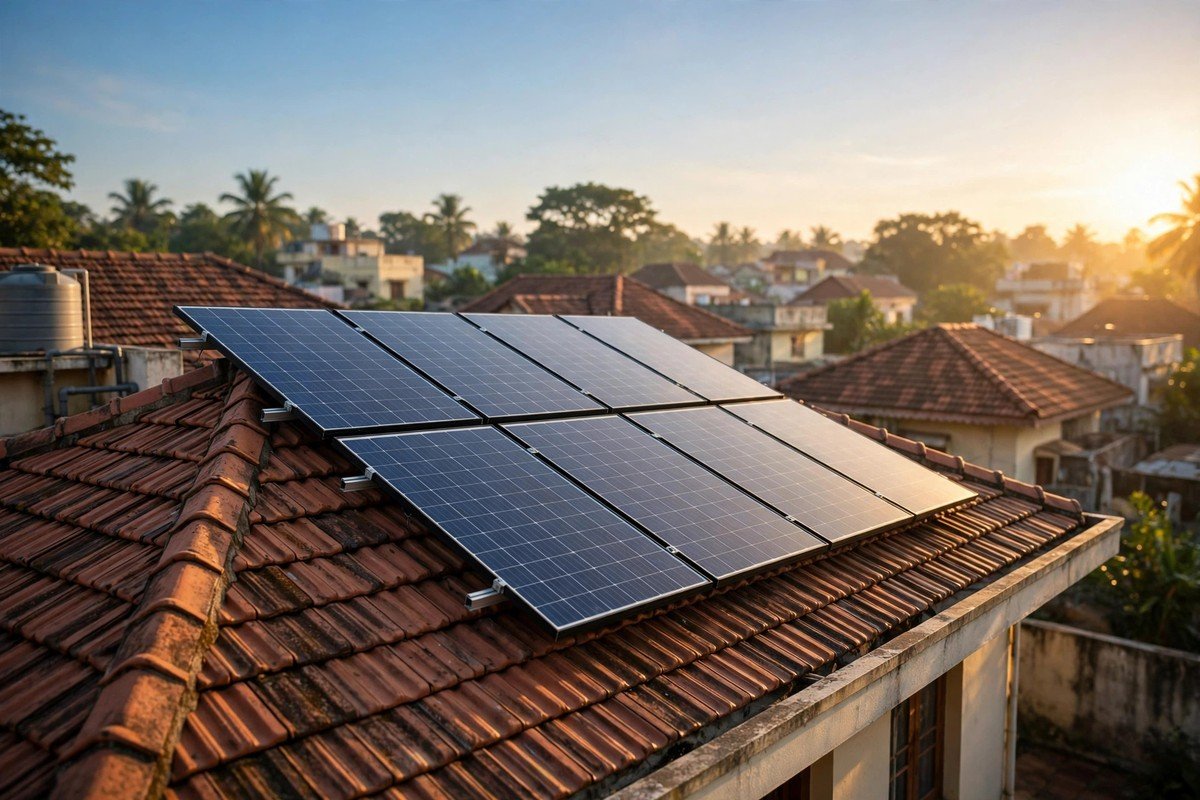
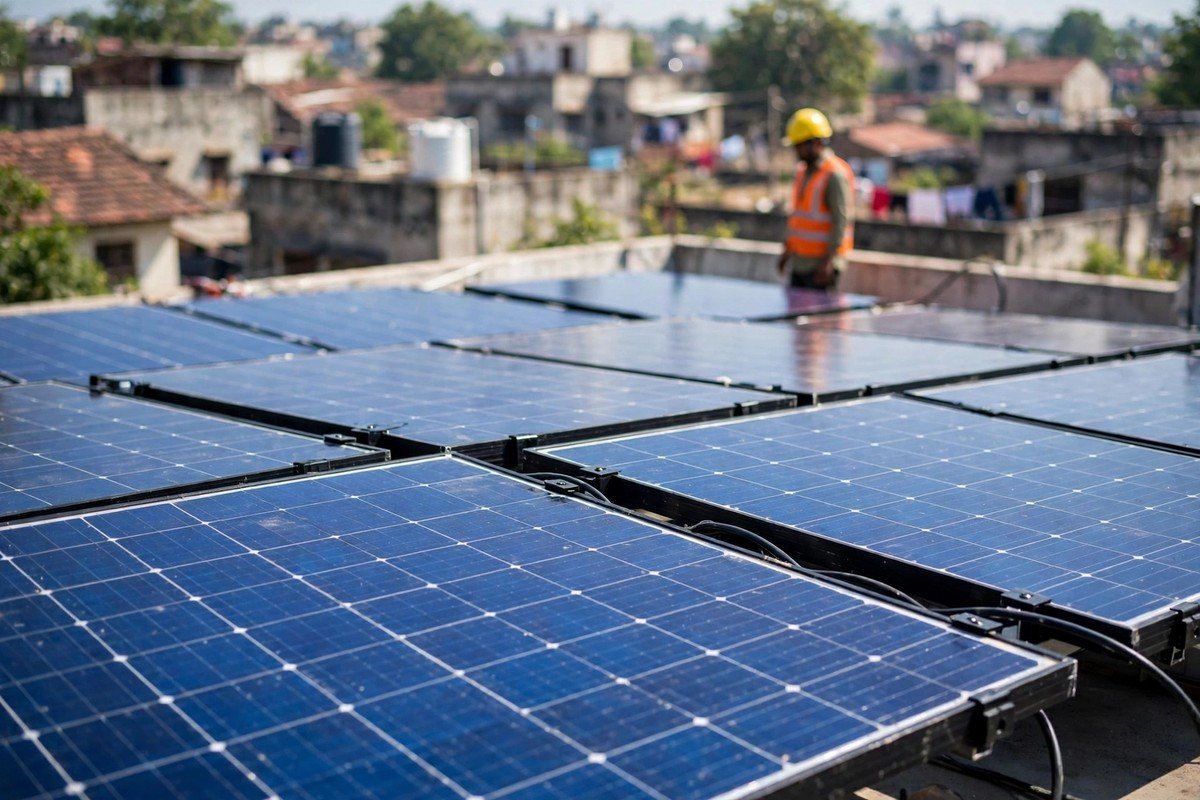
Under the scheme, solar panels are installed on the roof of a house. The electricity generated during the day is used in the home, and surplus power can flow into the grid. Families thus gain in two ways: their electricity bills come down, and their homes run on cleaner energy. That is why the scheme is counted among the government’s most important energy programmes.
How solar power became cheaper
The minister has also pointed to the sharp fall in the cost of solar power. Solar power that cost around eight rupees a unit in 2014-15 now sells for as low as 2.15 rupees a unit. That fall in price is what has made solar energy affordable for ordinary households.
India’s total solar capacity has grown in parallel. From 2.8 GW in 2014, solar capacity has risen to 171 GW. Wind power capacity has grown from 21 GW to about 60 GW. Total installed non-fossil fuel capacity has crossed 310 GW, compared with about 80 GW in 2014. India is the only G20 country to have met its 2030 target of 50 per cent non-fossil capacity five years early, the minister has said.
Investor confidence is rising too
Investment figures also support the government’s claims. According to the minister, India’s renewable energy sector has attracted investments worth 67 billion dollars over the past two years, including 6.2 billion dollars in foreign direct investment. The inflow shows that investors around the world have confidence in India’s clean energy market.
Policy stability and faster implementation are among the reasons for this confidence. Alongside rooftop solar, work is under way in large solar plants, wind energy and green hydrogen. The summit is hosting the 9th International Solar Alliance Assembly and the 4th International Conference on Green Hydrogen together for the first time, giving India’s clean energy push an international platform as well.
PM-KUSUM’s next phase in preparation
Alongside rooftop solar, the PM-KUSUM scheme for farmers also featured in the minister’s remarks. The government is working on refining future phases of PM-KUSUM after learning from the challenges encountered in earlier phases. Nearly 30 lakh solar pumps have already been rolled out under various components of PM-KUSUM, and a next phase is being prepared.
PM-KUSUM aims to increase the use of solar energy in agriculture. Solar pumps help farmers reduce dependence on diesel and cut irrigation costs. The next version is expected to address implementation hurdles, though the minister did not specify a timeline for its rollout or detail the changes under consideration. The message is clear: alongside rooftop solar, farm solar energy is also headed for a new round of reform.
A new challenge for the grid
The rapid spread of rooftop solar is also changing India’s power system. The minister noted that the fast-expanding rooftop solar ecosystem is changing the country’s power landscape, creating fresh opportunities as well as challenges for utilities and grid operators.
When millions of homes start generating their own electricity, the grid has to adapt to new patterns of demand and supply. Solar generation peaks during the day, while demand rises in the evening. Storage, smart grids and a more flexible power system will therefore matter more in the coming years. The government says that as the power system becomes more decentralised, new solutions will emerge.
What it means for ordinary households
For ordinary families, the news has a direct meaning: rooftop solar is now being installed faster than before, and its benefits are clearly visible. The figure of over 21 lakh households receiving zero bills shows that, with a correctly sized system and proper usage, a large cut in the electricity bill is possible. The actual benefit for each home will depend on its roof, its consumption and local rules.
Families wishing to apply can do so through the national portal. After applying, the process involves choosing a vendor, installation and inspection. With the pace now quickening, installation queues are expected to move faster in the coming months.
What happens next
The next two to three weeks will be important, because that is the period in which the pace of one lakh installations is expected to improve from six days to four or five days. If that pace is achieved, the target of one crore households by 31 March 2027 will look even stronger. The shape of PM-KUSUM’s next phase will also be watched closely.
This is not just a story of numbers. It is the story of how India’s energy system is reaching the rooftops of ordinary homes. Millions of households are now becoming producers of electricity as well as consumers. The speed of that change in the coming months will decide how quickly India meets its clean energy goals.
Disclaimer: This news has been prepared on the basis of available sources and verification. If any fact is found to be incorrect, a correction will be published.