



New Delhi Bureau
Summary: Inaugurating the Bharat Renewable Energy Summit at Bharat Mandapam in New Delhi, Prime Minister Narendra Modi said the ongoing global crisis has made it clear that energy security is directly linked to economic security. He said India met its Paris Agreement goal of sourcing half its installed power capacity from non-fossil fuels in 2025, five years early, that more than 44,000 government buildings are now on solar power, and that the country is moving towards 500 GW of non-fossil capacity.
A global stage in New Delhi
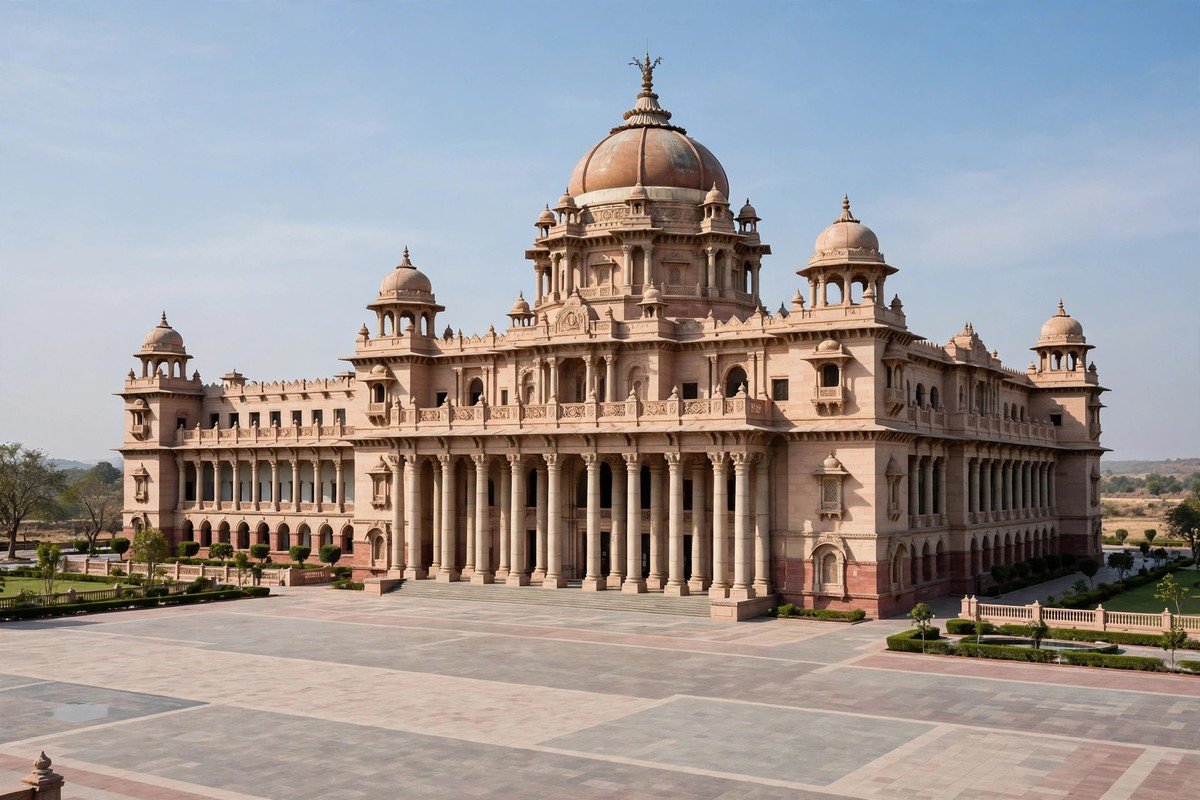
Prime Minister Narendra Modi inaugurated the Bharat Renewable Energy Summit and Expo 2026 at Bharat Mandapam in New Delhi on Monday and addressed the gathering. The four-day summit runs from 2 to 5 November under the theme “Invest. Innovate. Inspire.” It brings together policymakers, investors, financial institutions and industry leaders to promote investment, innovation and international partnerships in the renewable energy sector.
The summit is being held alongside the ninth session of the International Solar Alliance Assembly and the fourth International Conference on Green Hydrogen. Three major global clean-energy platforms thus share one stage. Organisers expect participants from more than 130 countries, including over 40 ministers. That scale shows that India is now seen not merely as a participant in the global clean-energy conversation, but as a host helping to set its direction.
Even before the summit opened, it was clear that India wanted to present its clean-energy journey as a working model for the world. In his inaugural address, the Prime Minister laid out the numbers, the experience and the road ahead in detail. He stressed that clean energy is no longer only an environmental subject; it has become a question of the economy, jobs and national security.
Energy security is economic security
The central message of the Prime Minister’s address was summed up in one line: energy security is directly linked to economic security. He said the ongoing global crisis has sent a clear message that a country with a weak energy system will also face pressure on its economy. Fossil fuel reserves are limited, while the potential of renewable energy is limitless, and every region and country can benefit from it.
He said that if India had not invested in clean energy and built new systems over the past decade, the present crisis could have been far more serious for the country than for the rest of the world. This matters because the world has in recent years seen sharp swings in energy prices, disruptions in supply chains and geopolitical tensions. Energy produced at home from clean sources acts as a kind of shield for any country in such times.
The Prime Minister said the future of energy security lies in clean power. When a farmer irrigates with a solar pump, when a rooftop panel cuts a household’s electricity bill, and when a government building generates its own power, energy stops being merely a supply and becomes self-reliance.
The 50 per cent target, met five years early
The biggest claim in India’s clean-energy story relates to the Paris Agreement. India had pledged to meet 50 per cent of its installed electricity capacity from non-fossil fuel sources. The Prime Minister said this target was achieved in 2025, five years ahead of schedule. Today, more than half of the country’s total installed power capacity comes from non-fossil sources.
Non-fossil capacity has now reached nearly 300 GW. The renewable energy minister said at the summit that the figure has crossed 310 GW, up by more than 110 GW in the past two years alone. The small difference between the two figures reflects different bases and timings of measurement, but the direction is the same: India is moving steadily towards its target of 500 GW of non-fossil capacity by 2030.
The Prime Minister also said India is now among the world’s top three countries in solar and renewable energy. He spoke of an ambitious target of adding another 100 GW of new non-fossil capacity, and expressed confidence that India will achieve it, given a decade of steady work on infrastructure, policy and investment.
Solar power reaches homes: the Surya Ghar scheme
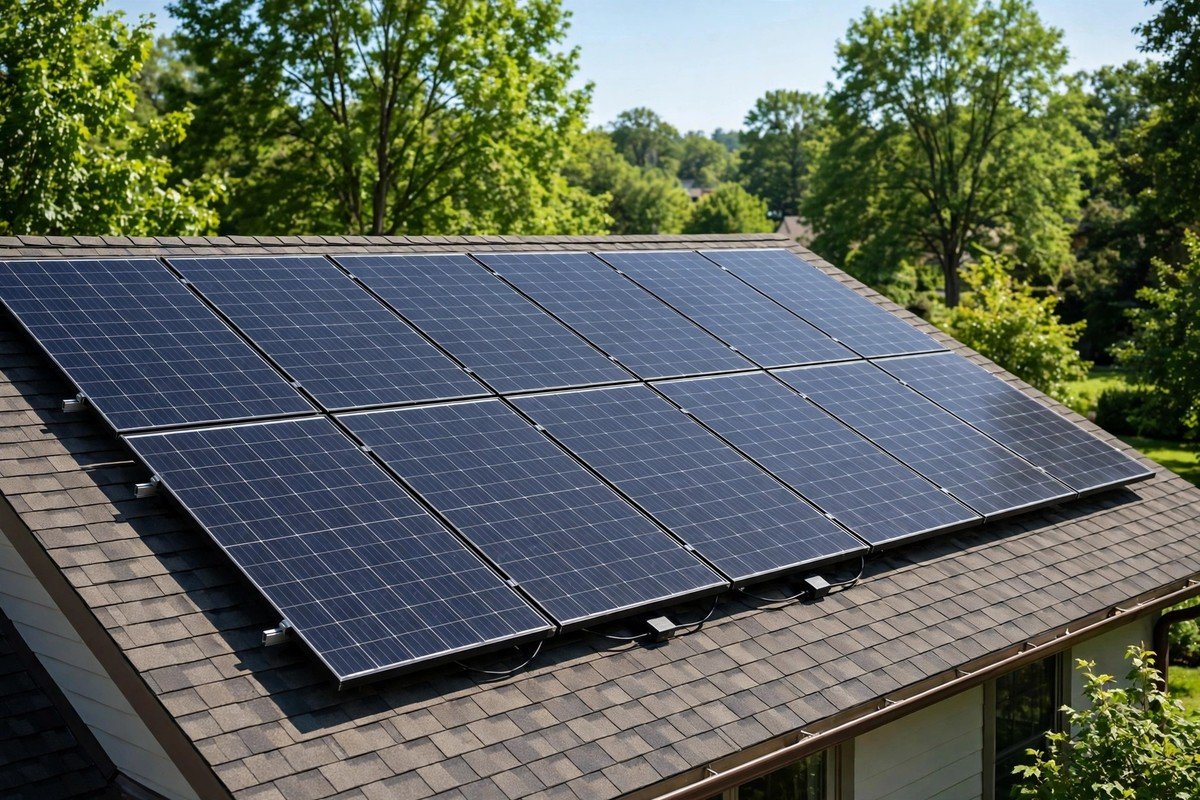
The clean-energy story is not limited to large power plants. The Prime Minister also spoke in detail about solar power reaching homes. The PM Surya Ghar Muft Bijli Yojana, launched in February 2024 with a target of covering one crore households, has connected more than 65 lakh homes in the past two years.
Electricity bills for beneficiary households have fallen sharply. According to government estimates, bills have dropped by up to 76 per cent, and many consumers have seen their bills fall to almost zero. A rooftop panel is therefore no longer only a green choice; it is direct relief for a family’s monthly budget.
The scheme has also changed the culture of power consumption. Electricity was once seen only as something that arrived from the grid. Now lakhs of families have become producers of power themselves. This reduces pressure on the grid, cuts wastage and increases public awareness about energy. The government aims to bring every government building, school, college, hospital and street-lighting system under solar energy.
A boost for farmers: the KUSUM scheme
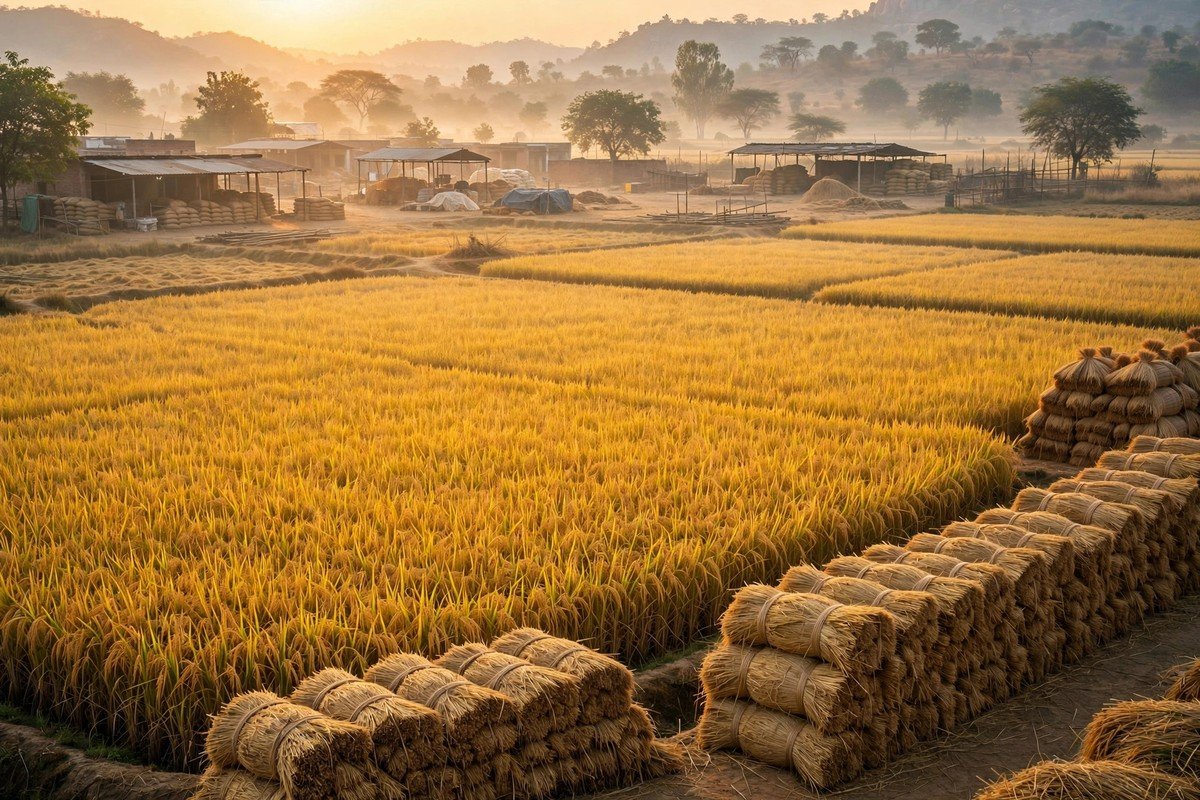
In agriculture, the impact of solar power is visible directly in farmers’ pockets. Under the PM-KUSUM scheme, more than 30 lakh farmers have received solar-powered irrigation facilities. Estimates suggest each farmer can save around Rs 1 lakh a year by using solar pumps.
Compared with a diesel pump, a solar pump costs far less over the long run. The farmer no longer fears rising diesel prices or an irrigation schedule interrupted by power cuts. The pump runs in daylight, exactly when the crop needs water most, which also helps yields.
The scheme offers another benefit: farmers can earn by selling surplus power. Farming thus becomes not only an expense but also a new source of income. The Prime Minister said that over the last 12 years, the work of connecting industries, farms and households with solar power has continued steadily, and that is the real strength of this journey.
44,000 government buildings save Rs 700 crore a year
One striking figure from the summit concerns government buildings. More than 44,000 government buildings across the country have now been connected to solar energy, generating annual savings of around Rs 700 crore. That money is saved directly from the public exchequer, which earlier went into electricity bills.
The Prime Minister said the government aims to connect every government building, school, college, hospital and street-lighting system to solar energy. When every public building generates its own power, government spending falls and a large share of power demand is met from clean sources, easing pressure on the electricity system in both cities and villages.
The figure matters for another reason: government buildings use the most power during the day, exactly when sunlight is strongest. Solar generation and consumption therefore match each other, reducing dependence on the grid and making supply more stable.
A manufacturing leap towards self-reliance
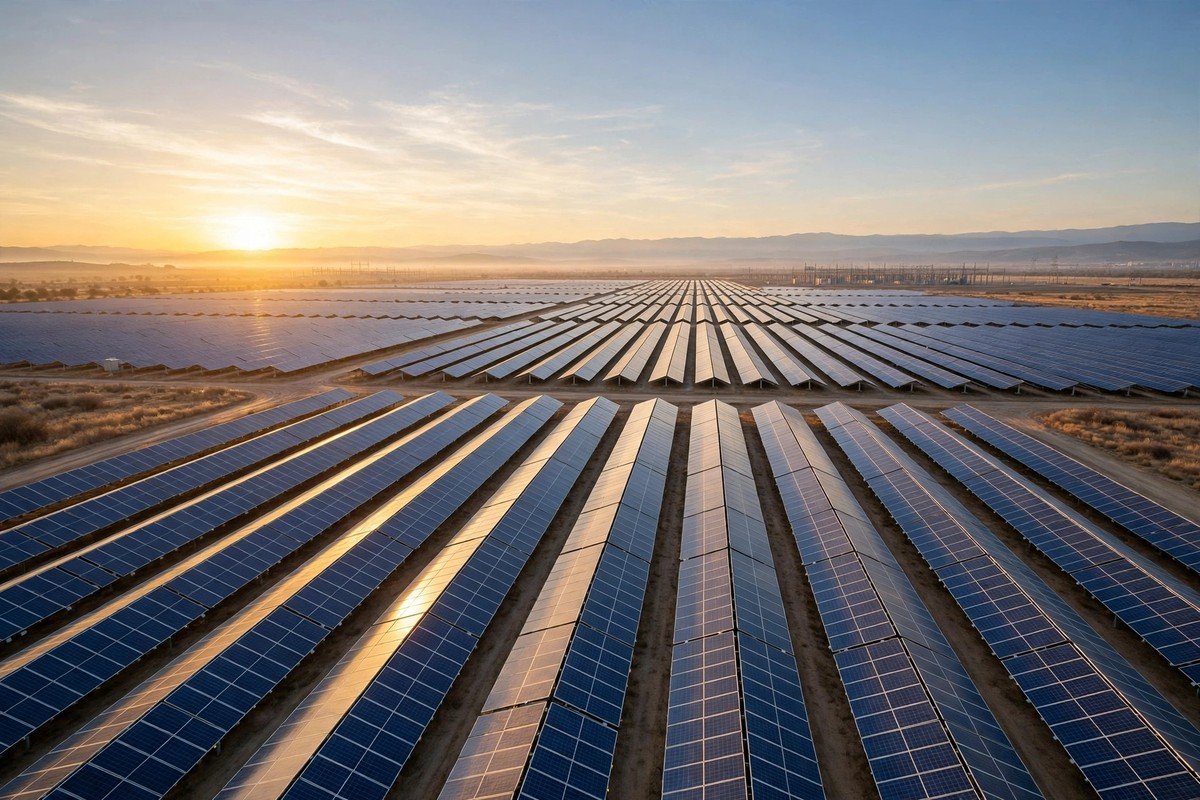
India’s clean-energy journey is not only about generating power; it is also about making the equipment. The Prime Minister said solar module production capacity has increased from 2 GW a decade ago to more than 200 GW, while solar cell manufacturing capacity has reached 40 GW.
The direct effect is visible in the price of solar power. Tariffs have dropped sharply from around Rs 10-11 per unit to nearly Rs 2.15 per unit. When power becomes cheaper, industry costs fall, farmers get relief and household bills come down.
Behind this change lie policies promoting domestic manufacturing, investment and the expansion of technology. The country is reducing its dependence on other nations for solar equipment. Jobs are also growing, as factories, installation and maintenance work need large numbers of workers.
Green hydrogen and investment in the decade ahead
The next big frontier of clean energy is green hydrogen. The Prime Minister said India is moving forward in mission mode under the National Green Hydrogen Mission, with a target of producing 5 million tonnes of green hydrogen annually by the end of this decade. The government is also integrating green hydrogen into the transport sector, so that heavy vehicles and industry can increasingly use clean fuel.
Investment figures are equally large. The renewable energy sector has attracted investments of more than Rs 15 lakh crore over the past decade, including around Rs 6 lakh crore since the 2024 ReInvest summit. Investment opportunities in the sector are estimated to exceed Rs 20 lakh crore by the end of this decade, spanning generation, storage, green hydrogen, manufacturing and transmission infrastructure.
Transmission is being strengthened through dedicated green energy corridors and a single-frequency national grid, backed by a recent government investment decision of Rs 2 lakh crore. The aim is to carry power from where solar and wind energy is produced to every corner of the country.
What lies ahead: the 2030 roadmap and opportunities for people
The message from the summit is clear: India’s clean-energy journey has entered its next phase. The first phase was about building capacity, the second about taking solar power to homes, farms and government buildings, and the third is about storage, green hydrogen and domestic manufacturing. Developing an indigenous battery storage solution is now a priority, so that solar power can be used at night as well.
India also reiterated its proposal for a $200-million Africa Solar Facility to extend clean-energy technology and financing to developing economies. India’s role is thus not limited to its own borders; it is emerging as a partner for countries of the Global South.
For ordinary people, the meaning of this journey is direct: cheaper power, lower bills, lower costs for farmers and new green jobs for young people. Families that want rooftop solar panels, farmers that want solar pumps and young people who want to work in clean energy will find the coming years full of opportunity. Further announcements on investment, technology and partnerships are expected in the remaining days of the summit.
Disclaimer: This news has been prepared on the basis of available sources and verification. If any fact is found incorrect, a correction will be published.