





Indore Bureau
Summary: For the first time, an electric engine ran on the Tihi-Dhar section of the Indore-Dahod new rail line on Monday, 2 November. The high-speed trial on the 47-kilometre newly built track was carried out in four phases, with the engine reaching 130 kilometres per hour in the final phase. The nearly three-kilometre-long tunnel at Pithampur also performed normally and safely. A team of the Commissioner of Railway Safety will now carry out the final inspection of the section on 5 and 6 November, after which the path for passenger and freight trains can open.
What happened on trial day
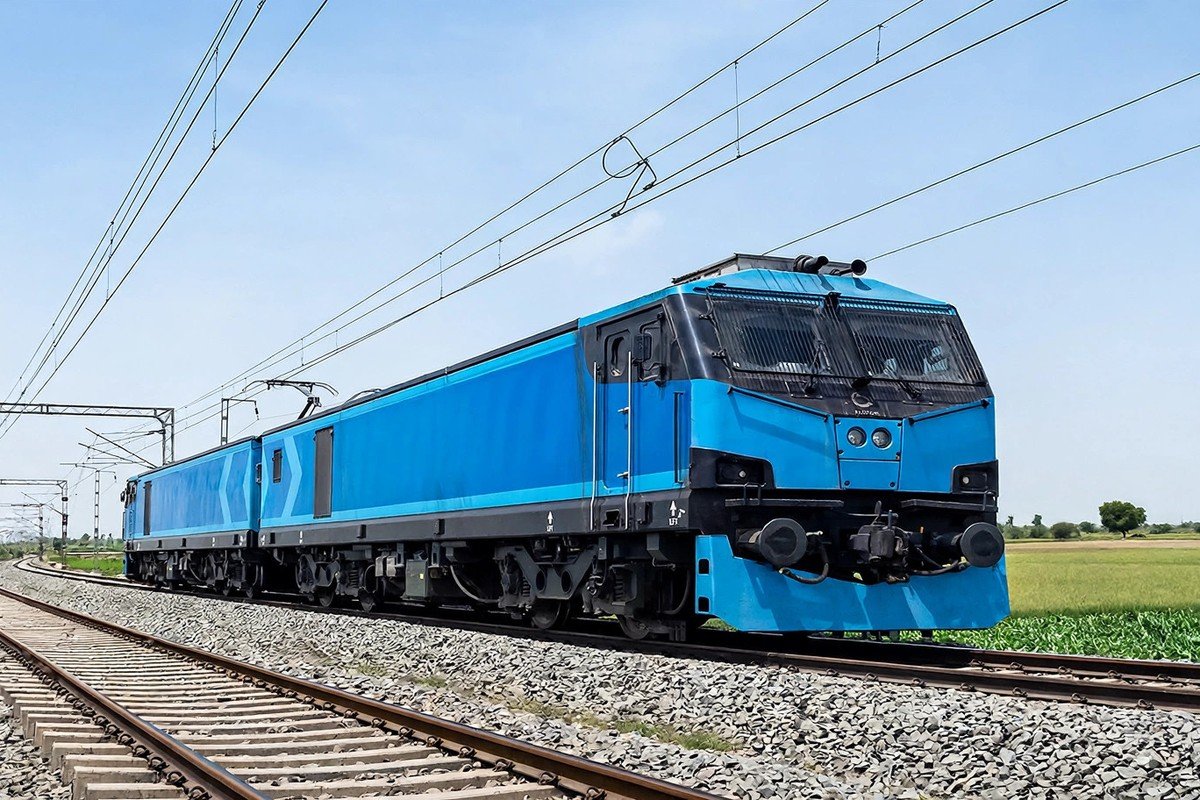
On Monday, the Tihi-Dhar rail section heard an electric engine for the first time. The engine started from Tihi and reached Dhar via Pithampur, Sagaur and Gunavad. Track laying, electrification and signalling work on this section was already complete, but running an electric engine was the stage that shows whether the track and power system are actually ready for operations.
As part of the preparations, the overhead electric line work was completed on Sunday evening and the 25,000-volt AC line was charged. The speed trial then moved forward on Monday. Compared with the morning schedule, the actual trial began in the afternoon, because some electricity-related work took extra time. Even so, all four phases of the trial were completed during the day.
There was visible curiosity in villages along the track. For people who have waited a long time for rail connectivity to reach Dhar, the day mattered because the trial is seen as a concrete step towards passenger train services. No date for the start of passenger services has been announced yet, and that decision will come only after the safety inspection.
Speed trial in four phases
The speed trial was not done at a single speed. It was divided into four phases. In the first phase, the engine ran from Tihi to Dhar at 30 kilometres per hour. The purpose of this slow run was an initial check of the track, bridges and other construction work. In the second phase, the engine ran from Dhar towards Tihi at 75 kilometres per hour.
In the third phase, the speed was raised to 110 kilometres per hour, with the engine travelling from Tihi to Dhar. The fourth and final phase was the most important, in which the engine ran from Dhar towards Tihi at 130 kilometres per hour. In this way, all phases from slow speed to high speed were completed on the same day. During the two rounds, the strength of the track, the condition of bridges and culverts, and the behaviour of the electrification system were checked.
In the first round, the engine reached Dhar in the afternoon at slow speed, and the trial then moved ahead with higher speeds. By the evening, the final phase was also complete. The track and tunnel performed normally during the trial, which is being seen as a positive sign for the Railways.
Pithampur tunnel test also succeeds
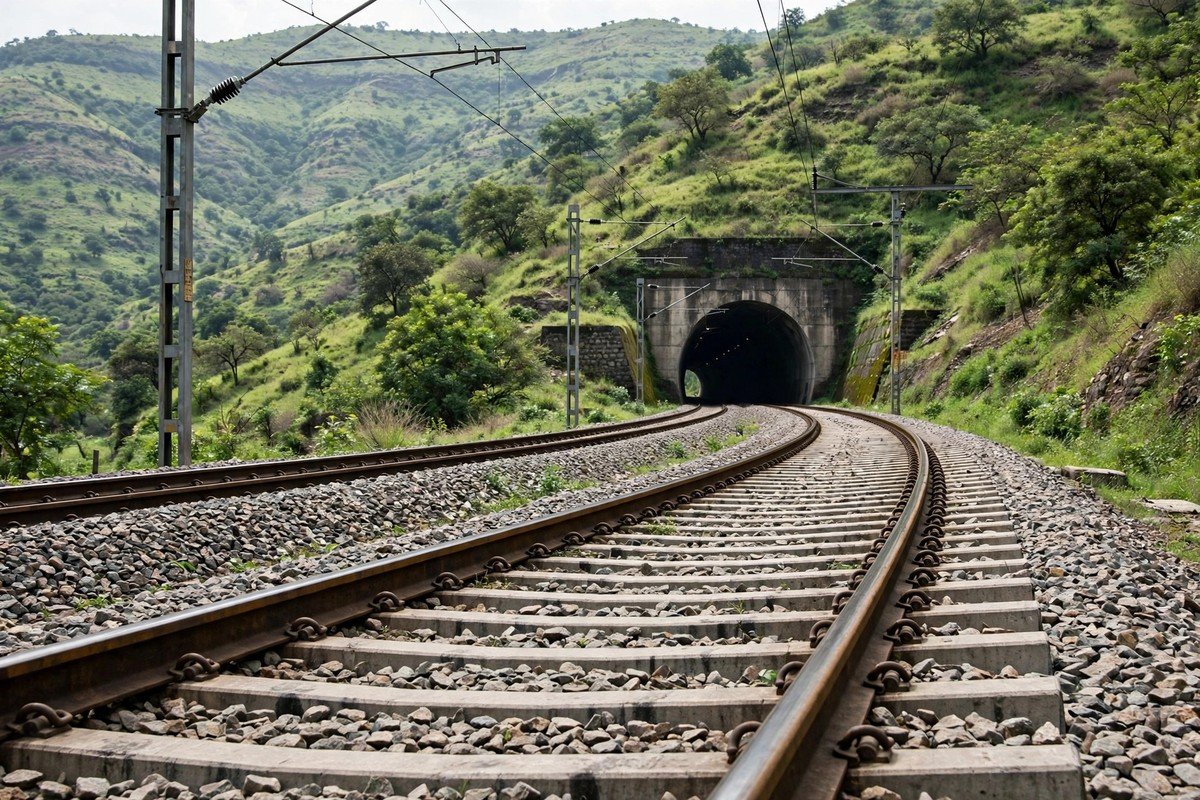
A special achievement of the trial was the successful testing of the nearly three-kilometre-long tunnel at Pithampur. While the engine passed through at high speed, the tunnel and track behaved normally. A tunnel is considered the most sensitive part of a rail section, because ventilation, structural strength and the electrification system are tested together there.
While passing through the tunnel, the speed of the engine, the stability of the track and the working of the overhead line were watched closely. After the trial, it could be said that the tunnel section also appeared ready for high-speed operations. That is why this trial is seen not only as a speed test, but as a test of the technical readiness of the whole section.
According to reports, some deficiencies were also noticed at a few places during the trial, and these will be rectified on 3 November. This is part of the normal process, in which shortcomings found in a trial are fixed before the safety inspection, so that there is no obstacle at the time of the final inspection.
Why the CRS inspection matters now
Before a passenger train can run on any new rail line, inspection by the Commissioner of Railway Safety is the final and mandatory stage. On the Tihi-Dhar section, this inspection will take place on 5 and 6 November. On 5 November, the Tihi to Gunavad stretch will be inspected, and on 6 November, the Gunavad to Dhar stretch will be inspected.
During this inspection, the track, bridges and culverts, and safety arrangements will be examined in detail. Only after the Commissioner’s permission will the path for passenger train operations between Dhar and Indore open. After that, the Railways will be able to finalise plans for train timings, halts and operations on this section.
That is why Monday’s trial, even though successful, cannot be treated as the start of passenger services. A trial is a technical test, while the CRS inspection is a safety clearance. Only after both are complete can trains run for ordinary passengers on this route.
Background of the Indore-Dahod project
The Tihi-Dhar section is part of the Indore-Dahod new rail line project. Under this project, a new rail line is being laid between Indore and Dahod, which will strengthen rail connectivity in the Malwa and Nimar region. On the Tihi-Dhar section, civil construction, electrification and signalling work on the newly built broad-gauge line is complete.
An inspection and speed-testing programme for this section was scheduled from 30 October to 6 November. Monday’s high-speed trial was a major part of that programme. Earlier too, the testing process on this track had been under way, with speeds being raised gradually to test the capacity of the track.
Preparations for the trial on the Indore-Dahod project had been reported earlier. At that time, information was given about the trial plan, electrification preparations and the safety appeal. Monday’s successful trial is the next and decisive stage of the same preparation.
What it means for passengers and the region
Rail connectivity reaching Dhar can bring a big change for passengers, traders and students in the region. At present, travel from Dhar to Indore and nearby cities depends largely on road transport. Once rail services begin, travel time, cost and convenience are all expected to change.
For farmers and small traders, rail connectivity means that their produce and goods can reach bigger markets more easily. Freight train operations can also benefit the industrial area of Pithampur and nearby areas, because rail can become a cheaper and more reliable option for transporting goods from there.
All of this, however, will depend on the Commissioner’s clearance and the Railways’ operations plan. No official announcement has yet been made about the number of trains, their timings or their halts. Passengers should therefore not rely on any unconfirmed claim about the start date of services, and should wait for an official announcement from the Railways.
Safety appeal and what happens next
During the trial and inspection period, the Railways have appealed to people not to go near the railway track, and not to let their animals go towards the track either. Trial and inspection activities will continue on this route from 8 am to 9 pm till 6 November, so staying near the track can be dangerous. With 25,000 volts of electricity flowing through the overhead line, keeping distance from the track and electric poles is essential.
The next steps will now follow in this order: first, the deficiencies noticed in the trial will be rectified on 3 November; then the CRS inspection will take place on 5 and 6 November; and after safety clearance, the path for passenger and freight trains will open. Projects such as Vande Bharat are also part of discussions on railway modernisation, but for the Tihi-Dhar section, the most important step right now is the Commissioner’s clearance.
Once passenger services begin on this section, another part of the Indore-Dahod project will be complete. Until then, following the Railways’ appeal and staying away from the track is the safest step.
Disclaimer: This news has been prepared on the basis of available sources and verification. If there is any factual error, a correction will be published.