






Indore Bureau
Summary: The Diljit Dosanjh Indore concert threat has triggered a police investigation after threat emails linked to the Punjabi singer’s proposed live concert in Indore on November 15 were received by three private schools and the Mayor’s office. Police searched all three schools with bomb disposal squads and found no explosives. Officers say the messages appear to be hoaxes on preliminary examination, but the crime branch is examining technical evidence to identify the senders.
Diljit Dosanjh Indore concert threat: who received the emails, and what they said
The Diljit Dosanjh Indore concert threat came to light on Monday, when it emerged that three private schools and the Mayor’s office in Indore had received threatening emails linked to the singer’s proposed concert on November 15. The messages warned of bomb blasts in connection with the event. The emails sent to the schools were written in Punjabi and told the managements not to send their students to the concert.
Because the threats were directed at schools as well as a large public event, the matter immediately raised concern in the city. Police took the messages seriously and began an investigation without delay. Officers have stressed that no threat is being taken lightly, even though the messages appear to be hoaxes on first examination. That is why security checks were carried out alongside the investigation.
The email received by the Mayor’s office is also part of the same chain of messages. Police say that email, too, is under investigation, so that its origin and the people behind it can be traced. The fact that the threats reached both schools and the office of the city’s Mayor is one reason police are examining all the messages together rather than as isolated incidents.
Bomb disposal squads search three schools, find no explosives
After the threat emails were received, police had all three schools checked by bomb disposal squads. The teams carried out a thorough search of the school premises to rule out any suspicious object. After the checks were completed, police confirmed that no explosive material was found in any of the three schools.

The finding brought relief, since the threats were aimed directly at schools where large numbers of children study every day. Police said care was taken to ensure that the routine functioning of the schools was not disrupted during the checks. After the searches, the situation was described as normal, though police said monitoring would continue.
According to Indore police, this is the standard procedure in such cases: the locations named in a threat are physically checked, while the message itself is analysed technically at the same time. In this case, both exercises are proceeding in parallel. The fact that nothing was found during the physical searches suggests the threats may have been intended to spread fear, but police have not yet drawn a final conclusion on that point.
What the Mayor said: two emails, copy sent to the Police Commissioner
Mayor Pushyamitra Bhargav said that threatening messages about Diljit Dosanjh’s programme had arrived on his official email address. According to him, the first email came about 15 days ago, while the second was received a day earlier. Both emails were written in English and carried threats to prevent the show from taking place and to get it cancelled.
The Mayor said that, given the seriousness of the matter, he immediately sent a copy of the emails to the Police Commissioner and sought an investigation into the whole episode. He expressed confidence that Indore police are fully capable of dealing with such threats and that the matter is being investigated seriously. He also said that such threats would not be allowed to affect the city’s programmes, and that public events in Indore would continue as before.
The Mayor’s account makes it clear that the threatening messages were not limited to schools but also reached the office of the city’s leading elected representative. That is why police have treated the messages as one connected matter and are pursuing the investigation in a single direction.
The official police version: messages appear to be hoaxes on preliminary probe
Additional Deputy Commissioner of Police Rajesh Dandotiya told reporters that the threat emails appear to be hoaxes on preliminary investigation. He said that bomb disposal squads had checked all three schools but found no explosive material there. The email received by the Mayor’s office is also being investigated, he said.
Dandotiya said the police crime branch is examining technical evidence to identify the people who sent the emails. The technical analysis covers which server the emails were sent from, the location they originated in, and the method used to send them. He added that appropriate legal action would follow once the investigation is complete.
The police statement matters because it carries two points at once. The first is that no concrete basis for the threats has been found so far and the messages look like hoaxes. The second is that the case has not been closed: the technical investigation to reach the senders is still under way. This balanced position signals that neither panic is being spread nor the matter being ignored.
Diljit Dosanjh Indore concert threat: the November 15 programme and the permission position
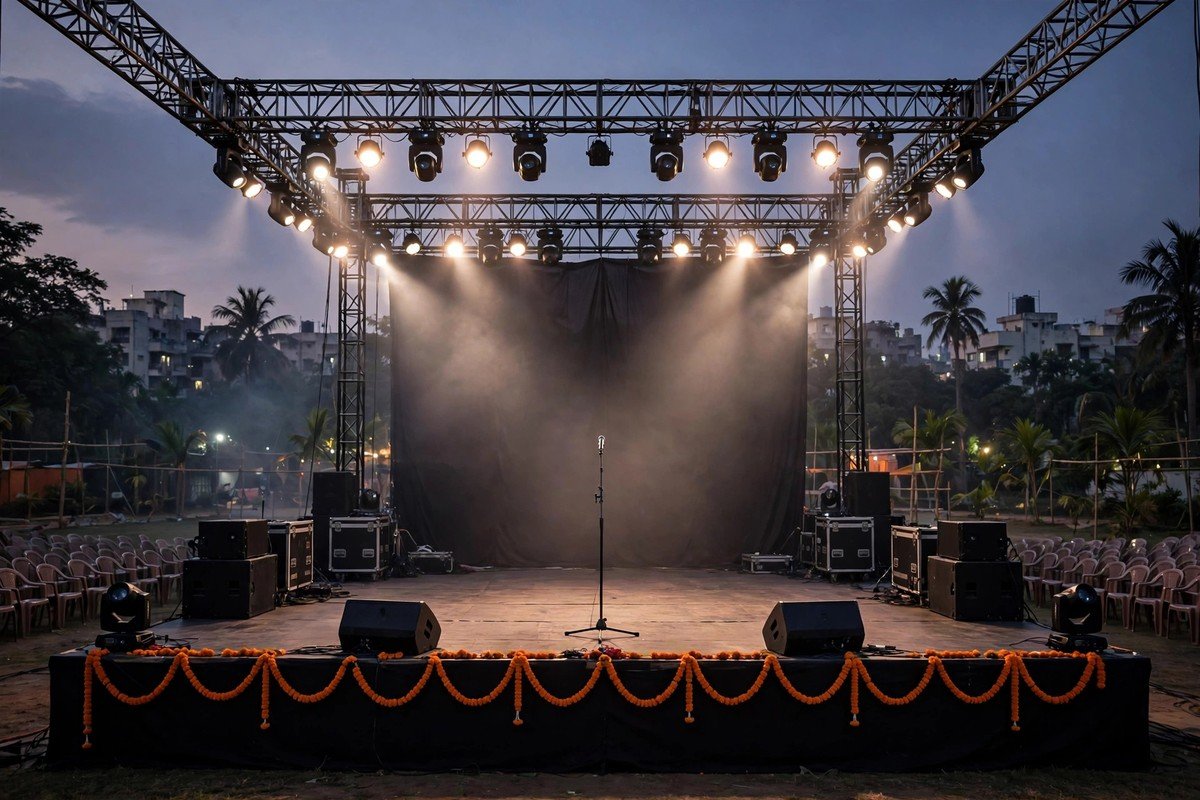
Diljit Dosanjh’s live concert is proposed to be held in Indore on November 15. The programme is part of the Punjabi singer and actor’s India tour, and it had generated considerable enthusiasm among young people and music lovers in the city. After the threat emails surfaced, however, questions have also been raised about the security arrangements for the event.
In this context, police have shared one important piece of information. According to the Additional Deputy Commissioner of Police, the organisers have not yet applied to the local police for permission to hold the November 15 programme. No person has contacted the police in this regard either. This means the formal permission process for the event has not yet begun.
The permission point matters because permission from the police is mandatory for any large public programme. It is during the permission process that the venue, crowd management, security arrangements, traffic and emergency preparedness are reviewed. Police say that when the organisers apply, all these aspects will be considered as per the rules.
Which way will the investigation go next
The police investigation is now mainly focused on technical evidence. The crime branch is trying to find out where the threat emails were sent from and who is behind them. Technical analysis of emails typically involves examining IP addresses, server information and the manner in which the messages were sent. It is on the basis of this information that police are able to reach the senders.
So far, police have not confirmed who sent the emails. It would therefore be premature to name any person or group as an accused in this matter. Police say further legal action will be taken on the basis of the investigation. If the technical probe points to any individual, action will be taken against that person as per the law.
It is also worth noting that sending threatening emails is itself a serious offence, even if the threat later turns out to be a hoax. Such messages not only consume police and administrative time and resources but also create an atmosphere of fear among ordinary people. That is why police give priority to identifying the senders in such cases.
Security at large events and caution for the public
Large public events are held regularly in Indore, and the city police are known for their security arrangements for such occasions. Even after the threat emails were received, police have taken the position that the investigation will be pursued with full seriousness, but panic should not be allowed to spread among the public. The fact that nothing was found during the school searches, together with the preliminary police assessment, is reassuring in that direction.
A general note of caution also follows from this case for ordinary people. If anyone receives a threatening or suspicious message, it should be reported directly to the police instead of being forwarded further. Spreading rumours only adds to the atmosphere of fear, while passing correct information to the police helps the investigation. This caution becomes even more important when the threats concern schools and public places.
For now, the Indore police investigation is continuing, and the position regarding the November 15 programme will become clearer in the coming days. Once the organisers apply for permission, the security arrangements and other preparations for the event will also become clearer. Until then, police maintain that the threatening messages appear to be hoaxes on preliminary examination, but no aspect of the case will be overlooked until the investigation is complete.
Disclaimer: This news has been prepared on the basis of available sources and verification. In case of any factual error, a correction will be published.