




Burhanpur Bureau
Summary: Divyang Dayashankar of Burhanpur has received a tricycle on the directions of Chief Minister Mohan Yadav. After a video of his wife Bindu Bai came to light, the administration acted swiftly and also extended support for the education of the family’s daughters.
A video that moved the Chief Minister to act
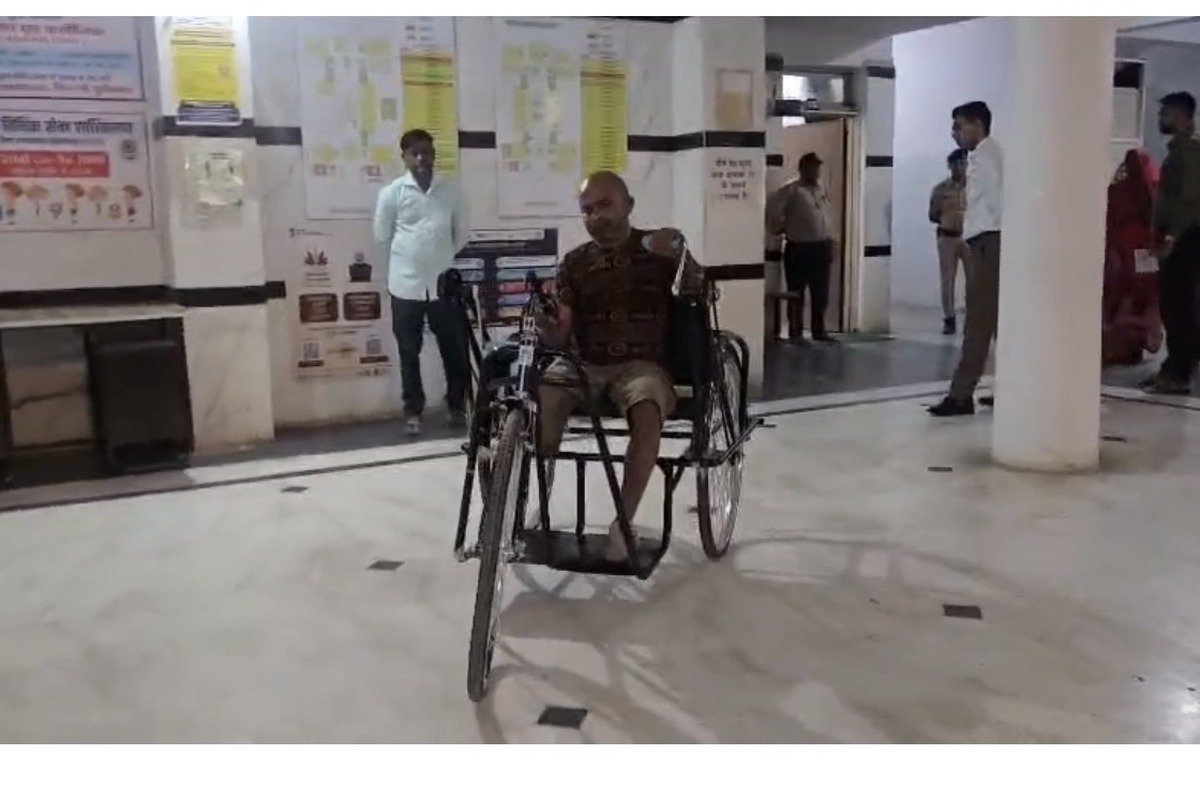
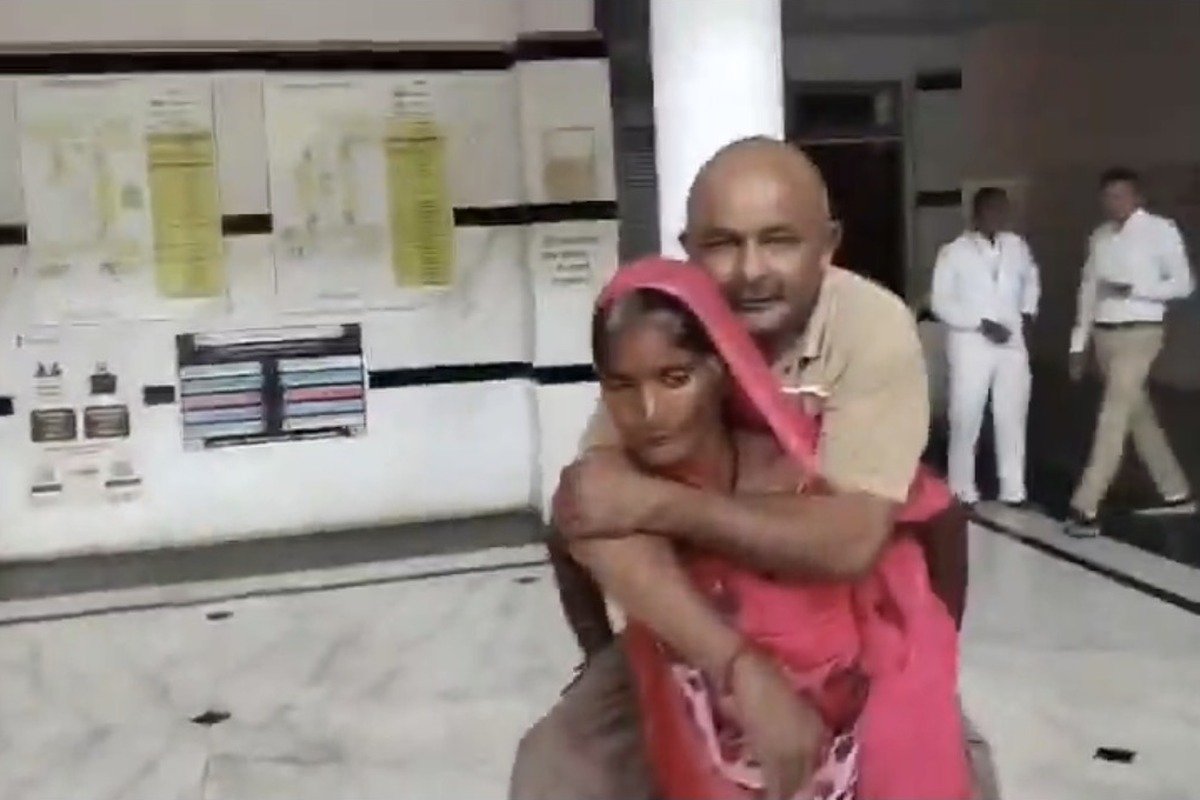
A video from Burhanpur drew the attention of the entire state. In the video, Bindu Bai is seen carrying her divyang husband Dayashankar on her back to the collector’s office. The sight raised an obvious question: why should a family have to go through such hardship simply to seek help? After the video came to light, Chief Minister Dr. Mohan Yadav took cognisance of the matter. In a post on the social media platform X, the Chief Minister said that no needy person’s pain should go unheard. He said that the government and the administration must extend the necessary support so that every family can live with dignity. Following the Chief Minister’s message, the district administration began swift action. The Chief Minister had directed the Burhanpur collector to provide help to Dayashankar and his family according to their needs. In compliance with those directions, the district administration provided a tricycle to Dayashankar. Support for the education of the family’s daughters was also extended.
The Mahajan Colony family and a nine-year struggle
The family lives in Mahajan Colony in Burhanpur. According to reports, Dayashankar suffered paralysis about nine years ago, after which one of his legs had to be amputated. Since then, his mobility has depended entirely on his family. For years, his wife Bindu Bai carried him on her back to government offices. This struggle was not a matter of a single day. The family says it approached different officials over a long period seeking help, but relief did not come through. It was in the middle of this difficulty that Bindu Bai reached the collector’s office carrying her husband on her back. There, she sought a tricycle and pension
facilities for her husband. This was not a demand for luxury. It was a demand to make the everyday life of a divyang person easier. Before the tricycle arrived, Dayashankar needed someone’s support for every task. Stepping out of the house, visiting an office or doing routine work, every step required physical effort from the family.
The demand at the collector’s office and the administration’s response
When Bindu Bai reached the collector’s office, she placed her difficulty before collector Vivek Kumar. She asked for a tricycle and pension facilities for her husband. The department had earlier stated that Dayashankar had been given a wheelchair about two years ago at a programme. A wheelchair has a fixed validity period, and under the rules a tricycle can be provided only after a certain period. Officials had then said that the matter had been brought to the notice of senior officers and efforts would be made to make arrangements soon. The process gathered speed after the Chief Minister’s directions. The Burhanpur collector arranged for the tricycle to be provided to Dayashankar in compliance with those directions. With the tricycle, Dayashankar’s movement will become much easier. He will no longer depend entirely on his family’s shoulders to move from one place to another. Bindu Bai has thanked Chief Minister Dr. Mohan Yadav and the Burhanpur collector. She has expressed happiness over the help extended by the administration.
How the tricycle will change everyday life
For a divyang person, a tricycle is not merely a vehicle. It is a means of independence. With the tricycle, Dayashankar will now be able to manage work around his home on his own. For an office visit, a trip to the market or any essential task, he will not have to depend on someone’s back every time. This will also reduce the physical and mental burden on other members of the family. For Bindu Bai, too, this is a major relief. For years she carried her husband on her back. That effort also affected her own health. The tricycle will now make that daily difficult journey easier. The change may look small from the outside, but for a person for whom movement itself is the biggest challenge, it is a very big change. The tricycle will increase Dayashankar’s self-reliance and help him connect more strongly with the mainstream of society.
What support for the daughters’ education means
In this case, the help has not been limited to the tricycle alone. Support has also been extended for the education of the family’s daughters. This aspect matters because a family’s difficulty is not confined to one person’s mobility. When the head of a household is divyang and the family is economically weak, children’s education is also affected. Support for the daughters’ education means that the next generation of the family will not have to drop out of studies. Education is the path through which a family can change its situation over the long term. By supporting the daughters’ education, the administration has signalled that the help is not limited to an immediate need. It has been extended keeping the family’s future in mind. For Bindu Bai’s family, this assurance matters: their daughters’ studies will continue. Such support gives the family confidence that the government understands their complete situation, not just one demand.
The system of assistance for divyang persons
The government has a system of assistance for divyang persons. It includes assistive equipment, pension and education-related support. Equipment such as wheelchairs and tricycles is provided to improve the mobility of a divyang person. Eligibility and time-related rules apply to such equipment. That is why, in many cases, after one device is provided, some waiting period applies before another device can be given. In this case too, a wheelchair had been provided earlier and a tricycle has now been given. The family had also raised the demand for pension. A pension demand is forwarded to the concerned department and further process follows after checking eligibility. In this case, the confirmed help so far is the tricycle and support for the daughters’ education. The process on pension will be completed according to administrative rules. The case also shows that when a needy person’s voice reaches the right forum at the right time, the system can work quickly.
A message of sensitive governance
The manner in which Chief Minister Dr. Mohan Yadav took cognisance of this case is an example of sensitive governance. After watching the video, the Chief Minister immediately directed the collector. His message was clear: no needy person’s pain should go unheard. That message is not meant for this one family alone. It is meant for every needy family in the state. The sensitivity of a government is judged by how seriously it takes the difficulty of an ordinary person. In Burhanpur’s case, the district administration acted swiftly after the Chief Minister’s directions. This strengthens the belief that when correct information reaches the right person at the right time, help does not get delayed. In recent days, the Chief Minister has shown similar sensitivity in matters concerning farmers and ordinary families. The praise for farmers in Balaghat and the honouring of farmers and meritorious students at Rajyotsav are part of the same approach. The Burhanpur case is another example in that chain, where a family’s voice led to immediate action by the government.
What happens next
Dayashankar now has a tricycle, and support has been extended for his daughters’ education. Attention will now remain on how the process on the family’s pension-related demand is completed. Under administrative rules, a decision on pension follows only after eligibility and documents are checked. The family hopes that the remaining formalities will also be completed soon. This case carries another lesson as well. The system for reaching help to needy families should be simpler and faster, so that no wife has to carry her husband on her back to an office. When the system works on time, families do not have to struggle. The story of this Burhanpur family has now become a story of hope. A video carried their voice across the state, and the Chief Minister’s directions turned that voice into help. That is the biggest message of this news.
Disclaimer: This news has been prepared on the basis of available sources and verification. If any fact is found to be incorrect, a correction will be published.