







Desk Report
Beijing confirmed on Monday that Chinese President Xi Jinping will host US President Donald Trump and Russian President Vladimir Putin in Shenzhen on Thursday, November 19, for the first-ever Xi-Trump-Putin summit, bringing together the leaders of the world’s three most powerful countries — a meeting that puts nuclear arms, artificial intelligence and the war in Iran on the same table.
What Beijing announced
China’s Foreign Ministry announced the meeting in a brief statement on Monday, November 16. “On November 19, Chinese President Xi Jinping will hold a China-Russia-US heads of state meeting with Russian President Vladimir Putin and US President Donald Trump in Shenzhen,” the statement said. Beijing gave no further details, including about what topics the historic meeting in the southern Chinese city would cover.
The Xi-Trump-Putin summit will be the first time the presidents of China, the United States and Russia have met in this trilateral format. The Kremlin and the White House had both previously confirmed the three-way meeting, and the three countries had engaged in weeks of discussions to finalise the agenda and protocol for the talks, according to the South China Morning Post.
The confirmation came as leaders from across the Asia-Pacific region gathered in China for a week of summit diplomacy. It is also a week of high-level meetings for India: Prime Minister Narendra Modi is in Manila for the Quad Summit, where he is set to meet Trump and the leaders of Japan and Australia. Trade is part of the week’s backdrop too, days after the India–US trade deal promised Indian goods lower duties in the American market than rival exporters face.
The APEC setting
The trilateral meeting is expected to take place on the sidelines of the summit of Asia-Pacific Economic Cooperation (APEC) leaders, which runs on Wednesday and Thursday. China is hosting the 33rd APEC Economic Leaders’ Meeting on November 18–19, with leaders of the 21-member grouping attending.
Running alongside the leaders’ meeting is the APEC CEO Summit 2026, scheduled for November 17–18 in Guangdong Province. Twelve leaders of APEC economies, including President Xi, are set to take part, and executives representing 115 Fortune Global 500 corporations will attend. American enterprises form the largest delegation from outside mainland China, accounting for nearly 20 per cent of the participating companies, according to the China Council for the Promotion of International Trade.
The business forum, held under the theme “To Prosper and Win the Future Together”, is meant to serve as a bridge between private-sector goals and state policymaking during APEC Economic Leaders’ Week. Its discussions will centre on strengthening supply chain resilience, streamlining regional commercial frameworks and expanding joint ventures across the digital and green economies. Ahead of the dialogues, the fourth APEC Business Advisory Council meeting began in Shenzhen on November 14 to draw up private-sector policy recommendations for the leaders.
Nuclear weapons at the centre
Nuclear arms reduction is expected to be the sharpest item on the table. Trump wants to talk about reducing nuclear arsenals, US officials said. “The president has made it clear that, among other topics, he will discuss the reduction of nuclear weapons in the world, whose proliferation President Trump believes is very dangerous,” White House spokeswoman Olivia Wales told the media last week.
The discussion comes at a moment when the world’s two largest nuclear powers are operating without binding limits. The New START treaty, the last remaining major bilateral nuclear arms control agreement between the United States and Russia, imposed legally binding limits on their strategic nuclear arsenals — and it expired in February this year.
China has long insisted that the United States and Russia reduce their own giant nuclear arsenals before it agrees to talks on its own stockpile, and Beijing has shown little enthusiasm for trilateral nuclear arms control, repeatedly stressing that it does not subscribe to a model of great-power co-governance in global affairs. Whether the Shenzhen meeting can bridge that gap will be one of its first tests.
The South China Morning Post reported that the discussions could also explore possible commitments on regulating the use of artificial intelligence in nuclear arsenals, as part of a broader global governance agenda — a subject on which all three countries are building capabilities at speed, and where no common rules exist today.
Iran in the frame
Iran is another potential subject of discussion at the trilateral meeting, and China has a direct stake in it: China is Iran’s largest trading partner and the biggest buyer of its crude oil.
The subject has grown more urgent in the past two days. Reuters reported that Iran fired drones at US bases in Bahrain on Sunday, and Bahrain said it had intercepted and destroyed several Iranian aerial attacks — the first such interceptions by its air defences since September. Iran’s Islamic Revolutionary Guard Corps said it had attacked a US military base in Bahrain with six drones in retaliation, according to Iran’s Fars news agency. Two days earlier, the Revolutionary Guards said they had attacked a US early-warning radar facility in Bahrain; the US military denied this, saying it had intercepted two Iranian drones without any damage.
The Revolutionary Guards also said two tankers were on fire on Sunday after striking naval mines in the Strait of Hormuz, a claim Reuters said it could not independently verify. Iran’s Foreign Minister Abbas Araqchi is due to visit Oman on Tuesday for talks with his counterpart; Oman holds the southern coast of the Strait of Hormuz and has played a role as mediator in the crisis. The fighting has already pushed Brent crude to about 96 dollars a barrel.
Ukraine stays off the agenda
One subject is not expected to feature: Russia’s war in Ukraine. US officials said the leaders are not expected to discuss it, and a senior US official said Washington was pursuing a separate negotiating track with Moscow on the conflict. Russia has shown reluctance to discuss its war in Ukraine at the trilateral table, the South China Morning Post reported on Monday.
German President Frank-Walter Steinmeier said that in a recent meeting, Xi showed “irritation” when the idea of the trilateral talks covering Ukraine came up. “He explicitly pointed out that this is a European conflict, in which the Europeans must also be at the table,” Steinmeier told German broadcaster ARD.
The exclusion underlines how the Shenzhen meeting is being framed: not as a forum to settle the war in Europe, but as a first conversation among the three capitals about the issues where their interests collide directly — nuclear weapons, artificial intelligence and the Gulf.
Why the meeting matters
The significance of the Xi-Trump-Putin summit lies as much in its existence as in its agenda. The leaders of the United States, China and Russia have never sat down together in this format, and the meeting has been arranged in the middle of overlapping tensions: the US–Iran war, now in its ninth month; the expiry of the last US–Russia nuclear arms treaty; and a race over artificial intelligence in which all three are investing heavily.
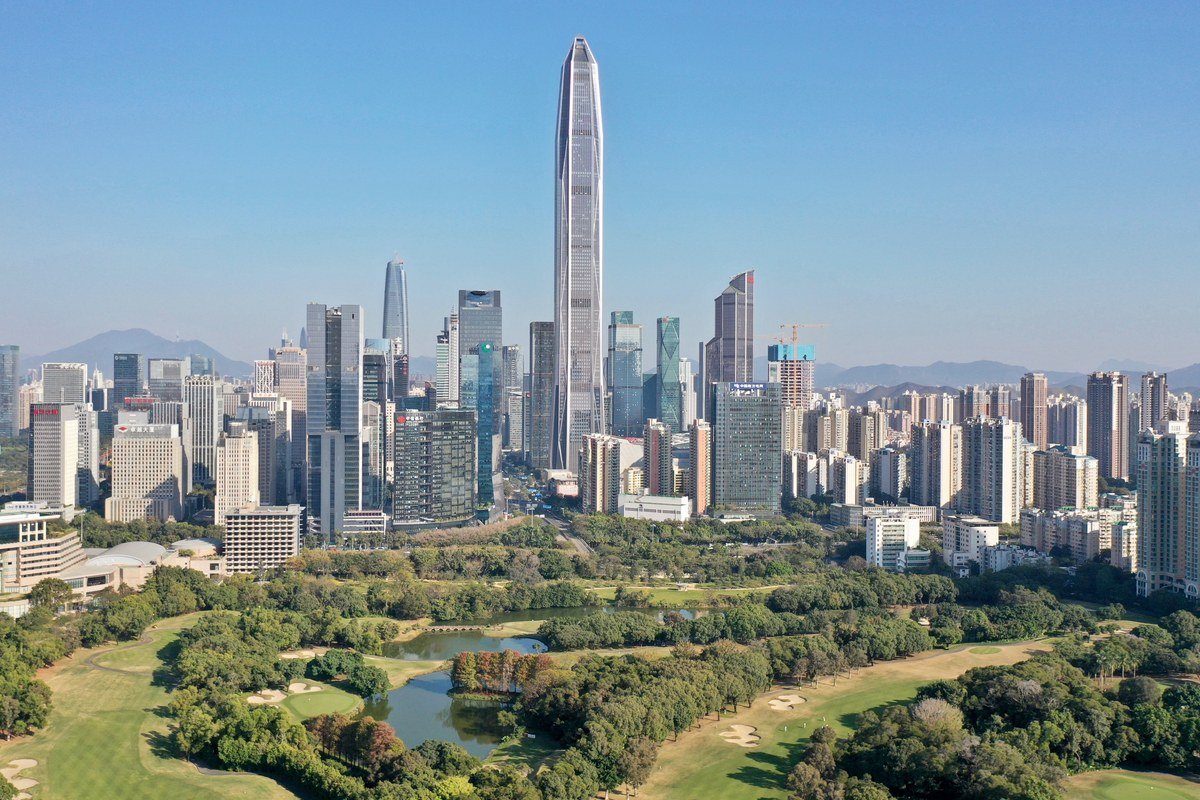
For China, hosting the meeting in Shenzhen — the tech hub where the APEC business summit is also being held — sends its own signal: Beijing wants the conversation to be about the future of the global order, on its own ground, and on terms that include economics and technology alongside security. For Trump, who is also set to bring up the war in Iran, the meeting offers a stage to press his case for smaller nuclear arsenals directly with the two other leaders who hold them. For Putin, it is a rare seat at a table with both of his biggest counterparts at once.
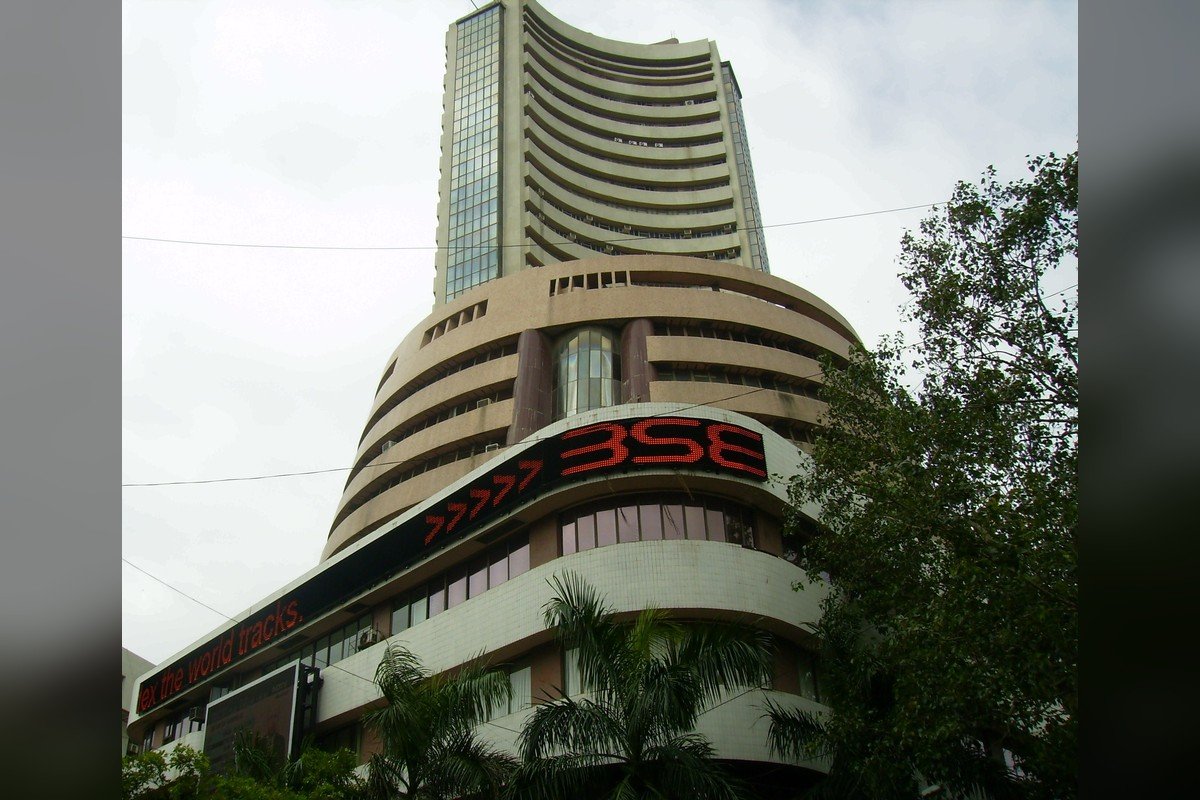
Markets will be watching too. The week has already moved oil and Asian equities, and any signal from Shenzhen on trade, energy or arms control is likely to feed straight into prices — just as it has in India, where the Sensex crossed 82,200 on Monday on record foreign investor buying.
What happens next
Leaders begin arriving for the APEC meetings on Tuesday, with the CEO summit running November 17–18 and the leaders’ meeting on November 18–19. The Xi-Trump-Putin summit session is scheduled for Thursday, November 19, in Shenzhen.
No joint statement has been promised and no agenda has been published, so the first real signal of what the three leaders agreed — or failed to agree — will come from the readout after the meeting. Watch for three things: any language on nuclear arsenals, any commitment on artificial intelligence in weapons systems, and any mention of the war in Iran. If all three appear, Shenzhen will have produced more than a photograph; if none does, the meeting will still stand as a first — the first time the three most powerful leaders in the world sat down together.
डिस्क्लेमर: यह खबर उपलब्ध स्रोतों और सत्यापन के आधार पर तैयार की गई है। किसी तथ्य में त्रुटि होने पर सुधार प्रकाशित किया जाएगा।