


Desk Report
Summary: The Diwali festivities this year will begin with Govatsa Dwadashi. Observed on 5 November 2026 as Vasu Baras, the festival is dedicated to the worship of cows and their calves, with prayers for the long life of children and the prosperity of the family. According to the panchang, the Dwadashi tithi begins at 10:35 am on 5 November and ends at 10:30 am on 6 November, and the pradosh kaal puja muhurat in the evening runs from 5:33 pm to 8:10 pm.
Govatsa Dwadashi is also known as Vasu Baras, Bachh Baras and Nandini Vrat. It falls exactly one day before Dhanteras, which is why it is regarded as the first step of the Diwali celebrations. On this day, women in particular observe a fast and serve cows, and after the puja, jaggery, gram, sweet fodder and other offerings are given to the cow and calf.
Govatsa Dwadashi 2026: Date and Shubh Muhurat
According to the panchang, Govatsa Dwadashi 2026 will be observed on Thursday, 5 November. The festival falls on the Dwadashi tithi of the Krishna Paksha of the Kartik month. The Dwadashi tithi begins at 10:35 am on 5 November and ends at 10:30 am on 6 November.
Although the tithi extends into the morning of 6 November, the festival itself will be observed on 5 November, because the puja of this festival is performed in pradosh kaal, and pradosh kaal falls on the evening of 5 November. This calculation resolves the confusion over whether the festival falls on 5 or 6 November.
The shubh muhurat for puja in pradosh kaal is from 5:33 pm to 8:10 pm. The exact minutes can vary slightly from city to city depending on the local sunset time. In Mumbai, for instance, the pradosh kaal puja time is given as 6:03 pm to 8:35 pm. Devotees are therefore advised to confirm the timing from their local panchang.
Significance of Govatsa Dwadashi: Why Cows Are Worshipped
In Hindu tradition, the cow is regarded as a symbol of motherhood, nourishment, prosperity and agricultural life. The worship of the cow and her calf on Govatsa Dwadashi carries a feeling of gratitude. It is believed that serving and respecting cows brings happiness, abundance and well-being to the household, and that the blessings of the cow keep peace in the family.
The fast is especially associated with the welfare of children. According to tradition, women observe this fast praying for the long life, good health and happy life of their children. The festival is also called Vasu Baras because, as per belief, Vasu, regarded as the lord of wealth, is worshipped on this day.
The festival is not only a matter of religious faith but also an occasion to express respect and gratitude towards animals. Caring for the cow and calf, feeding them and decorating them lie at the heart of the observance. In Maharashtra it is celebrated with great enthusiasm as Vasu Baras and in Gujarat as Vagh Baras, while in other parts of the country, including Madhya Pradesh, the tradition of cow worship in homes and gaushalas is also followed.
Puja Vidhi: The Order from Morning to Evening
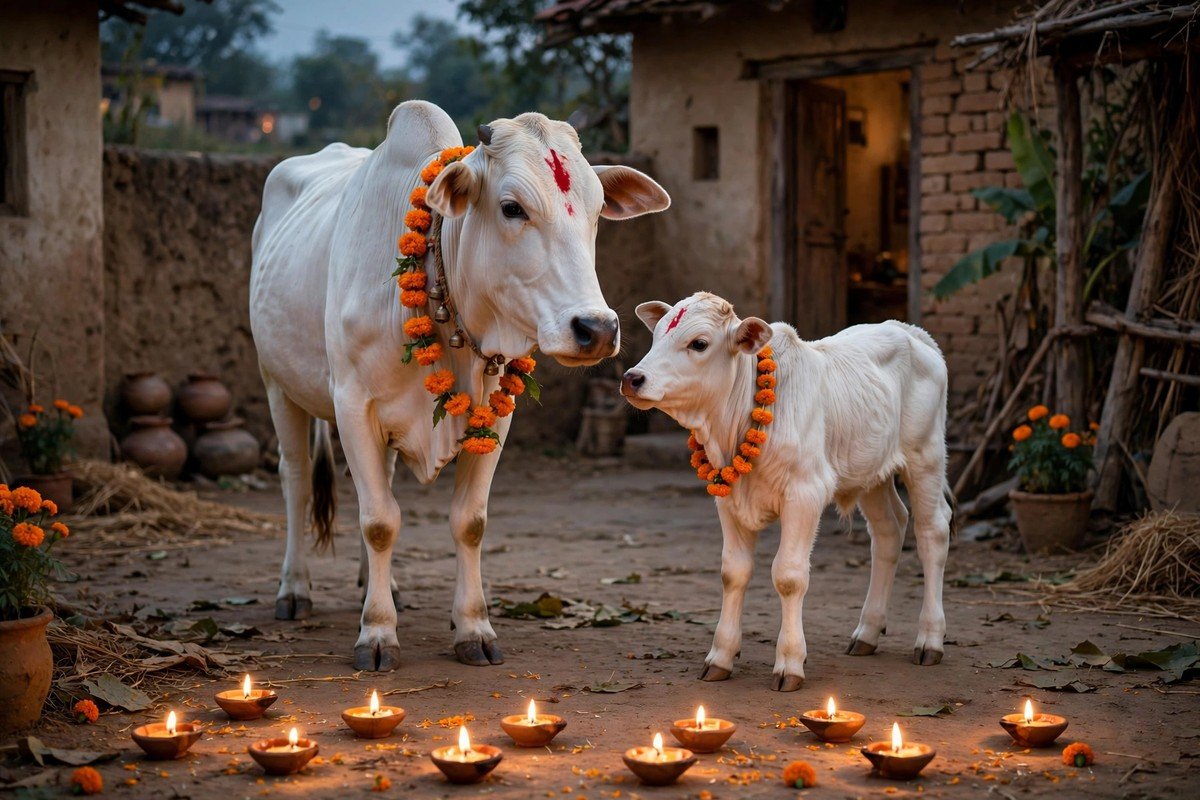
The puja of Govatsa Dwadashi begins in the morning and continues till the pradosh kaal in the evening. After taking a bath in the morning, devotees take the vow of the fast. The cow and calf are then bathed and decorated. Tilak of turmeric, kumkum and roli is applied on their foreheads, marigold garlands are placed around their necks, and clean cloth is draped over them.
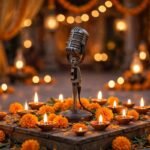
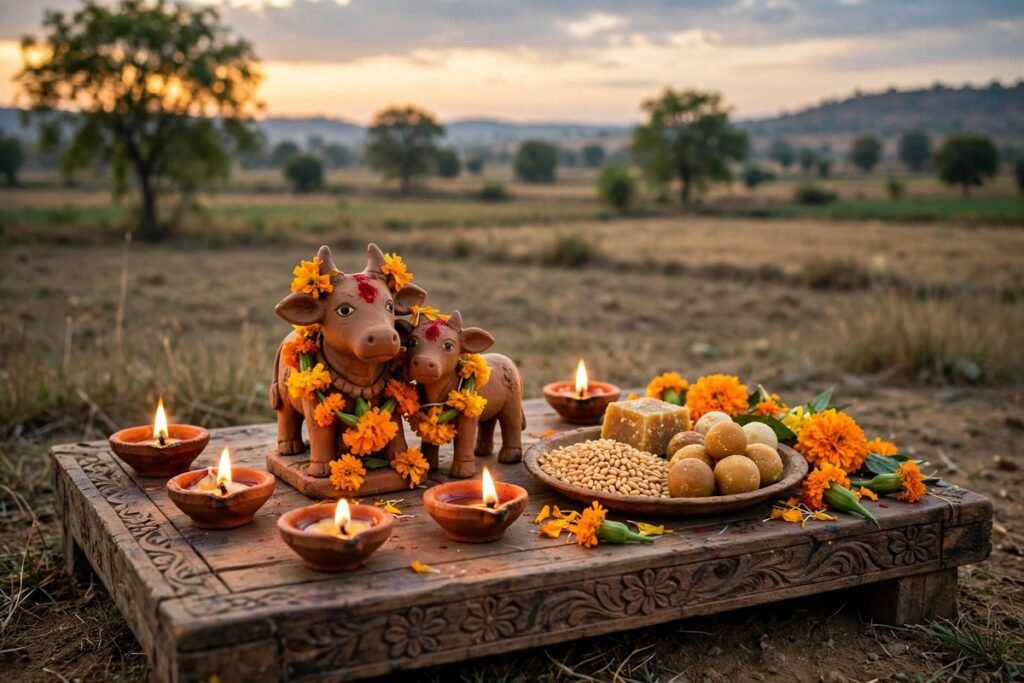
Akshat, flowers, naivedya, fruits, sweets, lamps and incense are used in the puja. After the worship, sweet fodder, jaggery, gram and other offerings are given to the cow and calf. The fast is observed through the day and the cow is served. In the evening, during pradosh kaal, the puja is performed again in full, lamps are lit, and the katha of Govatsa Dwadashi is heard. Only after the evening puja is the fast broken and food taken.
If there is no cow and calf at home, a clay idol or picture of a cow and calf can be decorated and worshipped. Many families also visit a gaushala on this day for the puja. The north-east direction, known as Ishan Kon, is considered best for the puja, and lamps and incense hold special importance during the worship.
Vrat Rules: What to Do and What to Avoid
Some rules are traditionally followed during the Govatsa Dwadashi fast. On this day, consuming cow milk and products made from it is considered prohibited, because the day is regarded as a day of rest for the cow. In many families, items made of wheat are also avoided on this day. These customs can vary according to region and family tradition, so following the tradition prevalent in one’s own family is considered appropriate.
The most important rule of the fast is not to cause any distress to the cow and calf, to serve them, and to feed them with love. Keeping the mind calm during the puja, listening to the katha, and praying for the welfare of the family is the essence of this fast. Women observing the fast remain on a fast through the day and take food only after the evening puja.
The Katha of Govatsa Dwadashi
Different popular versions of the Govatsa Dwadashi katha are found. One well-known katha is connected with the ashram of Maharishi Bhrigu. According to belief, in Satyug, many sages in the ashram of Maharishi Bhrigu were performing penance to have a darshan of Lord Shiva. Pleased with their severe penance, Lord Shiva decided to give them darshan.
According to the katha, Lord Shiva took the form of an old Brahmin, while Goddess Parvati appeared as a cow and Lord Kartikeya as a calf, and they reached the ashram. The old Brahmin told Maharishi Bhrigu that he was going away for some time and entrusted the care of the cow and calf to the sages till then. The sages promised to protect both.
Lord Shiva then took the form of a tiger to test the sages and began to frighten the cow and calf. The sages were afraid, but they continued their efforts to protect both. The katha says that the sages drove the tiger away with the sound of a special bell. After this, Lord Shiva appeared in his true form, and Goddess Parvati and Lord Kartikeya also revealed their true forms. The sages worshipped all three.
It is believed that this event took place on the Dwadashi of the Kartik month. That is why the tradition of worshipping the cow and calf on this tithi became prevalent, and it came to be called Govatsa Dwadashi. Listening to this katha is considered an important part of the evening puja.
The Start of Diwali: Festivals That Follow
Govatsa Dwadashi is regarded as the beginning of the Diwali festivities. It will be followed by Dhanteras on 6 November, when puja for wealth and health and the tradition of shopping are observed. On 8 November, Narak Chaturdashi and Lakshmi Pujan will mark the main festival of Diwali. After that, Diwali Padwa will fall on 10 November and Bhai Dooj on 11 November.
In this way, a festive sequence of almost a week runs from Govatsa Dwadashi to Bhai Dooj. Each festival has its own katha, vidhi and significance, but all of them begin with the worship of the cow. That is why this festival is considered the auspicious beginning of Diwali.
The Tradition in Madhya Pradesh
In Madhya Pradesh too, the tradition of cow worship in homes and gaushalas is followed before Diwali. From the morning itself, homes are cleaned and decorated, rangoli is drawn in courtyards, and lamps are lit in the evening. Many families visit gaushalas on this day and offer fodder and jaggery-gram to the cows.
In cities, where keeping a cow at home is not possible, the tradition of worship through an idol or picture is adopted. In rural areas, decorating the cow and calf, garlanding them and performing aarti are the identity of this day. Amid the preparations for Diwali, the day of Govatsa Dwadashi becomes a special occasion to express gratitude towards the cow.
Disclaimer: This news has been prepared on the basis of available sources and verification. If any fact is found incorrect, a correction will be published.