





Kevadia Bureau
Summary: A grand Ekta Parade was held at Ekta Nagar in Kevadia on Saturday evening as part of Rashtriya Ekta Diwas, where Prime Minister Narendra Modi administered the National Unity Pledge to citizens and personnel. Themed ‘Naxal-free India’, the parade showcased police, central armed police forces and cultural contingents from across the country.
The evening phase of the Rashtriya Ekta Diwas celebrations at Ekta Nagar in Gujarat’s Narmada district concluded with the Ekta Parade on Saturday. Prime Minister Narendra Modi had paid floral tribute at the Statue of Unity in the morning and unveiled development projects. In the evening, he took the salute at the parade ground and administered the unity pledge. This year, the parade was held in the evening rather than in the morning, a change from previous years. In the morning, lakhs of citizens across the country had taken part in the ‘Run for Unity’.
March-past by contingents from across India
The Ekta Parade featured contingents from state police forces, central armed police forces and other central police organisations. Sixteen marching contingents from nine states and one Union Territory took part, along with four central armed police forces, the National Cadet Corps and a marching band. Personnel from the Border Security Force, Central Reserve Police Force, Central Industrial Security Force, Indo-Tibetan Border Police and Sashastra Seema Bal marched alongside state police contingents. Around 10,000 police and paramilitary personnel took part in the parade.
Women personnel also marched in the parade, reflecting their growing role in the security forces. The national flag guard was commanded by an Assistant Commandant of the Border Security Force, described as the force’s first woman parachute-trained officer. The parade displayed the capability, discipline and courage of the country’s daughters, paramilitary forces and state police before a large audience.
‘Naxal-free India’ theme and the Prime Minister’s address
The central theme of this year’s parade was a ‘Naxal-free India’. Contingents of police and central armed police forces that played a frontline role in operations against Left-wing extremism were given special prominence. Short films shown during the event recalled the contribution of the security forces and the sacrifice of personnel killed in operations.
In his address, the Prime Minister said that last year, from the same venue, he had resolved that the country would not rest until it was completely free of Naxalism and Maoist violence, and that the resolve had now been fulfilled. He said the backbone of Naxalism had been broken. Citing figures, he said 126 districts were affected by Left-wing extremism in 2015, while by March 2026 no district remained affected. This was presented by the Prime Minister as a government achievement. He said formerly affected areas were now seeing expansion of roads, mobile connectivity, schools and health facilities, and were joining the mainstream of development.
Around 5,000 people from the 126 districts that were once affected by armed Naxalism had been invited to the celebrations, and several of them shared their experiences. The Prime Minister also remembered security personnel who lost their lives in operations. He said preserving national unity and internal security was the duty of every citizen.
National School of Drama presentation and cultural programmes
A major highlight was a theatrical presentation on the theme ‘Naxal-free India’ by the National School of Drama, featuring around 2,000 artists from the 126 districts that were once affected by armed Naxalism. The presentation depicted the journey of people in those regions from conflict to peace and development.
The cultural programmes were themed on 150 years of the national song ‘Vande Mataram’. Around 5,000 artists from across the country took part, presenting regional traditions and the spirit of ‘Ek Bharat, Shreshtha Bharat’. Fifteen special tableaux were also part of the parade, including 10 from Gujarat and five from other states. This year, the tableaux designs were based on entries received from citizens through competitions, rather than prepared only by government departments. The tableaux reflected India’s cultural heritage, diversity and shared consciousness.
Other attractions: Hell March, motorcycle display and flypast
Among the parade’s attractions was the National Security Guard’s ‘Hell March’ contingent, which impressed the audience with its discipline and courage. Men and women personnel of the Border Security Force and the Central Reserve Police Force performed daredevil displays on motorcycles. The Border Security Force also presented a combined display of Indian martial arts.
A pipe band performance by children was another attraction, while the Indian Air Force’s ‘Surya Kiran’ team performed a flypast. A dog squad display was also part of the parade. Together, these presentations turned the parade into a celebration of national unity, cultural diversity and the capability of the security forces, rather than only a military display.
Remarks on the Opposition
In his address, the Prime Minister also criticised the Opposition, describing it as an obstructive force rather than an opposing one. He said the country needed to stay united, and that ‘Ek Bharat, Shreshtha Bharat’ and a developed India were the country’s two goals. No immediate official reaction from the Opposition to this remark was reported in the accounts available at the time of writing.
Sardar Patel’s legacy and the day’s programme
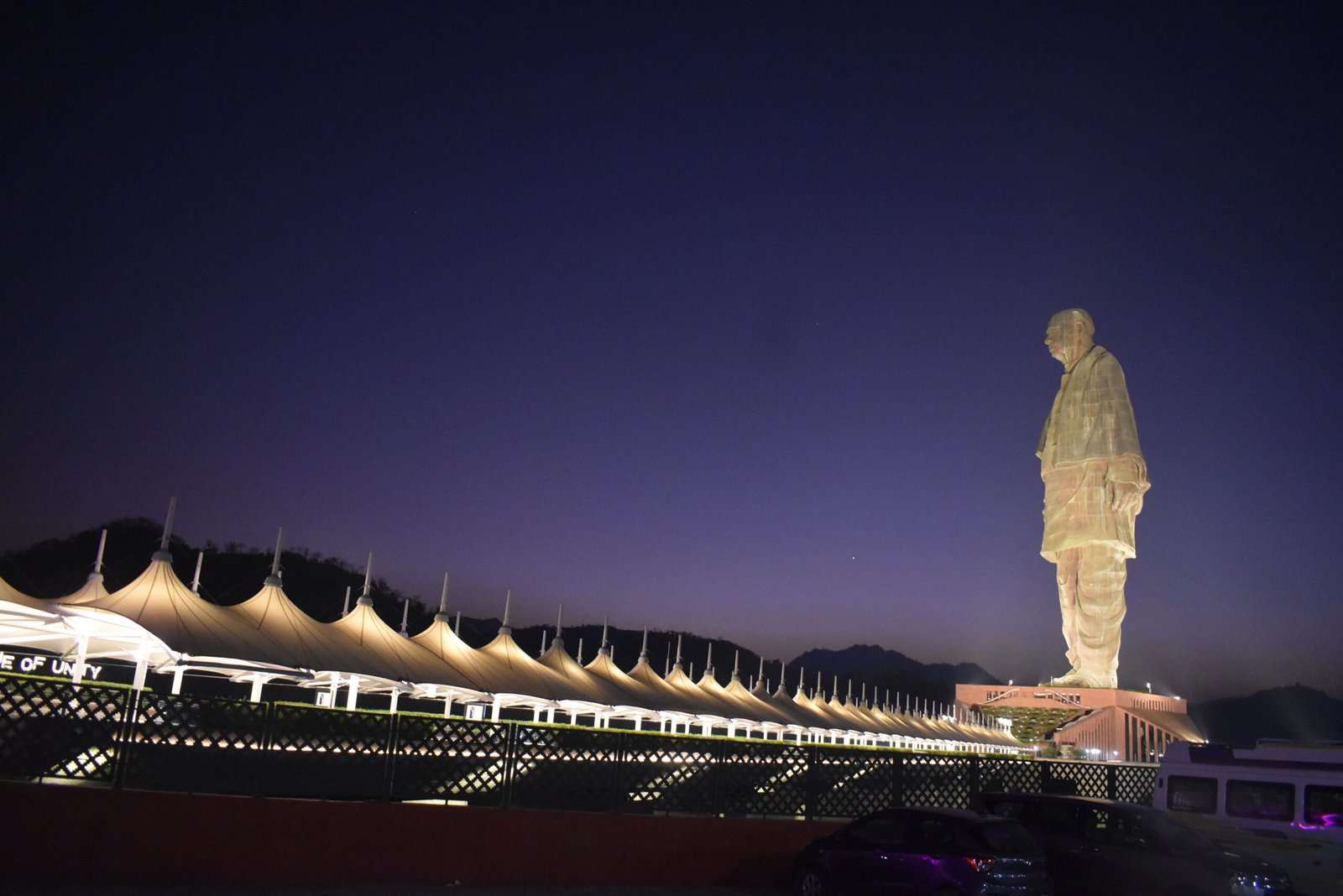
Rashtriya Ekta Diwas is observed every year on 31 October, the birth anniversary of Sardar Vallabhbhai Patel. Patel, India’s first Home Minister, is remembered for integrating more than 550 princely states after Independence and laying the foundation of modern India’s unity. The 182-metre Statue of Unity at Ekta Nagar, dedicated to the nation in 2018, stands as a symbol of that legacy.
The day began with floral tribute at the Statue of Unity and the inauguration and foundation-laying of development projects worth Rs 426.71 crore. The Prime Minister also visited the Rain Forest and the Vaman Vriksha Vatika at Ekta Nagar. The morning ‘Run for Unity’ saw participation by lakhs of citizens. The evening parade brought the day’s celebrations to a close, with the message that national unity, internal security and development are closely linked.
Through the Ekta Parade, the government also signalled that the campaign against Naxalism had entered a new phase, with emphasis now on development and public facilities in formerly affected areas. Roads, education, health and employment schemes in these regions will be watched closely in the coming period. Rashtriya Ekta Diwas repeats the same message every year: unity in diversity is India’s greatest strength.
Disclaimer: This news has been prepared on the basis of available sources and verification. If any fact is found to be incorrect, a correction will be published.