






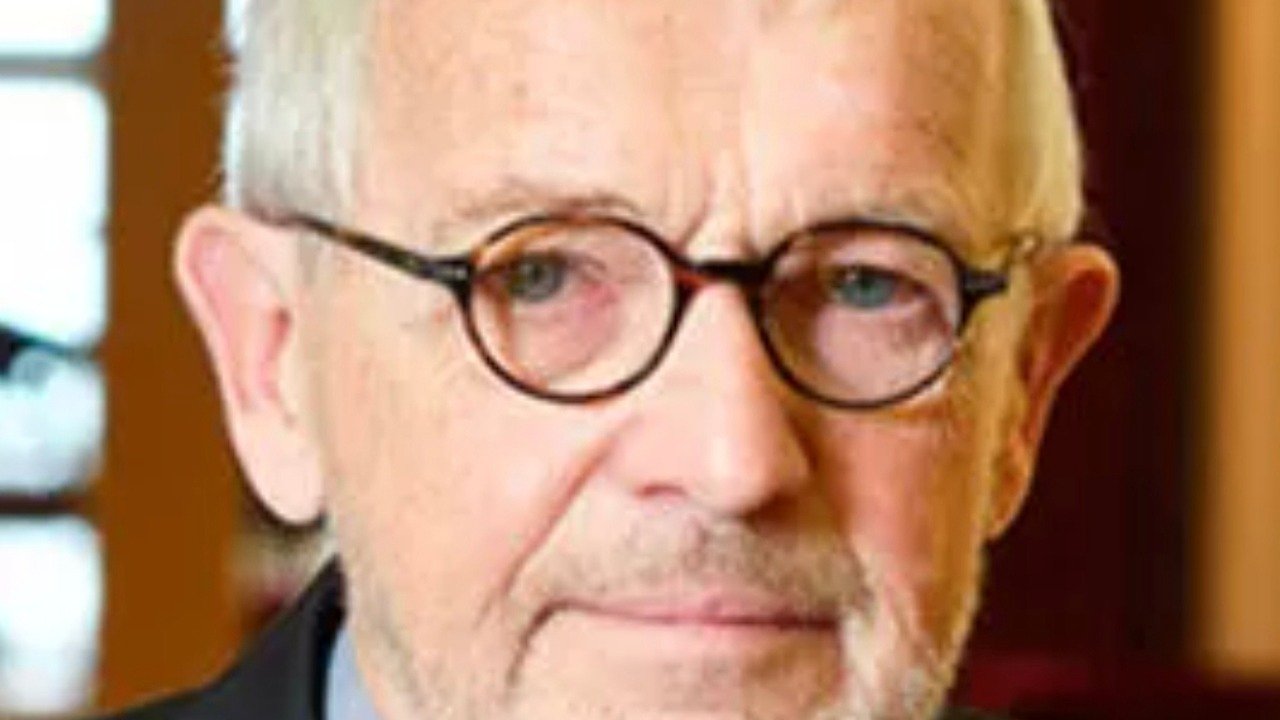
Stockholm Bureau. The 2026 Nobel Prize in Physics has been awarded to Francis Halzen, the American physicist who turned a cubic kilometre of ice at the bottom of the world into a telescope for the universe’s most elusive particles.
The Royal Swedish Academy of Sciences announced the prize in Stockholm on Tuesday, honouring Halzen “for decisive contributions to the IceCube Neutrino Observatory and the discovery of high-energy neutrinos of astrophysical origin.”
This year the prize has gone to a single laureate, which means Halzen alone receives the entire award money — a record 12 million Swedish kronor, roughly Rs 11.5 crore (about $1.2 million). The 2026 prizes also mark the 125th anniversary of the Nobel Foundation.
An idea born in 1988, built into a giant under the ice
Halzen’s big idea took shape back in 1988: the crystal-clear ice deep beneath the South Pole, he realised, could be used to track neutrinos — nearly massless “ghost particles” that stream through everything, including the Earth, without stopping.
Guided by that vision, the IceCube Neutrino Observatory was constructed between 2004 and 2011. Thousands of light sensors were lowered into holes drilled deep into the Antarctic ice, creating a detector one cubic kilometre in size. When a rare neutrino collides with the ice, it produces a faint flash of light that the sensors can catch.

That flash changed astronomy. IceCube captured the first high-energy neutrinos arriving from beyond our galaxy, giving scientists an entirely new way to study the cosmos — through particles, not just light.
The man behind the machine
Born in 1944 in Tienen, Belgium, Halzen earned his doctorate from the University of Leuven in 1969 and has long been associated with the University of Wisconsin–Madison in the United States, where he led the scientific effort that made IceCube a reality.
The discovery opened a new chapter for astrophysics: neutrinos can escape from the heart of exploding stars and feeding black holes where even light cannot get out, carrying information about the most violent events in the universe straight to Earth.
Source: Nobel Prize official press release.