





Desk Report
Summary: Narak Chaturdashi, also called Choti Diwali and Roop Chaudas, falls just before Diwali — and this year its tithi spans two days: the night rituals fall on 7 November, while the sacred pre-dawn abhyang snan will be taken on the morning of 8 November, the same day Diwali itself is celebrated in the evening.
The five-day festival of Diwali begins quietly, a day before the main celebration, with the lighting of the first lamp. That day is Narak Chaturdashi. Observed on the Chaturdashi, or fourteenth day, of the Krishna Paksha in the month of Kartik, it is known in different regions as Choti Diwali, Roop Chaudas, Roop Chaturdashi and Kali Chaudas. It is a festival of purification — of the body, the home and the mind — and it celebrates the victory of light over darkness and good over evil.
A festival spread over two days: understanding the tithi
This year, the date of Narak Chaturdashi needs a little explanation, because the tithi itself stretches across two calendar days. The Chaturdashi tithi begins at 10:47 AM on Saturday, 7 November 2026, and ends at 11:27 AM on Sunday, 8 November 2026. Because different rituals of the festival are tied to different parts of the day, they fall on different dates.
The night-time observances — including Kali Puja and Hanuman Puja — will be kept on the night of 7 November, when the tithi is present at night. The abhyang snan, the ritual oil bath taken before sunrise, will be taken on the morning of 8 November, because the tithi is still current at dawn on that day. This is also the conclusion drawn from the udaya tithi rule. There is an added rarity this year: the evening of 8 November itself is Diwali, with Lakshmi Puja, because the Amavasya tithi prevails that evening. So the morning of Choti Diwali and the evening of the main Diwali fall on the same day.
Timings can vary by a few minutes from city to city, so it is always wise to check the local panchang. According to the New Delhi panchang, the abhyang snan muhurat on 8 November is from 5:41 AM to 6:38 AM.
See the panchang details for the tithi and muhurat for more information.
The story of Narakasura: how the festival got its name
The best-known story behind Narak Chaturdashi is the slaying of the demon Narakasura. According to tradition, Narakasura was a tyrant who tormented gods and sages and held thousands of princesses captive. At the prayer of the gods, Lord Krishna, together with his consort Satyabhama, defeated Narakasura on Kartik Krishna Chaturdashi and freed all the captives.
It is said that as he died, Narakasura asked for a boon: that anyone who bathed before sunrise on this day would have no fear of hell. That is why the day came to be called Narak Chaturdashi, and why the morning bath carries such importance. The celebrations that followed in Dwarka after the demon’s defeat are remembered in the tradition of lighting lamps on this day. The festival is therefore not merely a date on the calendar — it marks the end of tyranny and the joy of liberation.
Another story, found in some traditions, tells of King Rantideva, who faced the fear of hell because a hungry Brahmin had once been turned away from his door, and who earned release through charity and good deeds in an extra year of life granted to him. Different texts tell the story differently, but the message is the same: compassion, charity and a clean life free a person from fear.
Abhyang snan: the ritual oil bath and how it is done
The most distinctive tradition of Narak Chaturdashi is the abhyang snan. Abhyang means massaging the whole body with oil. On this day, devotees rise before sunrise, massage the body with sesame oil, apply ubtan — a paste traditionally made of gram flour, turmeric, sandalwood, sesame and rose water — and then bathe. The belief is that this bath purifies the body, washes away sins and brings good health.
The method is simple. Rise before sunrise and begin with a moment of prayer. Massage sesame oil gently over the whole body. Apply the ubtan, wait a little while, and then bathe with lukewarm water. After the bath, wear clean clothes and offer prayers. Tradition holds that an abhyang snan taken after sunrise does not carry the same special merit, which is why the timing matters.
The practice also has a practical side. As the season changes, an oil massage and ubtan care for the skin, bring warmth to the body and prepare it for the onset of winter. That is one reason the tradition has survived in homes for centuries.
Roop Chaudas: the day of beauty and health
In north India and Rajasthan, Narak Chaturdashi is also called Roop Chaudas. The belief is that bathing with ubtan on this day enhances beauty and radiance, which is why it is known as the day of beauty. Women in many households prepare the ubtan specially, and the whole family takes part in the morning bath ritual.
Roop Chaudas combines care of the body with joy of the heart. Clean homes, decorated doorways and lamps lit in the evening together create the atmosphere in which the festive mood doubles. In many families, wearing new clothes and exchanging greetings on this day is also a tradition.
Yam deepdan and Kali Chaudas: the evening observances
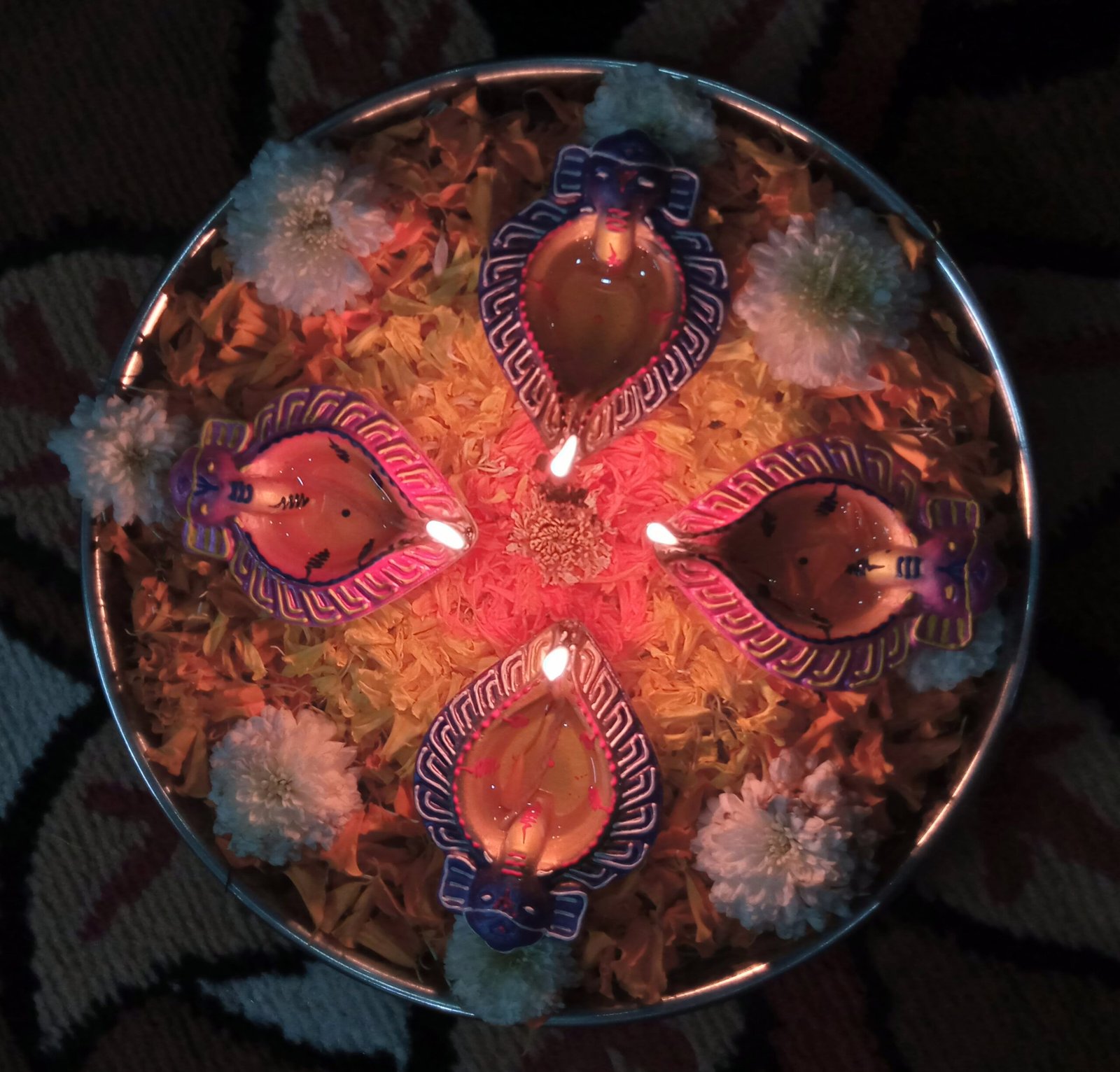
In the evening of Narak Chaturdashi, a lamp is lit in the name of Yamraj, the god of death. This is called Yam deepdan. The belief is that this lamp protects the family from the fear of untimely death and keeps peace and well-being in the home. The lamp is lit after sunset, outside the main door of the house or in the south direction. In several traditions, a four-wicked lamp is used.
The same night is also observed as Kali Chaudas, especially in Gujarat and western India, where Goddess Mahakali is worshipped with special devotion. The belief is that her worship drives away negative forces and brings positive energy into the home. Hanuman Puja is also part of this night — according to the tradition of south India, Hanuman Jayanti is connected with this tithi, and his worship is believed to remove troubles and grant fearlessness.
So a single night gathers together the worship of Krishna, Goddess Kali, Hanuman and Yamraj — freedom from fear, the worship of strength and the festival of light, all at once.
A rare coincidence this year: Choti Diwali and Diwali on one day
This year’s festive calendar is unusual. Dhanteras falls on 6 November, the night rituals of Narak Chaturdashi on 7 November, the abhyang snan on the morning of 8 November, and Lakshmi Puja with the main Diwali on the evening of the same day. Govardhan Puja follows on 10 November and Bhai Dooj on 11 November. The five-day festival is thus compressed in a way that makes 8 November especially significant — beginning with the purifying morning bath and ending with the lamps of Diwali in the evening.
How to observe the day at home
Observing Narak Chaturdashi at home follows a simple order. Rise before sunrise and take the abhyang snan. After the bath, wear clean clothes and worship Lord Krishna and the family deity. During the day, finish the cleaning and decoration of the home. In the evening, light lamps at the main door and place one lamp in the south direction in the name of Yamraj. At night, worship Goddess Kali and Hanuman according to family tradition.
Telling children the story of Narakasura is also a fine tradition. It teaches them that no matter how powerful evil may seem, the victory of good is certain — and that is the very soul of the entire Diwali festival.
Two things to keep in mind
Two practical points are worth remembering. First, muhurat and tithi timings can differ by a few minutes from city to city, so confirm them from the local panchang. Second, the real meaning of a festival lies in ease and joy — rituals observed with devotion and without pressure are the ones that bring happiness.
Narak Chaturdashi reminds us that the festival of lights is not only about lighting lamps. It is about the purification of the body, the clarity of the mind and compassion towards others. The morning bath of Choti Diwali and the evening lamp together carry one message: however deep the darkness, a single lamp is enough to dispel it.
Disclaimer: This news has been prepared on the basis of available sources and verification. If any fact is found incorrect, a correction will be published.