




Desk Report
Summary: Kartik Maas is regarded in Hindu tradition as the holiest month of the year. This year it runs from 27 October to Kartik Purnima on 24 November. Through the month, devotees bathe before sunrise, light lamps in the evening, worship the tulsi plant, give charity and follow a sattvic way of life.
Kartik Maas 2026: From When to When
According to the panchang, Kartik Maas this year began on 27 October 2026 and will end on 24 November 2026, on Kartik Purnima. Dev Deepawali is also observed on Kartik Purnima. Kartik is counted as the eighth month of the Hindu calendar and as the last and most important month of Chaturmas. The month is traditionally held to begin the day after Sharad Purnima.
One caution about dates is necessary. Some panchang listings differ by a day on the starting date of the month. Before taking a vow, a bath ritual or a puja sankalp, it is best to confirm with the local panchang of your region and with your family tradition. The main dates given in this article follow the majority of panchang listings.
Why Kartik Maas Is Called the Holiest Month
Religious tradition dedicates Kartik Maas to the worship of Lord Vishnu and Goddess Lakshmi. The month is linked with the belief that Lord Vishnu wakes from his four-month yogic sleep during this period. Dev Uthani Ekadashi marks that awakening, and auspicious works such as weddings are held to begin after it.
Kartik Maas is also called Damodar Maas. The name is linked with the childhood form of Lord Krishna. Through the month, devotees bathe in the morning, offer prayers during the day and light lamps in the evening. Tradition holds that bathing, charity and lamp-offering done with devotion in this month bring lasting merit. That is why the month is described as the finest among all months.
The Pre-Dawn Bath and Its Order
The best-known practice of Kartik Maas is the bath in Brahma Muhurat, before sunrise. Devotees traditionally bathe in a holy river, lake or at a ghat. Those who cannot reach a river bathe at home with Ganga water mixed into their bath water. This is called Kartik Snan. After the bath, the order of worship follows: prayer to Lord Vishnu, chanting of mantras and tulsi worship.
Tradition holds that the Kartik bath calms the mind and begins the day in a sattvic spirit. Devotees who cannot observe a fast for the whole month can still stay connected with the month through regular bathing and lamp-offering. Giving food, clothes or money to the needy after the bath is also part of the month’s tradition.
Deepdan: Where and How Lamps Are Offered
Evening lamp-offering, or deepdan, carries special importance in Kartik Maas. Devotees light ghee lamps at temples, river ghats, near peepal trees, at the main door of the home, at the place of worship and beside the tulsi plant. Floating lamps on a river or lake is also a tradition. It is believed that regular deepdan keeps peace and prosperity in the home.
Care is needed while offering lamps. A lamp should be lit in a safe place, shielded from wind, and lamps floated on water should be offered with care for the environment. The earthen diya is the identity of this month. Lighting a lamp in the courtyard in the evening brings the whole family together, and that togetherness is held to be the most beautiful part of the tradition.
Tulsi Puja: The Soul of Kartik Maas
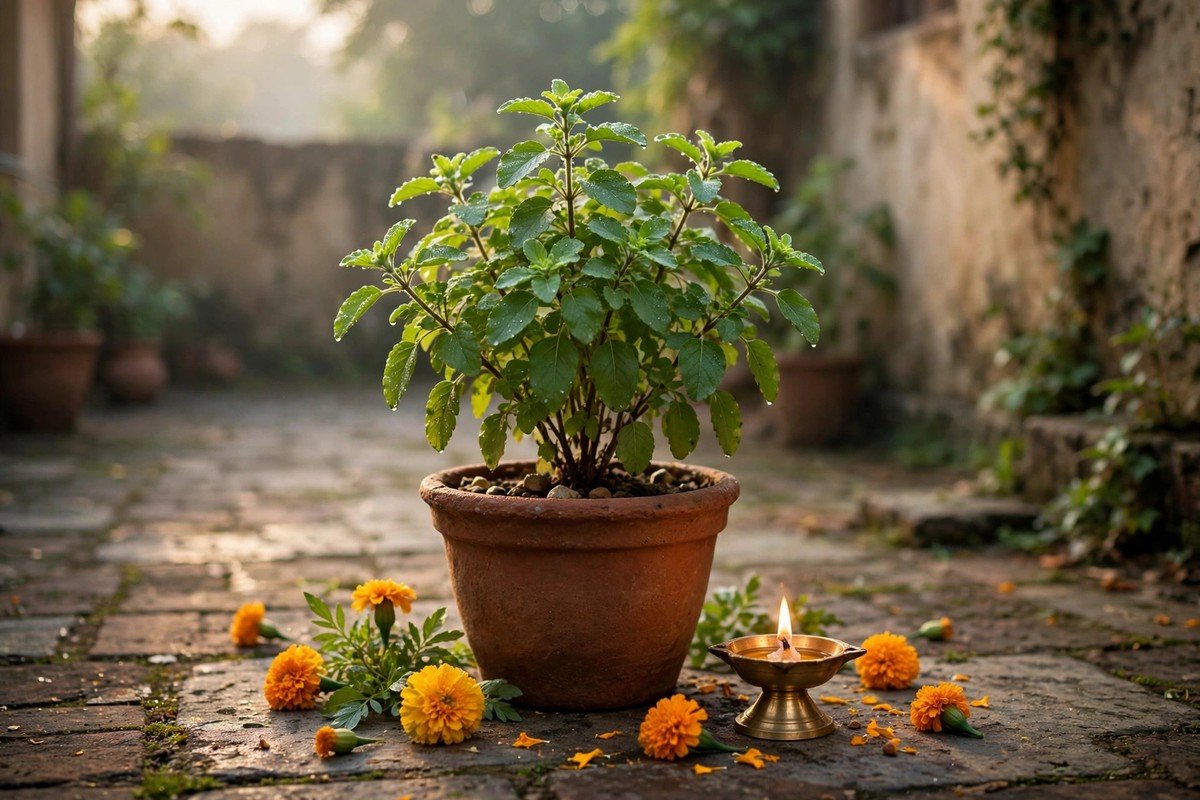
Tulsi worship holds the highest place in Kartik Maas. Through the month, water is offered to the tulsi plant in the morning and a ghee lamp is lit beside it in the evening. Tulsi is regarded as a symbol of the home’s happiness and prosperity. Family members worship together and sing devotional songs.
The month also carries the tradition of Tulsi Vivah. In this ceremony, the tulsi plant is decorated like a bride and symbolically married to Lord Vishnu in his Shaligram form. The main date for Tulsi Vivah this year is given as 21 November. Some families also perform it on the evening of Dev Uthani Ekadashi. Dates can vary by region and family tradition.
Charity and the Rules of a Sattvic Life
Charity is given great importance in Kartik Maas. According to one’s means, food, clothes, money and lamps are donated to the needy and to temples. Donation of lamps, food and clothes are the main traditions of the month. Charity is advised to be done without show, in a selfless spirit.
A sattvic life is also a central rule of the month. Through the whole month, tamasic food is traditionally avoided. Meat, alcohol, onion, garlic and eggs are kept aside. Some traditions also advise avoiding pulses such as urad, masoor, chana, matar and mustard seeds. Restraint in conduct is also advised. Avoiding harsh words about others, falsehood and anger is held to be part of the month’s discipline.
What to Avoid in Kartik Maas
The traditions of the month also list certain things to avoid. Tulsi leaves should not be plucked on Sunday. Tradition also advises against touching the tulsi plant or offering it water on that day. Plucking tulsi leaves on Ekadashi and on the wedding day is also avoided.
Other traditions speak of sleeping on the ground, observing restraint and eating sattvic food through the month. Every family follows these rules according to its means and tradition. The purpose of the rules is said to be discipline of body and mind, not burden. It is therefore advised to choose rules keeping one’s health and family tradition in mind.
The Month’s Great Milestones: Dev Uthani, Tulsi Vivah, Kartik Purnima
Three great milestones fall in the closing days of Kartik Maas. The first is Dev Uthani Ekadashi, which will be observed on 20 November this year. It marks the belief that Lord Vishnu wakes from yogic sleep, and auspicious works are held to begin from this day. The second milestone is Tulsi Vivah, whose main date is 21 November. The third and final milestone is Kartik Purnima, which falls on 24 November.
On Kartik Purnima, the morning holy bath, charity and the Satyanarayan Katha are traditional. In the evening, the festival of lamps is observed as Dev Deepawali. The tradition of lighting lakhs of lamps on the ghats of Kashi on this day is famous. The month’s bathing, charity and lamp-offering are also held to conclude on this full moon day.
What Next: How to Observe the Remaining Days
Kartik Maas is now in its middle phase, and its most important milestones are still ahead. Families who wish to join the tradition now can begin with the morning bath, tulsi worship and the evening lamp. Those who cannot fast for the whole month can still stay connected through regular bathing and lamp-offering.
In the coming days, preparations for Dev Uthani Ekadashi and Tulsi Vivah will begin in homes. Decorating the tulsi plant, preparing the mandap, the chunari and the puja items in advance is helpful. For the correct date and time of any fast or puja, confirm with your local panchang, because timings can differ by region and tradition.
Disclaimer: This story has been prepared on the basis of available sources and verification. If any fact is found incorrect, a correction will be published.