



Desk Report
Summary: The Chhath festival is considered incomplete without its vrat katha. According to tradition, the childless King Priyavrat received a vision of Goddess Shashthi, and her blessing gave rise to the Chhath Puja tradition. The stories of Draupadi, Karna and Ram-Sita are also told alongside it. In 2026, the festival runs from Nahay Khay on 13 November to Usha Arghya on 16 November.
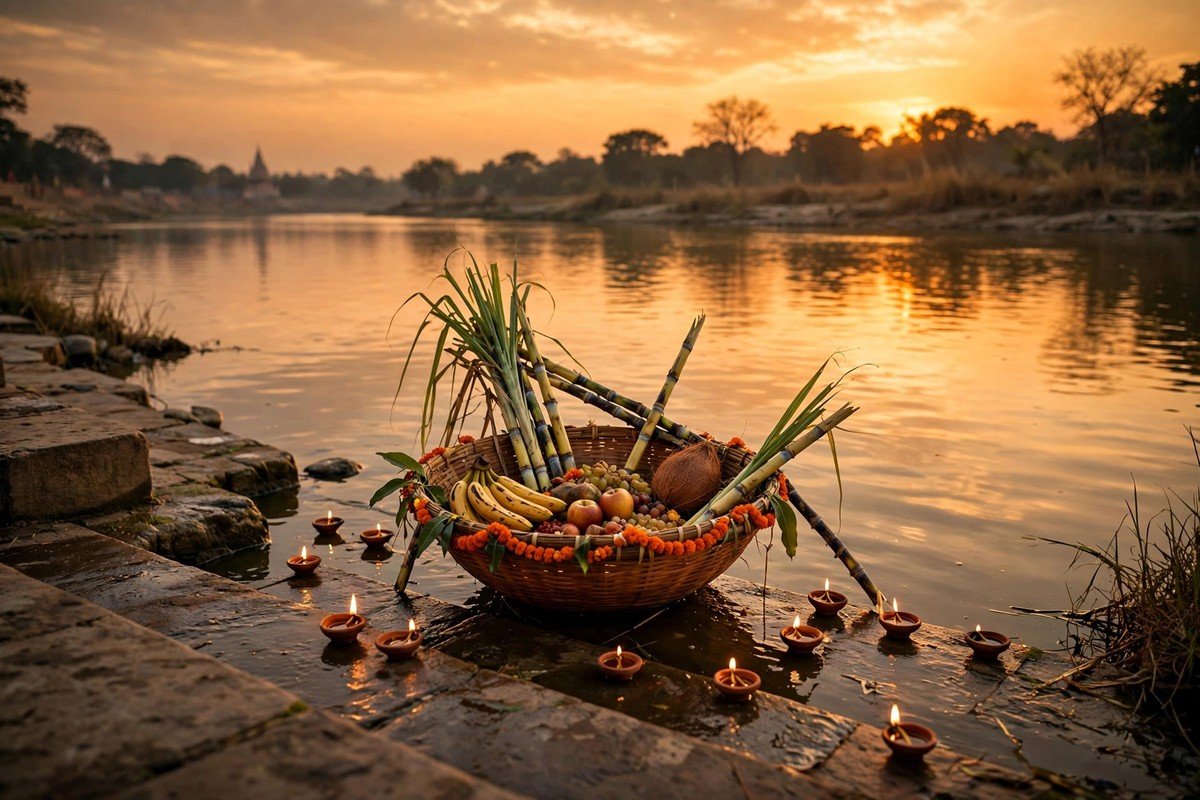
Chhath is called the great festival of folk faith. It is a four-day, demanding fast dedicated to the Sun God and Chhathi Maiya. Its most distinctive feature is that devotees offer arghya, a ritual offering of water, to the setting Sun as well as to the rising Sun. Those who observe the fast follow purity, restraint and discipline with great strictness. When folk songs echo on the river ghats and devotees stand waist-deep in water to offer arghya, the festival becomes not just a ritual but a celebration of gratitude towards nature.
Several traditional stories are associated with this festival. The foremost and most widely told is the story of King Priyavrat and Queen Malini. It is said that this is the one story that must be heard on Chhath. Alongside it, the story of Draupadi from the Mahabharata period, the legend of Karna, the son of the Sun God, and the tradition linked to Ram and Sita are also narrated. All these stories rest on religious belief and tradition, and they are told as faith, not as historical claims.
Who Is Chhathi Maiya
According to tradition, Chhathi Maiya is Goddess Shashthi. The story says she arose from the sixth part of the original nature of creation, which is why she is called Shashthi. She is regarded as the protector of children. This is why, on the sixth day after a child’s birth, Chhathi Devi has traditionally been worshipped, so that the child receives the blessing of good health and a long life.
In Chhath Puja, the worship of Chhathi Maiya holds a special place alongside the Sun God. Tradition also holds that Chhathi Maiya is the sister of the Sun God. That is why offering arghya to the Sun is believed to please Chhathi Maiya. The festival began in Bihar, Jharkhand, eastern Uttar Pradesh and the Terai region of Nepal, and it is now observed in many parts of India and abroad. Cities in Madhya Pradesh also see large gatherings of devotees on the ghats during Chhath.
The Sorrow of the Childless King Priyavrat
According to the traditional story, in ancient times there lived a king named Priyavrat. His wife was Queen Malini. The king had a kingdom, wealth and the love of his people, but for a long time the couple had no child. The pain of childlessness weighed deeply on both the king and the queen. According to the story, they remained deeply distressed by it and tried many remedies in the hope of a child.
At last, desiring a child, King Priyavrat had a Putreshti Yagya performed by Maharishi Kashyap. After the yagya was completed, the sage gave Queen Malini the kheer prepared as the offering of the yagya, to eat as prasad. According to the story, eating the kheer made the queen pregnant. The news brought joy across the kingdom, and people began congratulating the king and queen.
The Yagya and the Birth of a Stillborn Son
According to the story, nine months later Queen Malini gave birth to a son, but sadly the child was born dead. The news cast grief over the whole kingdom. King Priyavrat was overcome with sorrow at the loss of his son. According to the story, the grieving king carried his son to the cremation ground and began to think of giving up his own life. This is the most poignant turn of the story, where a father’s grief reaches its peak.
At that very moment, the story takes a divine turn. It is said that a divine goddess appeared from the sky. She was none other than Devsena, the mind-born daughter of Brahma, known as Goddess Shashthi or Chhathi Maiya. As the goddess appeared, a different kind of peace spread around, and the king’s attention turned towards her.
The Appearance of Goddess Shashthi and Her Blessing
According to the story, Goddess Shashthi told King Priyavrat that she had arisen from the sixth part of the original nature of creation, which is why she is called Shashthi. She said that she grants the blessing of a child to the childless and protects children. Whoever worships her with a true heart, she said, has all wishes fulfilled. She asked the king to worship her and to inspire others to do the same.
According to the story, at the touch of Goddess Shashthi, the dead child came back to life. Seeing this miracle, King Priyavrat was overjoyed. Following the goddess’s command, the king had Goddess Shashthi worshipped with full rituals on the Shashthi date of the bright fortnight of Kartik month. Tradition holds that, as a result of this worship, the king was blessed with a son, and from then on the tradition of Chhath Puja began.
The message of this story is that true devotion and patience fulfil one’s wishes. That is why men and women observing the Chhath fast listen to this story with great attention. It is believed that those who observe the Chhath fast with proper rituals receive the grace of Chhathi Maiya, and their children are blessed with a long life and good health.
The First Chhath Fast on Kartik Shukla Shashthi
According to the story, King Priyavrat observed the fast of Goddess Shashthi on the Shashthi date of the bright fortnight of Kartik month. The festival is called Chhath because Chhath is a form of Shashthi, the sixth day. It is observed on this date, six days after Diwali. On this day devotees offer Sandhya Arghya to the setting Sun, and the next morning they offer Usha Arghya to the rising Sun and break the fast.
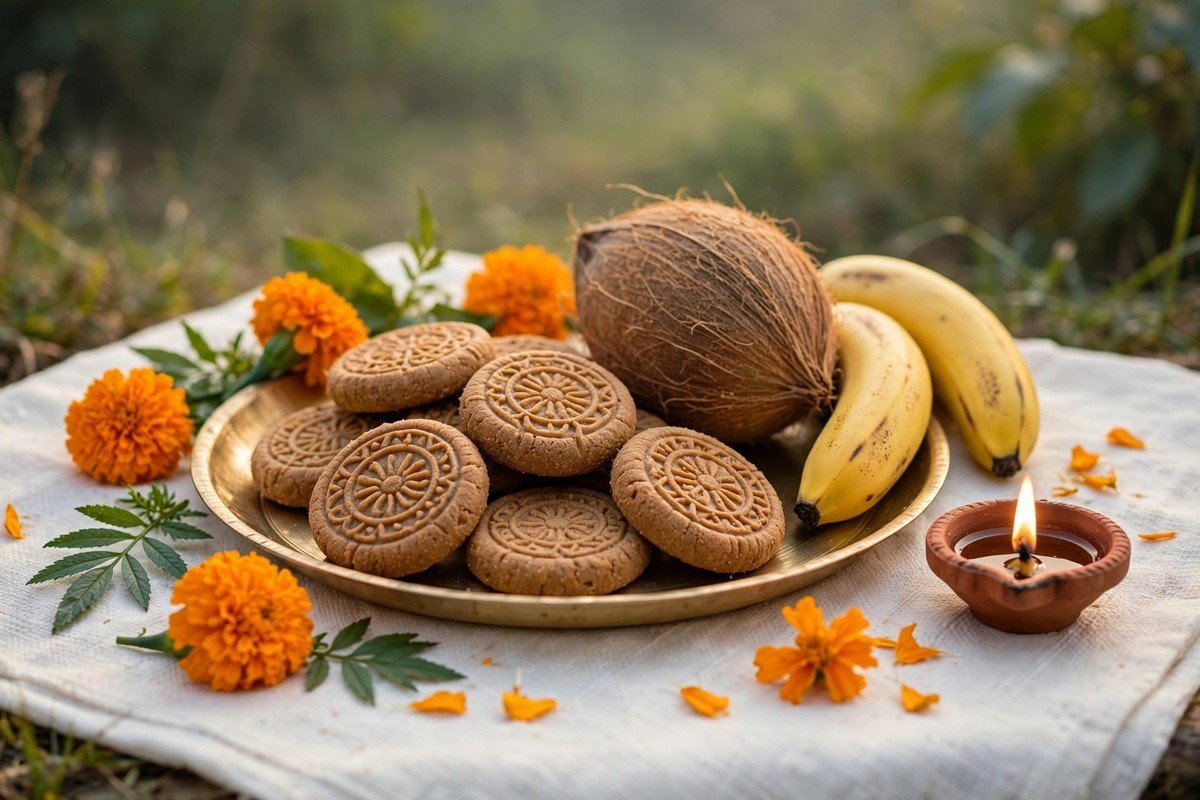
The Chhath fast is considered extremely demanding. After Kharna, devotees keep a waterless fast for about 36 hours. During this period they give up both food and water. That is why it is also called a Mahavrat, a great fast. Purity is observed so strictly during the fast that everything, from the preparation of prasad to the articles of worship, is prepared under special rules. Thekua, made from wheat, jaggery and ghee, is the most famous prasad of this festival.
Draupadi’s Story: The Return of the Lost Kingdom
The second famous story linked to Chhath comes from the Mahabharata period. According to tradition, when the Pandavas had lost their entire kingdom in gambling, Draupadi observed the Chhath fast. The story says that, pleased with Draupadi’s fast, Goddess Shashthi restored the Pandavas’ kingdom to them. The story is told with the message that patience and devotion in difficult times remove crises.
Draupadi’s story gives the glory of the Chhath fast another dimension. Where Priyavrat’s story is linked to the blessing of a child, Draupadi’s story is linked to the return of lost honour and rightful claim. Chhath is therefore not regarded only as a fast for the wish of a child, but as a fast for the fulfilment of every kind of wish. Devotees complete this demanding fast carrying their own wishes in their hearts.
Legends of Karna and Ram-Sita
The tradition of Chhath is also linked to Karna, the son of the Sun God from the Mahabharata period. According to tradition, Karna was a supreme devotee of the Sun God and worshipped the Sun standing in water for hours. It is said that Karna was the first to begin this form of Sun worship. Karna’s devotion to the Sun is regarded as an important source of the Chhath tradition.
According to a tradition from the Ramayana period, after returning to Ayodhya in the Treta Yuga, Ram and Sita worshipped the Sun God. Some versions of the story say that, at the advice of Sage Mugdal, Ram and Sita worshipped the Sun on the Shashthi date of the bright fortnight of Kartik. These episodes are narrated as faith, and they point to the antiquity of the Chhath festival. The forms of these stories may differ slightly from region to region, but the core spirit of Sun worship remains the same in all of them.
When the Katha Is Heard, and the Discipline of the Fast
During the Chhath fast, the tradition of hearing the katha is observed especially at the time of Sandhya Arghya and Usha Arghya. There is a night-long vigil, during which songs of Chhathi Maiya are sung and the katha is narrated. Family members sit together and listen to the story. It is believed that the Chhath fast is not considered complete without hearing the katha. The katha is therefore regarded as an inseparable part of the fast.
Each of the four days of the fast has its own rules. On the first day, Nahay Khay, devotees bathe and eat sattvic food. On the second day, Kharna, they fast through the day and in the evening take kheer made with jaggery as prasad. On the third day, Sandhya Arghya, arghya is offered to the setting Sun, and on the fourth day, Usha Arghya, arghya is offered to the rising Sun and the fast is broken. Throughout this sequence, purity, restraint and respect for nature are placed above everything else.
Chhath Mahaparv 2026: Dates and Arghya Timings
In 2026, the Chhath Mahaparv will run from 13 November to 16 November. The first day, Nahay Khay, falls on Friday, 13 November. The second day, Kharna, will be observed on Saturday, 14 November. The third day, Sandhya Arghya, the main day of the festival, falls on Sunday, 15 November. The fourth day, Usha Arghya, on Monday, 16 November, will complete the fast with the breaking of the fast. This year Sandhya Arghya falls on a Sunday, which is regarded as the day of the Sun God, and it is therefore also seen as a special coincidence.
Arghya timings depend on local sunrise and sunset, so the time in each city may differ by a few minutes. According to the Delhi panchang, sunset on 15 November for Sandhya Arghya will be at about 5:28 pm, and sunrise on 16 November for Usha Arghya will be at about 6:44 am. Readers should check their own city’s correct time from their local panchang, because in cities like Patna sunset can be earlier than in Delhi. According to the panchang, Sarvartha Siddhi Yoga is also forming on 15 November.
The Message of the Katha: Nature, Purity and Equality
The Chhath katha is not just a story; it also carries a message for life. The festival teaches that life is not possible without nature, and that gratitude should be expressed towards the Sun, water and food. The discipline, purity and restraint adopted during the fast also point towards healthy habits in everyday life. That is why this festival is called not only a religious ritual but also a festival that gives the message of a healthy life and harmony with nature.
Another special feature of Chhath is that there is no discrimination in it. On the ghats, everyone stands together and offers arghya to the Sun. The distinction between rich and poor, big and small, disappears in this festival. This spirit of equality is what makes Chhath the great festival of folk faith. After hearing the katha, devotees distribute prasad and wish one another well. In this way the festival binds family, society and nature into a single thread.
Disclaimer: This story has been prepared on the basis of available sources and verification. If any fact is found incorrect, a correction will be published.