





New Delhi Bureau
Summary: The INDIA bloc’s ‘Vote Bachao, Desh Bachao’ mega rally at Delhi’s Ramlila Maidan concluded on Sunday with the national anthem. Leader of Opposition in the Lok Sabha Rahul Gandhi renewed the demand for the removal of Chief Election Commissioner Gyanesh Kumar and alleged large-scale deletion of voters’ names during the Special Intensive Revision of electoral rolls, while Congress president Mallikarjun Kharge said the bloc’s fight would continue until the CEC resigns. The BJP dismissed the rally as a calculated conspiracy to spread anarchy, and the Election Commission has already rejected the opposition’s allegations.
The INDIA bloc’s mega rally at Delhi’s historic Ramlila Maidan concluded on Sunday, 1 November 2026. Held under the slogan ‘Vote Bachao, Desh Bachao’ (Save the Vote, Save the Nation), the rally brought leaders of the Congress, Samajwadi Party, Trinamool Congress, Rashtriya Janata Dal, Jharkhand Mukti Morcha, Dravida Munnetra Kazhagam, Communist Party of India, Communist Party of India (Marxist) and CPI(ML) Liberation onto a single stage. According to live updates, around 20 opposition parties took part in the protest. The programme ended at about 4:30 pm with the national anthem, after which leaders left the ground and workers began dispersing. Permission for the rally had been granted from 10 am to 5 pm.
From Kharge’s residence to Ramlila Maidan: the march
Before the rally, opposition leaders gathered at Congress president Mallikarjun Kharge’s residence. From there, several leaders travelled in open vehicles to Minto Road, and the ‘Chalo Dilli’ march that began at the Connaught Place junction reached Ramlila Maidan via Ajmeri Gate. A large tricolour-covered pandal was erected for senior leaders, with a separate stage for state units of the bloc’s constituent parties. Supporters had begun arriving in Delhi from the morning, many of them a day earlier. Delhi Police made extensive security arrangements across central Delhi, with multi-layered barricades, drone surveillance and CCTV cameras. Reports said nearly 10,000 police and paramilitary personnel were deployed in central Delhi, including more than 4,000 around Ramlila Maidan. Estimates of the crowd differed sharply: organisers had expected up to 10 lakh people, while police estimated around 50,000. Both figures were reported as the respective sides’ claims and estimates, not as a confirmed headcount.
Rahul Gandhi’s charges: vote theft, the Constitution and the CEC
Addressing the gathering, Rahul Gandhi said a message had gone out from Ramlila Maidan that democracy and the Constitution would not be allowed to be destroyed. He alleged that votes had been stolen in the country for years and that crores of voters’ names had been deleted during the Special Intensive Revision of electoral rolls. He claimed that vote theft had also taken place in the 2024 Lok Sabha election in states including Madhya Pradesh, Haryana, Chhattisgarh, Maharashtra and Karnataka, besides West Bengal, and that the 2024 election was therefore illegal. All of these claims were presented by opposition leaders as allegations; the Election Commission has already rejected them.
Rahul Gandhi directly attacked Chief Election Commissioner Gyanesh Kumar, saying that without Kumar, Narendra Modi could not have become Prime Minister and Amit Shah could not have become Home Minister. He claimed Kumar would be removed from office and would also have to go to jail. At the same time, he said he bore no hatred towards Modi, Shah or Kumar, but that the three had attacked the soul of the country, its Constitution and its democracy. He said the protest belonged to no single party or leader, but was India’s voice, and that its purpose was to bring love and brotherhood back to the country. He also raised the issue of shops in Connaught Place being shut, alleging that the BJP had forced traders to close their shops and thereby caused them losses.
Kharge’s announcement: the fight will continue until the CEC resigns
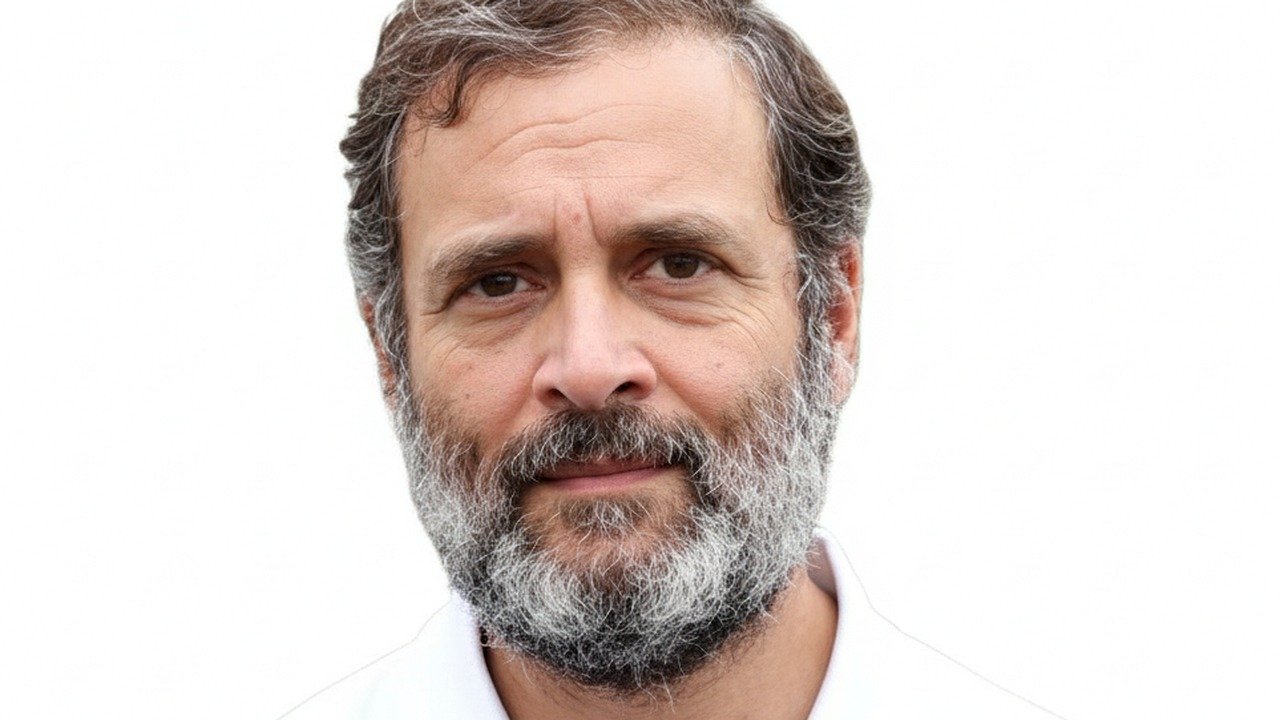
Congress president Mallikarjun Kharge told the rally that the INDIA bloc’s fight would continue until Chief Election Commissioner Gyanesh Kumar resigns. Kharge alleged that Modi and Shah were attempting to manipulate the votes of women, youth and Dalits, and said the struggle was necessary to protect democracy. He added that Kumar would be left with no choice but to step down. Kharge’s announcement was among the rally’s clearest political messages, because it also set the direction of the bloc’s agitation: sustained pressure on the CEC issue.
Akhilesh, Mamata, Tejashwi and other leaders
Samajwadi Party chief Akhilesh Yadav said 1.27 crore votes had been cut in Uttar Pradesh, and that if the figures were spread across the state’s 403 assembly constituencies, every constituency had lost votes. He said the people of Kashi had answered those who claimed a double-engine government. West Bengal Chief Minister Mamata Banerjee cited Bengal’s example while questioning the voter-list process. Rashtriya Janata Dal leader Tejashwi Yadav compared Ramlila Maidan to Kurukshetra of the Mahabharata and described the fight to save democracy as a battle for dharma. Former Jammu and Kashmir chief minister Farooq Abdullah and Peoples Democratic Party chief Mehbooba Mufti were also seen on stage. Chief ministers including Telangana’s Revanth Reddy, Himachal Pradesh’s Sukhvinder Singh Sukhu and Jharkhand’s Hemant Soren, along with several other senior leaders, joined the rally. Congress Parliamentary Party chairperson Sonia Gandhi and MP Priyanka Gandhi were also present on stage.
Who stayed away: Thackeray, Pawar and Kejriwal
The absence of some prominent faces also drew attention. According to reports, Shiv Sena (UBT) chief Uddhav Thackeray and Nationalist Congress Party chief Sharad Pawar did not attend the rally. Aam Aadmi Party convenor Arvind Kejriwal was also not seen on stage, although party leader Gopal Rai was spotted seated beside Priyanka Gandhi. These absences raised questions about the bloc’s unity, even as leaders on stage tried to project a message of togetherness. A day before the rally, on 31 October, the bloc had held a symbolic ‘Jan Mahabhiyog’ (people’s impeachment) proceeding against the CEC at Kharge’s residence, chaired by former Lok Sabha Speaker Meira Kumar, in which a motion was passed.
The BJP’s response: Nadda calls the rally a conspiracy to spread anarchy
The BJP reacted sharply to the rally. Union minister and BJP leader JP Nadda said the rally was not an act of respect for democracy but a calculated conspiracy to spread anarchy. Nadda alleged that Rahul Gandhi’s politics followed a four-stage model: first spreading lies and rumours, then creating anarchy on the streets, then damaging the country’s economy, and finally attempting to destabilise an elected government at the behest of foreign powers. He also alleged that the rally aimed to hurt traders and shopkeepers during the festive season and to tarnish the country’s image internationally. The Delhi BJP had earlier described the rally in a poster as a ‘mela of thugs’. The BJP had also questioned the choice of 1 November, the day on which anti-Sikh violence took place in 1984. Traders’ organisations had expressed apprehension about the impact on business, although Rahul Gandhi had appealed to supporters to buy from Delhi traders so that they benefited.
The Election Commission’s stand and what comes next
The Election Commission has consistently refuted the opposition’s allegations. Its stand has been that the Special Intensive Revision process is being carried out as per the rules and that the vote-theft charges are baseless. After the rally, attention will now turn to how the bloc carries its agitation forward — whether it moves towards an impeachment process against the CEC in Parliament, as indicated, or continues street protests. The BJP, for its part, has signalled that it will firmly present its side through counter-marches and statements. With elections in Bihar and other states in the backdrop, the questions of voter lists and electoral fairness are now firmly at the centre of political debate.
As the rally concluded, traffic restrictions in Delhi were gradually lifted and normal activity began returning to central Delhi’s markets. The charges raised at the rally and the counter-charges that followed, however, could shape the politics of the coming weeks.
Disclaimer: This news has been prepared on the basis of available sources and verification. If any fact is found to be incorrect, a correction will be published.