





New Delhi Bureau
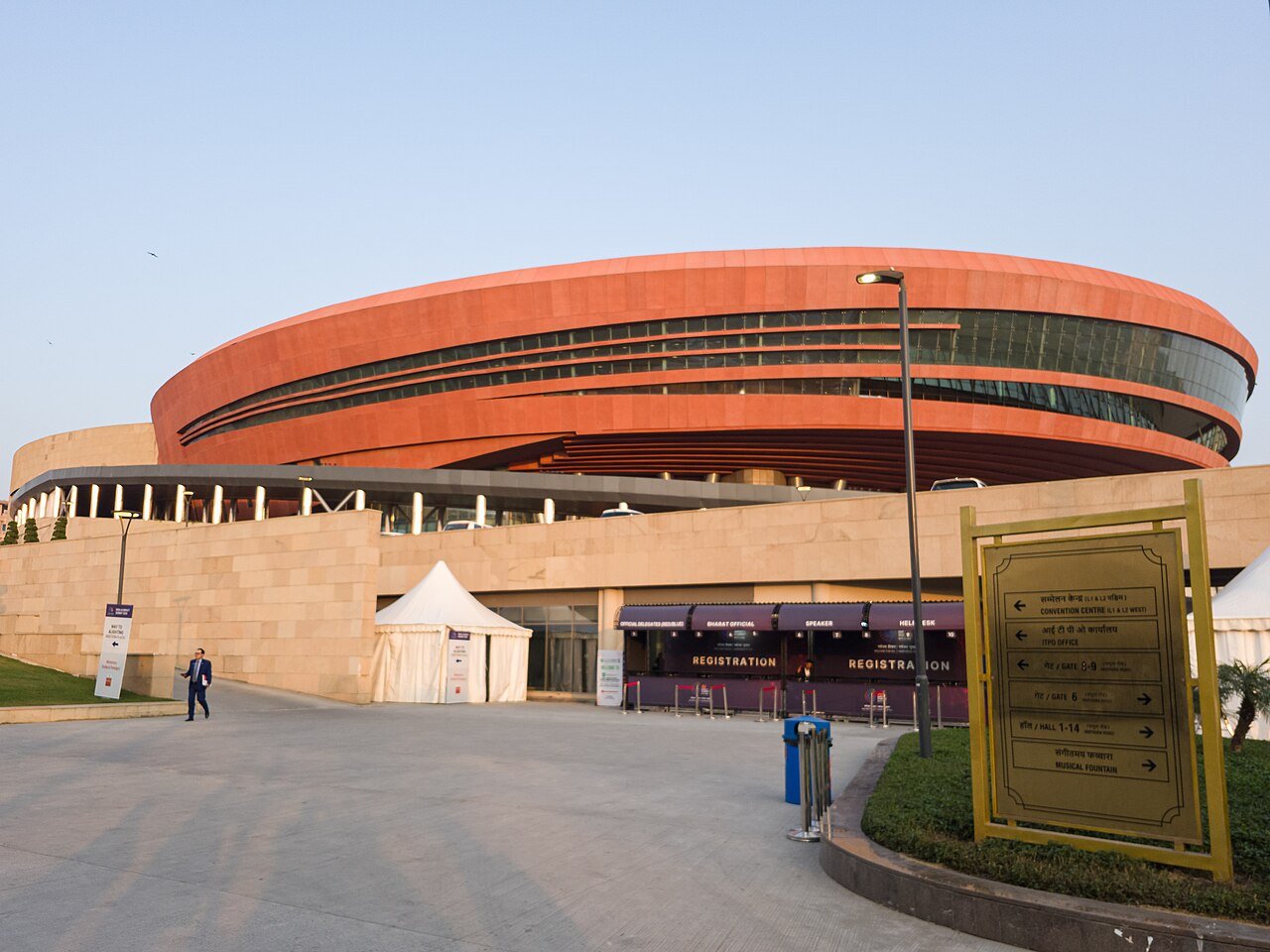
Prime Minister Narendra Modi will inaugurate the Bharat Renewable Energy Summit and Expo 2026 at Bharat Mandapam in New Delhi on 2 November. The four-day global event, running from 2 to 5 November, will bring together representatives from more than 130 countries and chart a roadmap for nearly $220 billion of investment in the clean energy sector by 2030.
Prime Minister Narendra Modi will inaugurate the Bharat Renewable Energy Summit and Expo (BRESE) 2026 at Bharat Mandapam in New Delhi on 2 November. Organised by the Ministry of New and Renewable Energy, the four-day summit will run from 2 to 5 November and is being seen as a decisive milestone in India’s clean energy transition. As per the programme outline, policymakers, investors, industry leaders, manufacturers, financial institutions, researchers and innovators from across the world will gather on one platform.
The theme of the summit is ‘Invest. Innovate. Inspire.’ The idea is clear: connect global capital, technology and industrial expertise with India’s fast-growing clean energy opportunities, so that investment potential turns into real projects, partnerships and progress. Alongside the summit, a large exhibition will showcase renewable energy technologies, products and solutions.
A four-day global event begins tomorrow
The Bharat Renewable Energy Summit and Expo 2026 will be held at Bharat Mandapam in New Delhi from 2 to 5 November. Over the four days, high-level plenary sessions, ministerial discussions, CEO roundtables and dedicated country and state sessions will be held. These sessions will discuss financing, policy, technology, manufacturing, energy storage and workforce development in detail.
The event will open with the Prime Minister’s inaugural address, followed by four days of deliberation on the future of clean energy. The summit also provides for direct meetings between investors, manufacturers and technology providers, enabling business-to-business, business-to-government and government-to-government agreements and partnerships. In this way, the summit is set to become not just a forum for discussion, but a bridge to concrete investment and projects.
Over 130 countries to take part, nine country partners
The global scale of the summit is evident from the fact that representatives from more than 130 countries — including ministers, policymakers, industry leaders, investors, financial institutions, manufacturers, innovators, researchers and multilateral organisations — are expected to attend. Australia, Denmark, the European Union, France, Germany, the Netherlands, Norway, Sweden and the United Kingdom will participate as country partners.
The participation of so many countries signals that clean energy is no longer only an environmental issue; it has become a central theme of the global economy, energy security and technological leadership. For India, the opportunity is significant because the country wants to present its vast renewable energy market to the world and open new routes for investment and technology transfer. The country partners’ sessions will also discuss bilateral cooperation, joint projects and technology partnerships.
The 2030 goal: 500 GW of non-fossil capacity
At the heart of the summit will be India’s goal of achieving 500 GW of non-fossil fuel-based power capacity by 2030. According to available information, the country’s installed non-fossil fuel capacity has already reached 308 GW. Achieving the target will require investment of around $220 billion between 2027 and 2030.
Along with this investment, rapid expansion of energy storage systems, strengthening of transmission networks and growth of domestic manufacturing capacity will also be essential. The summit’s sessions will discuss these very challenges — where the money will come from, how technology will be accessed, how the grid will be prepared and how domestic industry will be strengthened. That is why sessions on financing and policy have been given a special place in the summit, so that investors gain confidence and projects gain momentum.
India’s standing: third in solar, fourth in wind
India’s global position in renewable energy is strengthening continuously. According to available information, India ranks third in the world in renewable energy and solar installed capacity, and fourth in wind power capacity. Between July 2024 and June 2026, the country’s renewable energy sector attracted investment of $63.7 billion.
These figures show that India’s clean energy market is now counted among the most attractive markets in the world. Falling solar costs, expanding wind capacity and new technologies such as green hydrogen have increased investor confidence. The summit will present India’s journey through exhibitions and sessions, so that the world can see how far India has come in a short time in clean energy and what the road ahead looks like.
Madhya Pradesh among 13 participating states
Thirteen states and Union Territories will also participate in the summit as partner states, and Madhya Pradesh is among them. In the dedicated sessions of these states, their renewable energy potential, investment opportunities and manufacturing capabilities will be showcased. For Madhya Pradesh, this participation is important because the state has large solar energy potential and wants to attract investment for clean energy projects.
The participation of states means the benefit of the summit will not remain limited to the national level but will reach the states. In their sessions, states will share information about their policies, availability of land and resources and facilities for investors. This will make it easier for investors to understand what opportunities exist in which state for which kind of project. For Madhya Pradesh, solar energy, green hydrogen and energy storage are areas where special attention is expected during the summit.
Green hydrogen and the Solar Alliance alongside
The summit will be held alongside the ninth session of the International Solar Alliance Assembly and the fourth International Conference on Green Hydrogen. The Solar Alliance Assembly will focus on solar deployment, financing and capacity building, particularly across the Global South. It will also explore ways to expand the use of solar energy through international cooperation.
The green hydrogen conference will discuss production, storage, transport and use of this emerging technology. Green hydrogen is being seen as the clean fuel of the future, which can replace fossil fuels in industry, transport and energy storage. With both these companion events, Bharat Mandapam will host deliberation on almost every aspect of clean energy at once — from solar to wind, and from hydrogen to storage.
Exhibition, hackathon and a platform for young talent
The exhibition accompanying the summit will feature more than 400 manufacturers, developers, technology providers, companies, startups and research institutions showcasing their solutions. The exhibition will give visitors a chance to see and understand the latest renewable energy technologies up close, including solar panels, wind turbines, battery storage, smart grids and green hydrogen equipment.
There are also special events for young people. Winners of the Bharat Renewable Energy Hackathon 2026 will be honoured during the summit. In this hackathon, students, startups and researchers prepared solutions for ten real-world challenges. In addition, the grand finale of the National Renewable Energy Quiz 2026 will be held at Bharat Mandapam. The participation of young people shows that the future of clean energy lies with the new generation, and the summit is giving that generation a platform.
What next: investment, jobs and energy self-reliance
After the summit, the biggest question will be how far the announcements and discussions translate on the ground. If the roadmap for $220 billion of investment turns into concrete projects, it will not only increase power generation capacity but also create large-scale employment in manufacturing, installation and maintenance. Investment in energy storage and transmission networks will make power supply more reliable, benefiting both industry and ordinary consumers.
For India, expanding clean energy is also a big step towards energy self-reliance. Reduced dependence on fossil fuel imports will save foreign exchange and strengthen energy security. For states like Madhya Pradesh, this is an opportunity to harness solar potential, attract investment and create jobs. In the coming days, all eyes will be on the agreements and announcements emerging from the summit, because they will decide how fast India’s clean energy journey moves forward.
Disclaimer: This report has been prepared on the basis of available sources and verification. In case of any factual error, a correction will be published.