










Desk Report
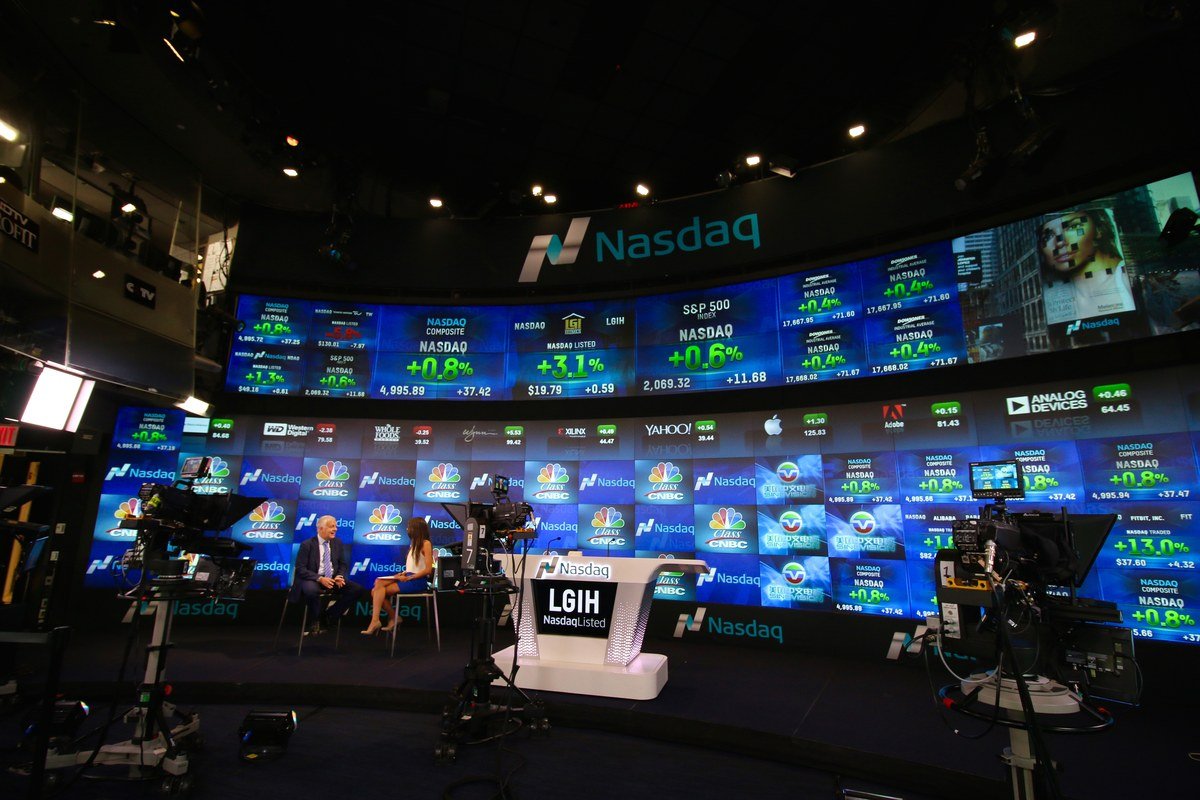
Anthropic, the company behind the Claude chatbot, has raised $81.3 billion in the largest initial public offering in history, pricing its shares at $83 each and debuting on the Nasdaq on Thursday under the ticker ANT — overtaking SpaceX’s $75 billion debut from June.
A debut that rewrote the record books
Anthropic priced its initial public offering late on Wednesday, selling 980 million shares at $83 each to raise $81.3 billion, the company said in a statement. Business Standard, citing Reuters, reported the pricing. The figure makes it the largest stock-market debut on record, ahead of SpaceX, whose June offering raised about $75 billion.
The comparison comes with a caveat that matters: SpaceX’s total later rose to $85.7 billion after its underwriters exercised an option to buy additional shares, and Anthropic has granted its banks a similar option over additional shares, which could lift its total further still.
What is not in doubt is the scale of the first-day raise — more than double the $29.4 billion raised by Saudi Aramco in 2019, the third-largest listing on record, and well ahead of SK Hynix at $26.5 billion earlier this year.
At $83 a share, Anthropic is valued at roughly $1.5 trillion on a fully diluted basis, or about $1.1 trillion without dilution, making it the world’s 12th-biggest listed company, just behind Tesla. Its shares begin trading on the Nasdaq on Thursday under the ticker ANT, with Goldman Sachs and Morgan Stanley leading a 22-bank underwriting syndicate.
How the deal was priced
Anthropic had told investors last week that it planned to sell 825 million shares at between $70 and $78 each. Demand, however, ran far ahead of supply. Orders outpaced the shares on offer by nearly seven times, according to Bloomberg, and the company expanded the deal by about 19 per cent, raising the number of shares to 980 million and pricing them at $83 — above the top of the marketed range.
Of the total, the company itself sold 956.4 million shares, while its seven co-founders sold a further 23.6 million shares between them.
The pricing caps a remarkable run for a company that is less than six years old. “Both of them are much bigger than any previous IPO,” Jay Ritter, professor emeritus at the University of Florida and director of its IPO Initiative, said of Anthropic and SpaceX. “What’s also remarkable is that Anthropic is less than six years old.”
A further $26 billion from private investors
Alongside the public offering, Anthropic is raising a further $26 billion through a separate private placement at the IPO price, taking the total capital raised to about $107.3 billion. Bloomberg reported that Google, the chipmaker AMD and Microsoft are among the participants in the placement, while CNN reported Nvidia among the investors.
The placement underlines how the world’s largest technology companies are now directly funding the frontier AI labs whose models run on their hardware and cloud platforms. Anthropic’s listing also makes it the first major developer of frontier AI models to go public, ahead of its arch-rival OpenAI — a milestone the market has watched for years as a test of whether the eye-watering valuations of AI companies can survive contact with public shareholders.
From a 2021 startup to a $1.5 trillion valuation
Anthropic was founded in 2021 by a group of former OpenAI employees who left to build a company with a sharper focus on AI safety. Its first version of Claude reached the public in March 2023, a few months after OpenAI released ChatGPT in November 2022.
Growth accelerated when Claude Code, its AI coding agent, was released in early 2025 and quickly gained traction with software developers, followed by Claude Cowork in early 2026, as Anthropic established itself as a core provider of so-called agentic AI tools — systems that can carry out multi-step tasks on a user’s behalf.
The company’s revenue has soared with that demand. Its annualised revenue run rate reached $81 billion at the end of October, up $10 billion in a single month from September 30, and the filing showed revenue of $33.24 billion for the nine months to September 30.
The customer base has expanded just as fast: Anthropic reported 11,900 customers generating at least $100,000 in annual revenue on a trailing 12-month basis at September 30, compared with more than 1,500 at the end of 2025.
The revenue surge — and the losses
For all the growth, Anthropic is not yet profitable. It reported third-quarter revenue of $16.96 billion, a 47 per cent increase on the second quarter, but an operating loss of $567 million in the same quarter, against operating income of $974 million in the preceding three months. Its net loss narrowed to $23.3 billion from $66.3 billion, including non-operating items linked to bonds convertible into its shares.
Going public means the company will now have to disclose its revenue, spending and losses every quarter, offering investors a regular pulse check on the health of the AI boom — and on whether a frontier lab can turn its models into steady profit.
“Investor sentiment toward AI has been extremely volatile, and while a successful IPO will likely turn that sentiment positive in the near term, the long-term trajectory of Anthropic’s business and performance is what could really instill greater confidence in the AI trade,” said Avery Marquez, director of investment strategies at Renaissance Capital.
The $900 billion compute bill
The largest question hanging over the valuation is cost. Anthropic spent nearly $9 billion on computing capacity and infrastructure in the first half of 2026, almost four times the amount in the same period a year earlier, and incurred another $5 billion in computing costs in the third quarter, according to its IPO filing.
It has also committed to nearly $900 billion in computing expenditure with infrastructure partners, including Amazon and Google, to train and operate increasingly powerful models.
The company needs to lock in extraordinary revenue growth to justify that spending and its valuation. Sceptics question whether it can maintain its growth as competition intensifies, warning that AI tools could become more like a commodity, with customers picking between providers and squeezing pricing power.
A listing into a cooling market
Anthropic’s debut also lands at a nervous moment for the AI trade. The tech-focused Nasdaq Composite is down more than 10 per cent from its record high six weeks ago, and has shed about 7.6 per cent over the past month, while Asian stock markets with heavy exposure to AI fell on Thursday morning, with South Korea’s Kospi, Hong Kong’s Hang Seng and Taiwan’s Taiex all in the red.
The backdrop is a bull market that began in mid-October 2022, after ChatGPT’s release, in which the Nasdaq has gained roughly 135 per cent and added $26 trillion in market value. Whether that run has further to go is now openly debated: AI-related spending is forecast to reach $2.7 trillion in 2026 and $3.6 trillion in 2027, according to Gartner, and companies betting on the technology make up roughly half of the value of the S&P 500 — figures that have stoked debate over whether Big Tech is funding a future gold mine or a speculative bubble like the one that preceded the 2000 dot-com crash.
“At a time in which investors are very nervous on the overall tech trade, Anthropic’s IPO is a big near-term win for the tech sector and should help restore some investor confidence that the AI revolution growth thesis is not waning,” Dan Ives, partner and senior managing director at Yorkville Ives, said in a note to clients.
Jay Ritter struck a longer view: “Thirty years ago, the internet was the next big thing. It has changed our lives. Today, artificial intelligence is the next big thing. It will change our lives, too.”
What comes next
With trading under way, attention now shifts from the pricing to the performance. Anthropic must show that its growth can be sustained against OpenAI, whose GPT-6 Astra accounted for about 13 per cent of enterprise AI spending tracked by the corporate expense platform Ramp in September, against about 8 per cent for Anthropic’s Claude Fable, while OpenAI’s own annualised revenue run rate crossed $40 billion in July.
Safety will also stay in focus: chief executive Dario Amodei called in September for the industry to “pace the frontier” after former employees sounded the alarm over safety at the lab, and the Trump administration at one point barred Anthropic from releasing its most advanced models, CNN reported.
If the shares hold their value, the debut will be read as a vote of confidence in the AI boom; if they slip, it will deepen the doubts that have already pulled the Nasdaq well off its highs. Either way, the largest listing in history has put the economics of artificial intelligence on public display as never before.
डिस्क्लेमर: यह खबर उपलब्ध स्रोतों और सत्यापन के आधार पर तैयार की गई है। किसी तथ्य में त्रुटि होने पर सुधार प्रकाशित किया जाएगा।