






New Delhi. India has reached a major milestone in digital agriculture. The Centre has created 11 crore Farmer IDs, achieving the target nearly five months ahead of the 31 March 2027 deadline. Union Agriculture and Farmers’ Welfare Minister Shivraj Singh Chouhan announced the achievement on Saturday, 24 October 2026. He said the target was completed by the night of 23 October 2026. The Farmer ID, also called Kisan Pehchaan Patra, is a unique 11-digit number that will serve as each farmer’s distinct digital identity.
What is a Farmer ID and why does it matter
A Farmer ID is an Aadhaar-like unique digital identity that is linked dynamically to the State’s land records. It carries demographic information, details of the crop sown and ownership details. The idea is simple: government scheme benefits should reach the right farmer, at the right time, and transparently. Until now, farmers had to submit the same documents again and again for different schemes and undergo repeated verification. The Farmer ID is meant to end that repetition. According to the minister, farmers will no longer need to submit piles of paperwork repeatedly or provide endless documentation to access services.
The Digital Agriculture Mission and AgriStack behind it
Farmer IDs are issued under the AgriStack framework, which is part of the government’s Digital Agriculture Mission. The Union Cabinet approved the Digital Agriculture Mission on 2 September 2024, with an outlay of Rs 2,817 crore, of which the central share is Rs 1,940 crore. AgriStack rests on three core registries. The first is the Farmers’ Registry, through which Farmer IDs are issued. The second is the registry of geo-referenced village maps, and the third is the Crop Sown Registry. Together, these create a verified digital database for agriculture that can be used to identify beneficiaries, record crop information and improve the delivery of assistance.
What the minister said: a historic day and cooperative federalism
In a video message, Agriculture Minister Shivraj Singh Chouhan called it a historic day for Indian agriculture. He said the task of creating 11 crore Farmer IDs had been completed ahead of schedule. He described the achievement as an outstanding example of cooperative federalism and thanked officials and staff of the Central government, state governments, Union Territory administrations and district administrations. Addressing farmers directly, he said they now had their own unique identity and urged them to take timely advantage of government schemes and adopt technology to improve farming practices. He linked the effort to Prime Minister Narendra Modi’s vision of a developed India, saying a modern agricultural sector would require the use of technology. The Prime Minister had set the target of 11 crore IDs by March 2027.
What benefits will farmers get
According to the ministry, the Farmer ID will be the only document a farmer needs to access bank loans, crop insurance, disaster relief and to sell produce. It is expected to strengthen the implementation of the Pradhan Mantri Fasal Bima Yojana, the crop insurance scheme. In the event of crop damage caused by natural disasters, the verified database is expected to support more transparent assessments of losses and quicker disbursement of eligible compensation. The system will also help verify cultivators during the procurement of crops at the Minimum Support Price, the ministry said. It is also expected to simplify access to institutional credit, including loans under the Kisan Credit Card scheme. More than 6 crore farmers have already received direct benefits under various schemes through Farmer ID-based service delivery, according to the ministry.
The numbers behind the milestone
Ministry sources cited in national reporting give a picture of who the 11 crore registered farmers are. About 26 percent of them are women. About 81 percent belong to marginal and small operational-holding categories, that is, farmers with small landholdings. On age, around 15 percent of the registered farmers are 70 years of age or older, while 7.5 percent are below 30 years. The majority lie between 30 and 70 years of age. The pace of growth has also been rapid. The count was about 4.86 crore in March 2025, rose to 10.31 crore by August 2026, and reached 11 crore by the night of 23 October 2026. The spread across women farmers and smallholders suggests the digital identity has reached well beyond a narrow section of the farming community.
Background: from pilot districts to a national drive
The Farmer ID journey began with pilots. In the initial phase, pilots ran in one district each in six states: Farrukhabad in Uttar Pradesh, Gandhinagar in Gujarat, Beed in Maharashtra, Yamuna Nagar in Haryana, Fatehgarh Sahib in Punjab and Virudhnagar in Tamil Nadu. States then signed agreements with the agriculture ministry and the drive expanded. During Rabi 2024-25, the Digital Crop Survey covered 492 districts and more than 23.5 crore plots, forming part of the foundation of the digital agriculture database. The journey shows the Farmer ID was not built overnight. It grew step by step through the digitisation of land records and cooperation between the Centre and the states.
What it means for Madhya Pradesh’s farmers
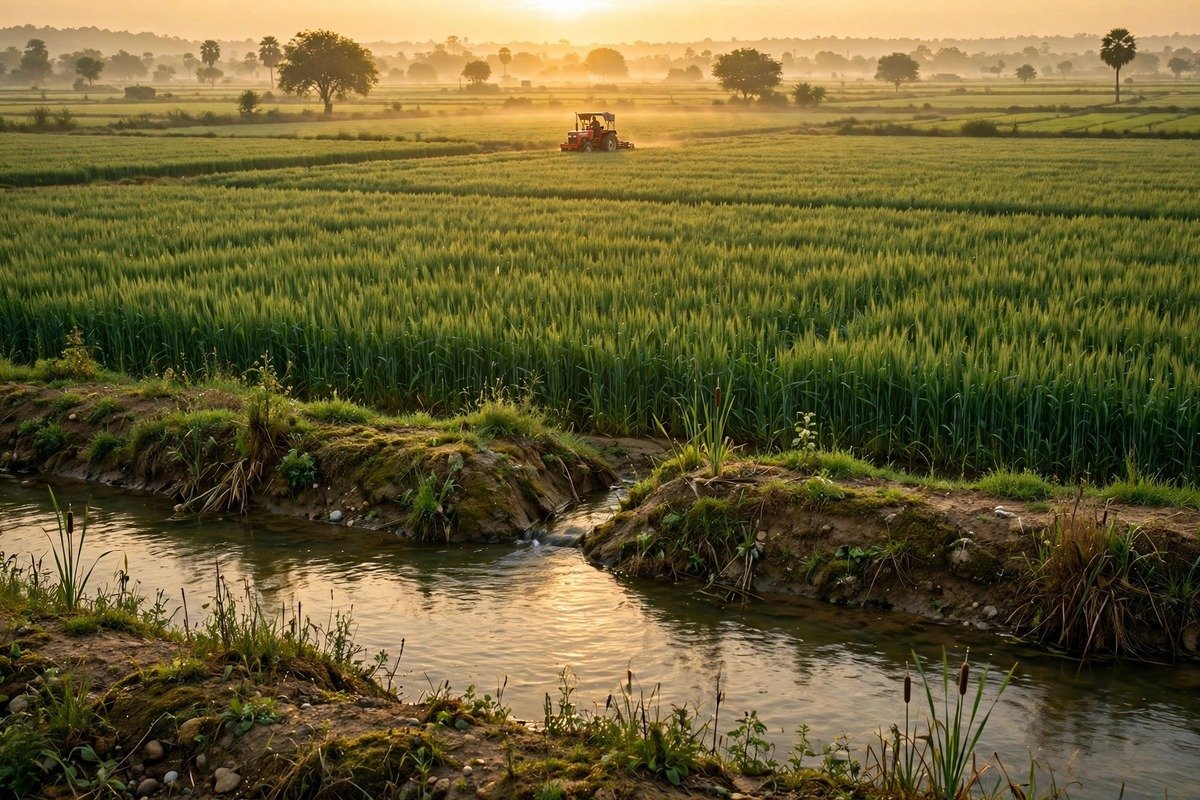
Madhya Pradesh is among India’s major agricultural states, and the Rabi season is the time when farmers prepare for wheat, gram and mustard crops. At such a time, a verified identity matters because it can save time in processes linked to schemes, insurance and credit. Shivraj Singh Chouhan himself is a former chief minister of Madhya Pradesh and now leads this drive as Union Agriculture Minister. The recently launched Khet Bachao Abhiyan for Rabi 2026 is also carrying messages on balanced fertiliser use, crop diversification and water conservation to farmers. Farmer IDs and such campaigns moving together point to an effort to make farming more transparent and technology-based. No separate Madhya Pradesh-specific Farmer ID figure was given in this announcement, so this report makes no separate claim for the state.
What next: reaching the actual cultivator
According to ministry sources, an important emerging priority for the Farmer ID initiative is the inclusion of actual cultivators who may not be recorded as landowners. This includes tenant farmers and sharecroppers who till the land but do not own it in the records. This question matters because scheme benefits should reach the person who actually farms. In the coming months, it will be watched how coordination between state land records and the farmers’ registry brings this group into the fold, and how quickly Farmer ID-linked services expand from village to village so that farmers can use the identity easily for schemes, credit and insurance.
Disclaimer: This news has been prepared on the basis of available sources and verification. If any fact is found to be incorrect, a correction will be published.