








Ujjain Bureau
Summary: Ahead of Diwali, work to polish the sanctum of Ujjain’s Mahakal temple has begun in full swing. The silver doors, walls and the Rudra Yantra are being specially cleaned and polished so that the sanctum shines in its full glory on the festival day. Painting and decoration work in the temple is going on alongside.
What is being polished inside the sanctum
Before the Diwali festival, work has begun to polish the silver parts fitted inside the sanctum of the Mahakal temple. This includes the silver doors of the sanctum, the silver walls and the Rudra Yantra located on the peak of the sanctum. Craftsmen are cleaning these parts in a special manner, followed by polishing, so that once the cleaning is complete, the silver doors and walls shine again in full. Along with this, the jaladhari, the silver doors fitted at the threshold and the doors of the Nandi hall are also being specially cleaned. Other silver parts around the sanctum are being cleaned in the same sequence. The temple management is getting this work done in such a way that devotees visiting for darshan on Diwali day see the sanctum in its grand and clean form.
Why the silver-cleaning tradition matters
The special cleaning and polishing of the silver doors, walls and yantras of the Mahakal temple is not a new practice. According to the temple committee, this cleaning is carried out regularly just before major festivals such as Mahashivratri, the Shravan month and Diwali. Preparations for this year’s festival have begun under the same tradition. The tradition is directly linked to the sanctity of the festival and the grandeur of the temple. On major festivals, the number of devotees in the temple rises sharply, and the sanctum itself is the centre of darshan. That is why the silver parts are cleaned in fine detail before the festival, so that the silver, fitted years ago, appears in its original shine. The craftsmen’s work is slow and careful, because the silver doors, walls and yantras are part of the temple’s heritage.
Painting and decoration work alongside
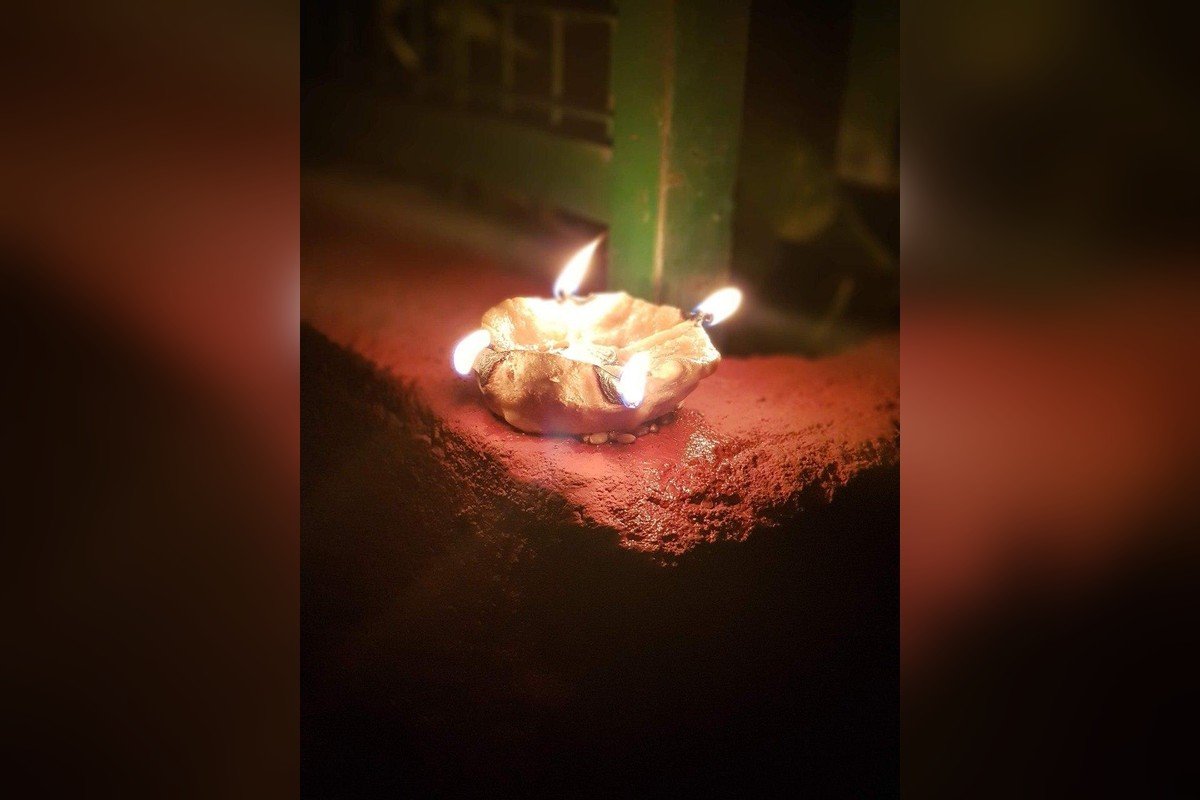
Along with the cleaning of the sanctum’s silver, painting and decoration work in the temple is also going on at a fast pace. Preparations to decorate the temple premises for the sacred festival of Diwali have begun. The temple will glow with lamps, flowers and electric lights, so that the splendour of the festival is visible across the premises. The temple management is giving final shape to all arrangements. During the festival days, attention is being paid simultaneously to darshan arrangements, cleanliness and decoration. That is why the silver cleaning is seen not merely as maintenance work, but as part of the overall preparation for the festival.
A five-day festival sequence with a different rhythm this year
This year, the sequence of the festival appears somewhat different because of variations in the dates. Dhanteras will be observed on 6 November, Diwali on 8 November and Govardhan Puja on 10 November. There will be a one-day gap between each festival, but the glow of the festival will remain for five days. In the Mahakal temple, the Gwalior panchang is given primacy for worship and festival calculations. This time, because of the variation in panchang calculations, there will be a festival on one day and a pause on the next, from Dhanatrayodashi to Govardhan Puja. Even so, according to tradition, the priests will perform aarti with sparklers for five days. The temple committee has clarified this sequence in advance, so that there is no confusion among devotees about the dates.
Morning of 8 November: festival begins with Bhasma Aarti
The Diwali festival at the Mahakal temple will be celebrated with its unique traditions. In most temples across the country, Diwali is observed on Amavasya, but at the Mahakal temple the festival is traditionally observed on Chaturdashi itself. This time, since Chaturdashi and Amavasya fall on the same day, 8 November, the Diwali celebration in Mahakal’s court will begin during the early-morning Bhasma Aarti itself. On Diwali day, after the temple doors open at 4 am, a special abhishek and worship of Mahakal will be performed. First, an abhyang bath with sesame oil will be given. After that, women of the priest families will apply saffron-sandalwood ubtan to enhance Mahakal’s form. A special adornment with gold and silver ornaments will follow. On Roop Chaturdashi, Diwali will be celebrated in Mahakal’s courtyard during the 4 am Bhasma Aarti, and from the same day the tradition of bathing with warm water will begin, continuing till Holi.
Annakoot and the sparkler aartis
On the occasion of Diwali, traditional dishes will be offered to Mahakal as bhog. For this, an annakoot will be decorated, including gujiya, papdi, khurme, kheer, poori, bhajiya, rice, dal, various vegetables and chutneys. This annakoot is regarded as the grandest part of the Diwali bhog tradition. The most special attraction of the Mahakal temple’s Diwali will be the aarti performed with sparklers. Sparklers will be lit in all five aartis, from morning till night. The entire court of Mahakal will glow in the light of lamps and sparklers. In the evening, townspeople will celebrate the festival by lighting lamps in their homes, while the temple will already be filled with Diwali joy at dawn.
What devotees visiting for darshan should keep in mind
For devotees coming to Ujjain during Diwali, the direct message of the temple’s preparation is that the sanctum will look its grandest on the festival day. The silver cleaning and polishing work is being completed before the festival, so that there is no shortfall in the sanctum’s shine at darshan time. Devotees should also note that at the Mahakal temple, the main Diwali celebration takes place in the early-morning Bhasma Aarti, while the festival is celebrated in the town in the evening. Keeping this difference in mind while planning darshan is therefore important. Crowds in the temple premises are likely to grow on festival days, so planning time carefully and following the temple management’s instructions will make darshan more convenient.
Ahead: the festival glow will last five days
After the silver cleaning and decoration, the festival sequence at the Mahakal temple will run from Dhanteras to Govardhan Puja. On Dhanteras, silver coins will be offered to Mahakal and special worship will be performed for the happiness and prosperity of the country, state and city. On Diwali, there will be the abhyang bath, ubtan, adornment, annakoot and the sparkler aartis. On Govardhan Puja, Govardhan and the cattle will be worshipped with due ritual. In this way, the silver cleaning that began before Diwali is not merely a preparation, but the first glimpse of the festival that will fill Mahakal’s court with the light of lamps and sparklers in the coming days. The shine of the sanctum, the decoration of the temple and the five-day tradition of aartis together will make this year’s festival memorable for devotees.
Disclaimer: This news has been prepared on the basis of available sources and verification. If any fact is found incorrect, a correction will be published.