





Desk Report
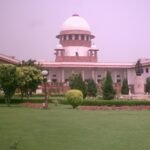
The Supreme Court on Monday said it is in favour of allowing only vehicles that meet BS-VI emission standards to run in Delhi during the winter months, describing it as the single most effective step to protect the capital’s air — even as the court noted that Delhi has so far had a “lucky winter”, with pollution staying short of the severe category.
What the court said
A three-judge bench led by Chief Justice of India Surya Kant, with Justices Joymalya Bagchi and V Mohana, was hearing the court’s suo motu proceedings on Delhi-NCR’s annual air pollution crisis on Monday, 23 November 2026.
Justice Bagchi said BS-VI compliance “must follow… and restricted not only to Delhi but to the entire National Capital Region (NCR)”, adding: “That is one thing which will significantly contribute to reduction of (pollution).”
The observation came during a discussion on older BS-IV vehicles. A counsel told the bench that a Supreme Court order dated 17 December 2025 had said BS-IV vehicles would be permitted and no coercive action should be taken against them — but authorities have now stopped issuing Pollution Under Control (PUC) certificates for these vehicles, which means they cannot get fuel. “Let them do the PUC,” the counsel urged.
Chief Justice Kant replied that the status quo should remain “for next month or so too”. When the counsel repeated the request, Justice Bagchi was emphatic: “That’s what we want. We want that. We want only BS-VI vehicles in Delhi, if not NCR.”
It is important to note what this means in law: the bench was expressing its view during a hearing, not passing a final order. The Chief Justice said the court will consider what further directions — short-term and long-term — are needed in the matter. The next hearing is likely on 25 November.
A ‘lucky winter’ — and why the court is still worried
At the outset of Monday’s hearing, the bench said Delhi had a “lucky winter” because air pollution had not spiked into the severe category this time. The Chief Justice said the weather had been favourable, while amicus curiae and senior advocate Aparajita Singh pointed to good wind movement.
Additional Solicitor General Aishwarya Bhati, appearing for the Commission for Air Quality Management (CAQM), said it was “nature primarily, but efforts (by authorities) have also fructified”. Justice Mohana called it a “cumulative effect”.
“Whatever, the lungs of the people are safe till now, to a certain extent,” Justice Bagchi remarked, noting that pollution “has not gone into severe (this time)”. Bhati agreed, saying: “Yes, otherwise this month is the most polluted.”
The caution behind the remarks is clear: November is usually Delhi’s most polluted month, and the relatively cleaner air this year is being credited largely to favourable winds rather than any lasting improvement. Singh told the court that long-term measures need to be implemented in a phased manner so that children and citizens do not face the same health hazards in the future. Vehicular pollution and dust are the main contributors, and a CAQM report cited in court said vehicular emissions are one of the most significant factors behind the poor air quality in Delhi-NCR.
The BS-IV vehicles caught in the middle
The exchange over BS-IV vehicles captures the human side of the winter curbs. Owners of older vehicles say they are caught between two positions: a 2025 court order that permitted their vehicles, and the current refusal of PUC certification that leaves them unable to buy fuel.
According to NDTV, advocate Rakesh Khanna appeared for the owner of a Volvo vehicle older than 15 years, arguing that although the court had earlier granted an exemption to BS-IV vehicles from punitive action, his client was now being denied fuel because PUC certificates were not being issued.
The bench did not accept the plea. The Chief Justice said the status quo should continue for the next month or so, and Justice Bagchi’s response made the court’s direction of travel plain: only BS-VI vehicles in Delhi, if not the entire NCR.
What rules already apply in Delhi this winter
BS-VI emission standards became mandatory across India on 1 April 2020 for the manufacture, sale and registration of new vehicles. That means every new vehicle sold in the last six and a half years already meets the standard — the restriction the court is contemplating would bite mainly on older vehicles.
Delhi already enforces a winter ban on the entry of vehicles below BS-VI standards that are registered outside the capital, from 1 November to 31 January every year. Under the notification, BS-VI, CNG and electric vehicles are allowed to enter the city in line with the prescribed rules and exemptions.
The Graded Response Action Plan (GRAP), enforced by the CAQM, adds another layer: when the air quality index touches the severe band of 401–500, Stage-III measures kick in automatically and bar BS-III petrol and BS-IV diesel vehicles. This year, authorities have barred the entry of BS-IV vehicles from NCR into Delhi from 1 November till 31 January.
In practice, as the Times of India noted, GRAP enforcement during severe-air days virtually achieves a BS-VI-only regime. What the court is now weighing is making that the stated position for the winter months, and extending it across the NCR rather than Delhi alone.
Commercial vehicles and the five-year idea
The hearing also turned to commercial vehicles, which form a large share of the traffic entering Delhi from neighbouring states. Senior advocate Sanjiv Sen, appearing for the Municipal Corporation of Delhi, told the court that orders permitting an increase in the Environment Compensation Charge (ECC) had led to a 30% reduction in commercial vehicles coming into Delhi from neighbouring states — a change he said had contributed greatly to the improvement in air quality.
Chief Justice Kant then asked the central question: “how to ensure that commercial vehicles do not enter Delhi at all?” He immediately acknowledged the difficulty — the capital has its own demands for food, groceries and vegetables, all of which have to come from outside. “So what can be the alternative? Can there be warehouses at the border and battery-operated vehicles to bring the goods into Delhi?”
The Chief Justice wondered whether such a system could become a reality in at least five years, if not immediately. “May not be possible this year or next year, but why not try to make it work in the next five years?” he asked. The court also floated the idea of logistics hubs along Delhi’s borders, where incoming goods could be offloaded and carried into the city in non-polluting vehicles.
States pulled up — what happens next
The court also pulled up neighbouring states for their role. Chief Justice Kant wondered why they were “very passively participating and not actively involved” in efforts to clean Delhi’s air. The bench directed the Advocate Generals of Punjab, Uttar Pradesh, Haryana and Rajasthan to appear before it at the next hearing, and asked all states to file affidavits on the steps they have taken to reduce pollution in the NCR. The court also asked the states to file their replies to a report submitted by an expert committee appointed by the CAQM.
The next hearing is likely on 25 November, when the court is expected to consider what further directions are needed. For now, vehicle owners in Delhi and the NCR have a clear signal of the court’s thinking — but no final order yet. The distinction matters: until the court passes directions, the existing winter rules, including the 1 November–31 January entry ban and the GRAP stages, remain the law on the ground.
डिस्क्लेमर: यह खबर उपलब्ध स्रोतों और सत्यापन के आधार पर तैयार की गई है। किसी तथ्य में त्रुटि होने पर सुधार प्रकाशित किया जाएगा।