





New Delhi Bureau
Summary: The Defence Ministry has signed contracts worth Rs 53,866.50 crore for eight Next Generation Corvettes for the Indian Navy. Garden Reach Shipbuilders and Engineers will build five of the warships and Goa Shipyard will build three. For the first time, the Navy itself will design the ships, while defence public sector shipyards chosen through a competitive process will construct them.
The Indian Navy is set for a major addition to its fighting strength. On 2 November 2026, the Defence Ministry signed contracts for the construction of eight Next Generation Corvettes, small but multi-role warships that will strengthen the Navy’s surface combat fleet. The contracts are together worth Rs 53,866.50 crore. They were signed in New Delhi at Kartavya Bhawan-2 in the presence of Defence Secretary Rajesh Kumar Singh. The deal is expected to give fresh momentum to India’s indigenous warship-building programme.
What happened: Rs 53,866 crore deal signed
The Defence Ministry signed two separate contracts on Monday. One was signed with Garden Reach Shipbuilders and Engineers Limited, known as GRSE, and the other with Goa Shipyard Limited, known as GSL. Together, the two contracts cover the construction of all eight Next Generation Corvettes. According to the information released by the ministry, the deal is an important step towards strengthening the Navy’s maritime combat capability.
What makes the deal stand out is that it will move forward entirely on an indigenous path. The ships will be designed in India, built in India, and will involve Indian industry, including micro, small and medium enterprises. The government believes that such projects strengthen self-reliance in defence production and also support the Make in India campaign.
Who will build them: Five by GRSE, three by Goa Shipyard
The division of work under the contracts is clear. GRSE, based in Kolkata, will construct five corvettes, while Goa Shipyard Limited will be responsible for the remaining three warships. Both are defence public sector undertakings with long experience in warship construction.
Splitting the work between two shipyards also has a practical benefit. Construction does not get stuck at a single location, and the capacity of both centres can be used at the same time. This increases the chance that the project will maintain its pace. It also spreads shipbuilding skills and employment across both the eastern and western coasts of the country.
A first: Navy designs, competitively chosen shipyards build
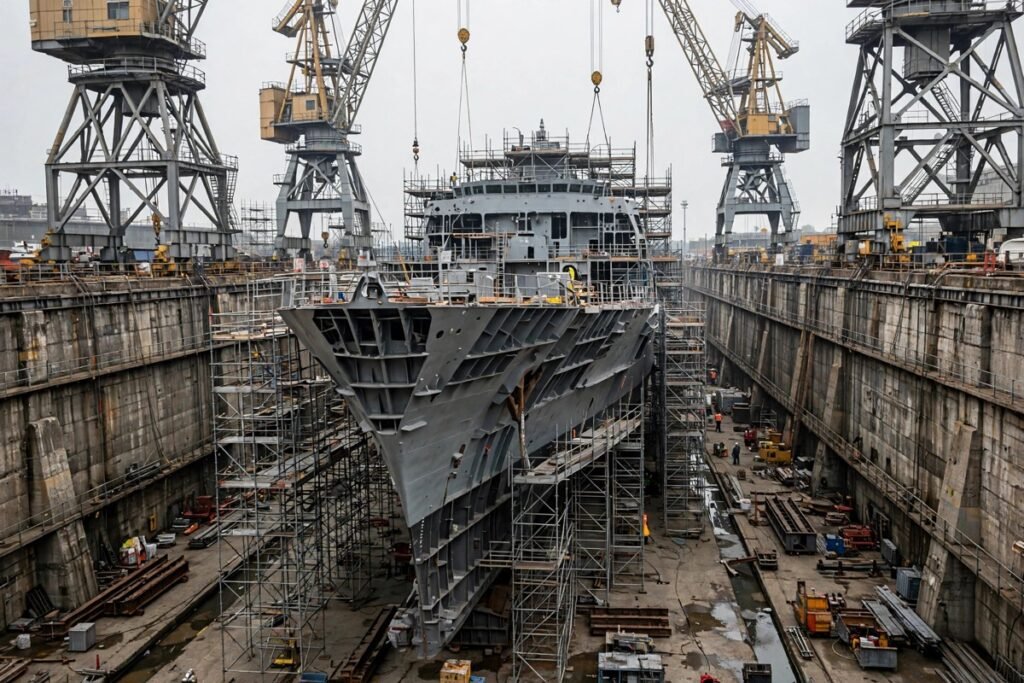
The ministry has described the project as a milestone for India’s indigenous warship design and construction capability. It is the first project in which the ships will be indigenously designed by the Indian Navy itself and constructed by defence public sector undertakings selected through a competitive process.
This point is worth understanding. In many earlier projects, the responsibility for design and construction was fixed in different ways. This time, the Navy will keep control of the design so that the ships are built exactly for the roles they are needed for. Choosing the builders through competition keeps the focus on capability, quality and timelines.
The Cabinet Committee on Security had approved the construction of these eight corvettes on 30 October 2026. The fact that the contracts were signed within three days of that approval shows that the project is being taken forward quickly.
What is a corvette, and why the next generation matters
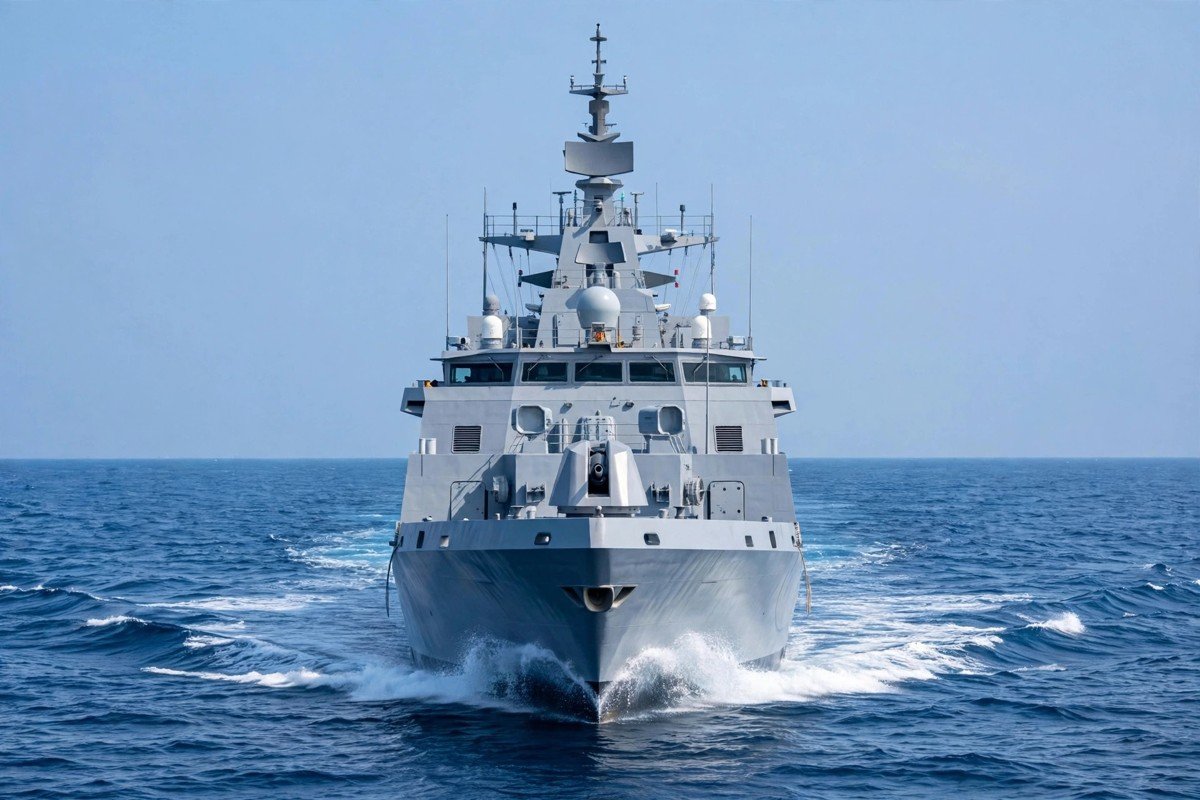
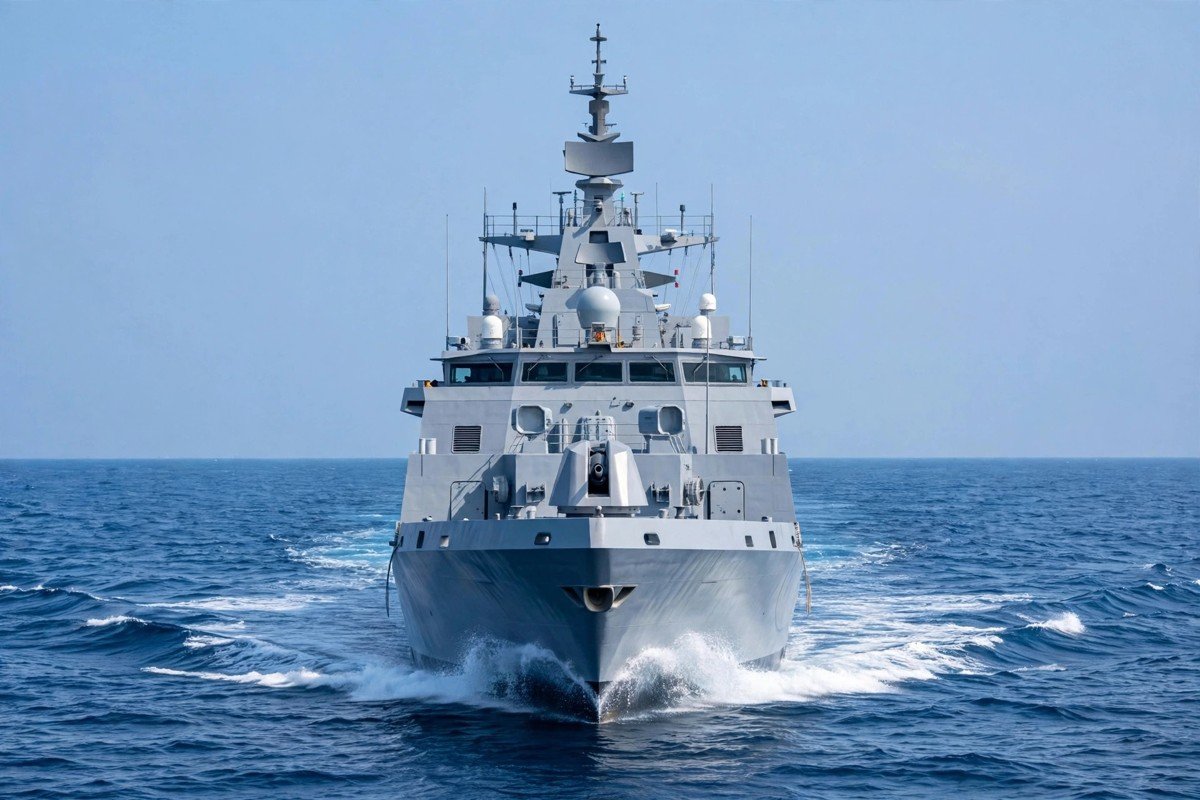
A corvette is a relatively small warship. It is smaller in size than a frigate or a destroyer, but the role of a modern corvette is no longer limited to coastal patrol. It can carry advanced radar, electronic warfare systems, anti-ship missiles, air defence systems and anti-submarine warfare equipment. In other words, despite its smaller size, it is a multi-role combat vessel.
The Next Generation Corvettes are the next stage of this thinking. They will be built on a stealth design, which aims to reduce their detection by radar. Reports suggest that their speed could be around 30 knots and that they will be compact, fast and capable of performing several roles. Their area of operation will extend across the Indian Ocean region. The combination of small size and high speed makes them useful both in coastal waters and in the open sea.
What the new warships will be able to do at sea
The new corvettes will be fitted with advanced missiles, weapon systems and sensors. With their help, the Navy will be able to conduct operations in the air, on the surface of the sea and under water. Their roles will include protecting sea trade routes, action against enemy ships and submarines, coastal security and military operations in littoral waters.
They will also strengthen maritime surveillance and the Navy’s continuous presence in the region. The burden on larger frontline ships will come down, because many tasks that bigger ships currently have to handle can be taken up by these smaller but capable vessels. Alongside the four existing Kamorta-class corvettes, which focus mainly on anti-submarine warfare, the new ships will make the Navy’s fleet of smaller warships more balanced.
Defence Minister Rajnath Singh has also described the deal as good news for the country’s indigenous shipbuilding ecosystem. The government says that the indigenous construction of these ships takes forward the Prime Minister’s SAGAR vision, the idea of security and growth for all in the region.
What it means for jobs and indigenous industry
The impact of the project will not be limited to the Navy. According to government estimates, the construction of these warships over the next 10 years is expected to generate about 72 lakh person-days of employment in shipyards and around 460 lakh person-days in ancillary industries and MSMEs. Taken together, the figure reaches about 532 lakh person-days.
This employment will spread across several levels. Alongside engineers, technicians and skilled workers directly involved in shipbuilding, smaller and larger companies making parts, equipment, steel, electronics and other materials will also get work. This will strengthen the entire chain of the country’s shipbuilding industry and will leave trained skills available for future projects.
The government has also said that the project will promote equipment and materials made in India, indigenous technology and Indian skills and expertise. The direct meaning of this is that dependence on imports will fall and the country’s own capacity in defence manufacturing will grow.
Background: The growing need for maritime security in the Indian Ocean
The Indian Ocean is one of the busiest sea trade routes in the world. Energy supplies, the movement of merchant ships and coastal security all make this region increasingly important. In such a setting, a navy needs ships that can stay at sea for long periods, carry out surveillance and act quickly when required.
Alongside larger warships, a fleet of smaller, fast and multi-role ships meets this need. Corvettes fall in this category. They can handle tasks ranging from coastal security to anti-submarine operations and can be deployed with fewer resources than larger ships. This is why many navies around the world give modern corvettes an important place in their fleets.
For India, this project is also a step towards Aatmanirbhar Bharat, or self-reliant India. When design, construction and technology develop within the country, control over cost and timelines improves, and it also becomes easier to maintain the ships, upgrade them and add new technology in the future.
What happens next: Construction, delivery and joining the fleet
With the contracts signed, work will now move towards construction. Reports suggest that the warships under this project are expected to start arriving by 2030. After that, they will join the Navy’s fleet in phases and will add significantly to the number of surface combat vessels.
The road ahead will include finalising the design, starting construction, testing and sea trials. Every ship has to pass strict tests before joining the fleet, so that it can perform its role in every weather and in every condition. This whole process takes time, but once the ships are ready, they serve the Navy for decades.
The message of this deal is also clear: India wants to advance its maritime security preparedness on the strength of its own indigenous capability. Eight new corvettes, two experienced shipyards, the Navy’s own design and an indigenous investment worth thousands of crores together could change the picture of the Indian Navy in the coming years.
Disclaimer: This news has been prepared on the basis of available sources and verification. In case of any factual error, a correction will be published.