


Ujjain Bureau.
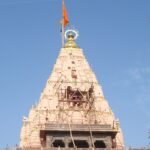
Diwali at Ujjain’s Mahakaleshwar temple will follow its unique tradition this year and be celebrated on Chaturdashi. On 8 November, the festival will begin at dawn itself during the Bhasma Aarti in the court of the deity, while the people of the city will celebrate Diwali in the evening. The abhyang bath, ubtan, annakoot feast and sparkler aartis in all five daily rituals will mark the occasion.
Ujjain is known as the city of Mahakal, and every festival here is celebrated with its own distinct tradition. Diwali is no exception. In most temples and homes across the country, Diwali is celebrated on Amavasya, but at the Mahakal temple the tradition is to celebrate the festival of lights on Chaturdashi. This year, that tradition comes with a special coincidence that has made the celebration even more remarkable.
A rare coincidence of Chaturdashi and Amavasya
This year, Chaturdashi and Amavasya fall on the same day, 8 November. Because of this, the Diwali celebration in the court of Mahakal will begin at dawn itself, during the Bhasma Aarti. According to temple tradition, the deity will receive special worship and adornment in the Bhasma Aarti, and that will mark the formal beginning of the festival.
In the evening, the residents of the city will celebrate Diwali in their homes. In this way, the festival will be observed at two levels on a single day — first at dawn in the temple, and then in the evening across the city. It is this feature that sets Mahakal’s Diwali apart from celebrations elsewhere in the country. The temple court will glow with lamps and sparklers, offering devotees a sight that is described as truly divine.
The festival sequence begins at 4 in the morning
On Diwali day, the temple doors will open at 4 in the morning, after which the deity will receive a special bath and worship. The sequence will begin with an abhyang bath using sesame oil. After the oil massage bath, women of the priest families will apply an ubtan of saffron and sandalwood, and then bathe the deity with warm water and fragrant substances.
The ubtan ritual is performed only once a year. It is believed that on Roop Chaudas, this special ubtan is applied to enhance the divine form, and the service is performed by the women of the priest families, followed by a camphor aarti. After the bath, the deity will be dressed in new clothes and adorned with gold and silver ornaments in royal splendour.
During the Bhasma Aarti, the priests will meditate on the deity amid chanting of mantras, and the festival of lights will begin. A large number of devotees are expected to attend this early-morning aarti, as devotees from across the country travel to Ujjain for darshan of Mahakal’s Bhasma Aarti.
The annakoot feast of traditional dishes
On Diwali, traditional dishes will be offered to Mahakal as bhog. An annakoot will be arranged, featuring gujiya, papdi, khurme, kheer, poori, bhajiya, rice, dal, various vegetables and chutneys. Annakoot literally means a mountain of grain — offering the deity a feast of many grain-based dishes.
According to tradition, the annakoot at the Mahakal temple is offered before anywhere else. While the tradition of offering annakoot in temples exists during the month of Kartik, at the Mahakal temple the priest family that performs the Bhasma Aarti arranges the annakoot on Roop Chaturdashi itself. That is why the annakoot holds a special place in Mahakal’s Diwali, and devotees consider its darshan an occasion of blessing.
Sparklers in all five aartis
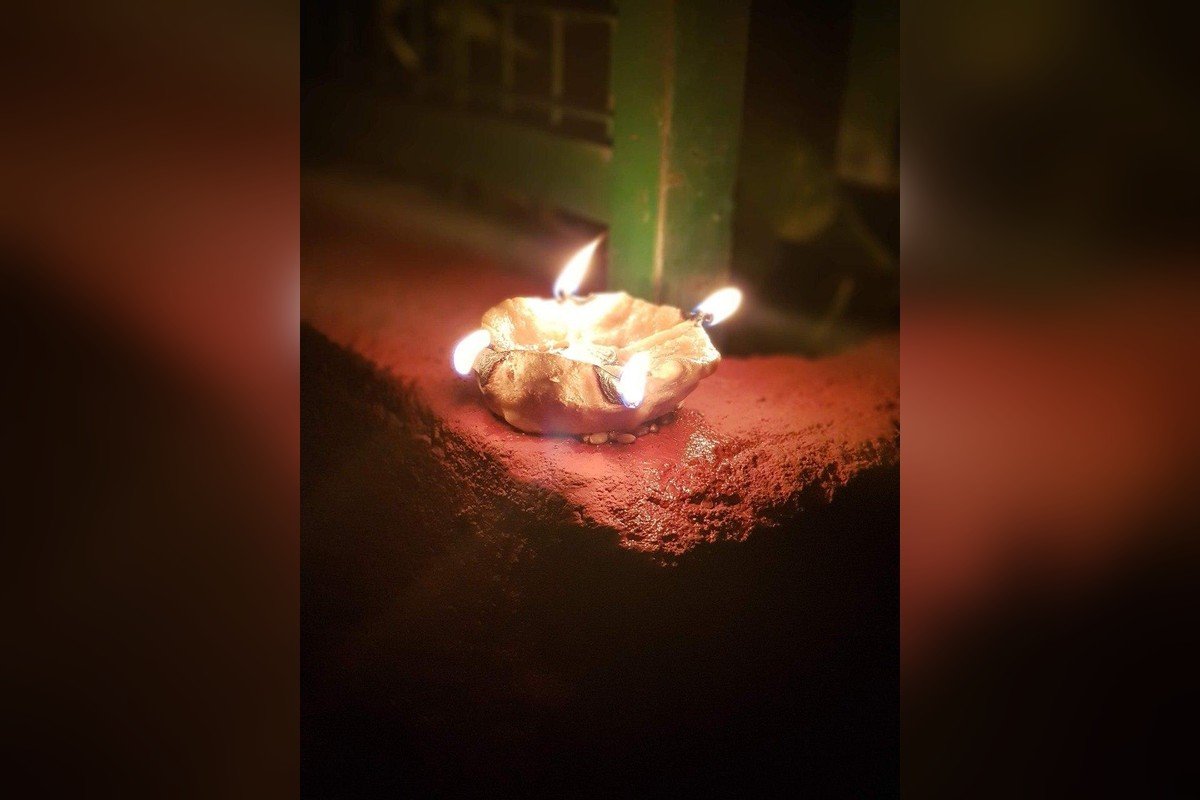
The most attractive feature of Diwali at the Mahakal temple is the aarti performed with sparklers. On Diwali, sparklers will be lit in all five aartis held from morning to night. The light of lamps and sparklers will illuminate the entire court of Mahakal.
For worship and festivals at the temple, the panchang of Gwalior is given primacy. This year, fluctuations in the calculation of dates mean that between Dhanteras and Govardhan Puja there will be a pattern of one day of festival followed by a day of pause. However, the glow of the festival of lights will remain for five days, and as per tradition the priests will perform the aarti of Mahakal with sparklers for five days. The temple will shine with lamps, flowers and electric lights.
Hot-water baths from Chaturdashi till Holi
From Chaturdashi itself, the sequence of bathing the deity with warm water begins, and it continues until Falgun Purnima, the day of Holi. It is believed that the onset of cold is marked from the Chaudas of Kartik month, and the deity is bathed with warm water to protect against the cold.
This tradition is part of the daily service routine of the Mahakal temple. During the cold season, bathing the deity with warm water and dressing him in warm clothes is part of the temple’s service tradition. The sequence that begins on Diwali day continues until Holi, after which the tradition of bathing with cool water resumes.
The full five-day festival calendar
The festival calendar this year runs as follows. Dhanteras will be observed on 6 November. On Dhanteras, the priest committee will perform special worship of Mahakal for the happiness and prosperity of the country, the state and the city, and silver coins will be offered to the deity. As per the Gwalior panchang, the worship of Dhanteras falls on 6 November, and the grand puja will therefore be held on that day. The temple calendar, however, shows the Dwadashi tithi of Kartik Krishna Paksha on 6 November — a difference between panchangs that those associated with the temple are already aware of, and as per tradition the Gwalior panchang is given primacy.
Diwali will be celebrated on 8 November. On Roop Chaturdashi, Diwali will be observed in the courtyard of Mahakal at dawn during the Bhasma Aarti at 4 in the morning. From this day, the tradition of bathing the deity with warm water will begin. The priests will first bathe him with turmeric and sandalwood, followed by a bath with warm water. After a special adornment with gold and silver ornaments, the annakoot bhog will be offered and the aarti will be performed amid the glow of sparklers.
Govardhan Puja will be observed on 10 November. In this way, the five-day festival of lights will be celebrated from Dhanteras to Govardhan Puja, with a day’s gap between each festival, while the glow of the festival will remain on all five days.
Why Mahakal’s Diwali is different
The Mahakal temple has a tradition of celebrating festivals before anyone else. It is believed that Mahakal is the king of the mortal world, and therefore every festival — be it Holi, Diwali or any other — is first celebrated here, before sunrise, in the Bhasma Aarti. That is why Mahakal’s Diwali holds a special attraction for devotees across the country.
The Bhasma Aarti itself is the most distinctive tradition of the Mahakal temple. In this early-morning aarti, sacred ash is offered, and as per tradition the ash is offered to Mahakal by the Mahanirvani Akhara. On Diwali day, this aarti becomes even more special, because the abhyang bath, ubtan, annakoot and the sparkler aarti all come together in it.
What is special for devotees
For devotees visiting Ujjain on Diwali, the temple makes special arrangements. A large number of devotees gather for the early-morning Bhasma Aarti, and the temple premises become devotional in atmosphere with the light of lamps. In the evening, the residents of the city will light lamps in their homes to celebrate Diwali, and the whole of Ujjain will glow with the light of lamps.
The Diwali celebration at the Mahakal temple is not merely a religious event; it is also part of Ujjain’s cultural identity. The observance of centuries-old traditions is what gives this city its distinct identity across the country. This year, the rare coincidence of Chaturdashi and Amavasya has made the festival even more memorable.
Disclaimer: This news has been prepared on the basis of available sources and verification. If any fact is found incorrect, a correction will be published.