



Dindori Bureau
Summary: Big news for the farmers of Dindori — Chief Minister Dr. Mohan Yadav has announced the procurement of kodo, kutki and paddy while addressing the Balram Krishi Mahotsav. The traditional crops of this tribal-dominated district will now get the support of the market and government procurement, raising hopes that farmers will get a fair return on their produce.
Friday proved to be an important day for the farmers of Dindori, a tribal-dominated district of Madhya Pradesh. Chief Minister Dr. Mohan Yadav addressed the Balram Krishi Mahotsav organised in Dindori through video conferencing from Indore airport, and during the address he shared several important decisions related to the farmers of the district. The biggest among them was the decision on the procurement of kodo, kutki and paddy, which the Chief Minister described as an important step in the interest of farmers.
The Chief Minister said that new possibilities of innovation and development in agriculture are emerging in Dindori district. The positive atmosphere that has been created around agriculture in the district is encouraging. The state government is continuously working to strengthen the economic condition of farmers, and the decision on the procurement of traditional crops has been taken in the same direction.
What was decided in Dindori
The Chief Minister said that the state government has decided to procure kodo and kutki along with paddy. This is expected to encourage the farmers of the district who cultivate traditional crops. According to the Chief Minister, this decision will help local farmers get a fair return on their produce and will also promote the traditional farming of the region.
In a tribal-dominated district like Dindori, kodo and kutki are not merely crops; they are part of the lifestyle and farming tradition of the farmers here. For a long time, farmers of these crops have complained that their produce does not get the price in the market that they deserve. The procurement decision is being seen as an answer to this complaint, because government procurement gives the farmer a reliable system for his produce.
Including paddy in this decision is also significant, because paddy is a major crop of Dindori and several other districts of the state. With kodo-kutki and paddy being procured together, farmers of the district hope to get support for their entire produce.
Address through video conferencing, an old connection with Dindori
The Chief Minister joined the Dindori programme through video conferencing from Indore airport on Friday. He said that Dindori district holds special importance for him. He has earlier been the in-charge of this district, so he is well acquainted with the conditions of the district, the needs of its farmers and its farming traditions.
The Chief Minister said that Dindori has established a distinct identity in the state under the leadership of its able public representatives. Despite being a tribal-dominated district, it has built its identity in agriculture, education and development. According to the Chief Minister, the positive efforts taking place in the field of agriculture in the district are commendable, and the government is committed to taking these efforts forward.
Information about the Chief Minister’s 30 October programme has already been published earlier, in which his virtual connection with Dindori’s Balram Krishi Mahotsav was mentioned. Friday’s address was part of the same programme, in which concrete decisions like procurement came to the fore.
Why kodo-kutki matter
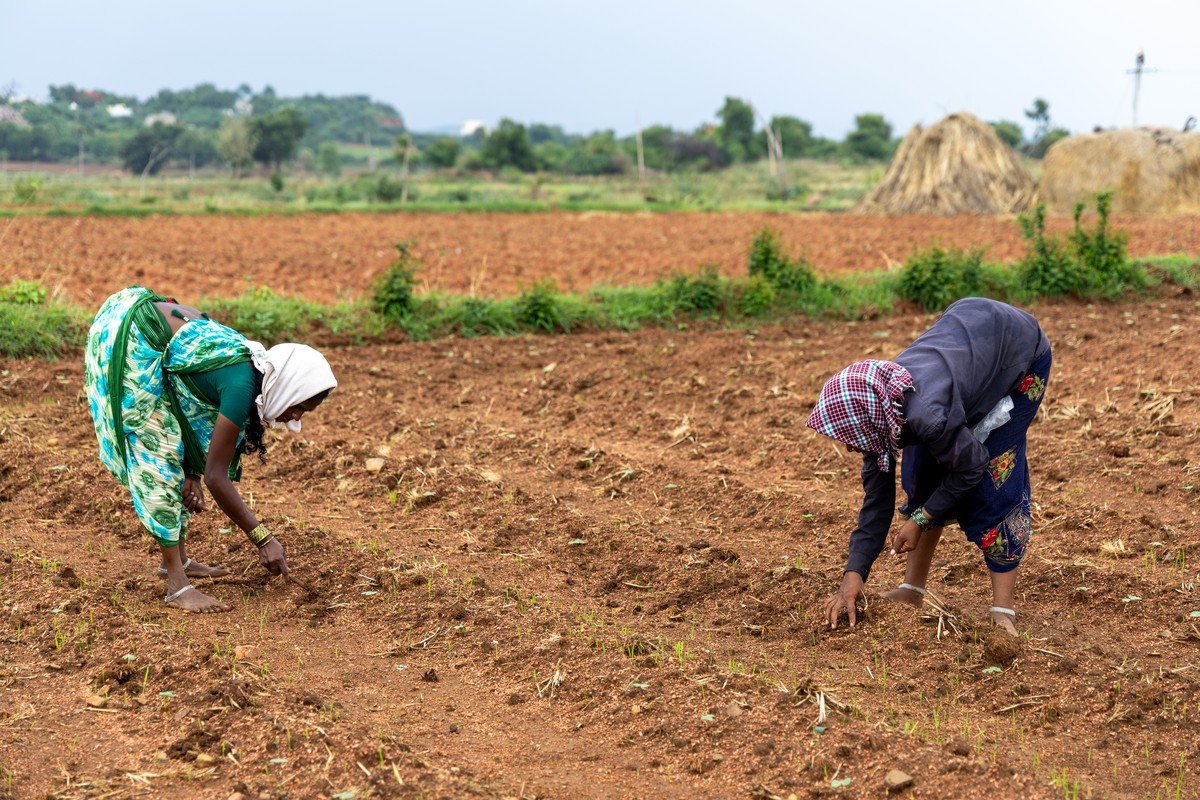
Kodo and kutki are traditional crops of the coarse grain category. They are also known as Shri Anna. These crops grow even with less water and fewer resources, which is why they are considered particularly suitable for farmers in tribal and hilly regions. From the nutritional point of view too, these grains are considered important.
Despite this, for a long time, farmers of these crops have faced the uncertainty of the market. There has been confusion among farmers about the arrival of these crops in mandis and their prices. The decision of government procurement is a step towards removing this confusion. When a farmer is assured that his produce will be procured, he can decide with greater confidence about cultivating these crops.
Promoting traditional crops in Dindori will also bring another benefit: the diversity of farming in the region will be preserved. Instead of depending on only one or two crops, the cultivation of traditional crops supports soil health, the sources of farmers’ income and the local food tradition — all three.
Balram Krishi Mahotsav: a medium to connect farmers with new technology
The programme organised in Dindori was the 49th event in the Balram Krishi Mahotsav series. This information was given by Mahendra Singh Yadav, administrator of the State Cooperative Bank. The Balram Krishi Mahotsav is being organised in the name of Lord Balram under the Farmer Welfare Year.
The Chief Minister said that the Balram Krishi Mahotsav is an important medium to connect farmers with new possibilities, modern technologies and innovations in agriculture. In such events, farmers come face to face with new farming methods, improved seeds, irrigation techniques and market information. In a tribal-dominated district like Dindori, the importance of such events increases further, because taking new technology and information to such areas is itself the biggest challenge.
The Balram Krishi Mahotsav series is being organised in different districts of the state. In every event, special attention is given to local crops, the needs of local farmers and the possibilities of local agriculture. The emphasis on kodo-kutki and paddy in the Dindori event reflects this local need.
Farmer Welfare Year and promotion of cow rearing
The Chief Minister said that through the Farmer Welfare Year, animal husbandry is also being specially encouraged along with agriculture in the state. This year, a Gaumata competition is being organised in every development block. Under this, excellent cow rearers will be honoured in the Vrindavan village of each block.
The aim of promoting cow rearing is to diversify the sources of farmers’ income. Along with farming, animal husbandry gives the farmer another source of regular income. It also promotes cow-dung and cow-urine based organic farming, which can help in reducing the cost of cultivation.
This policy of encouraging agriculture and animal husbandry together under the Farmer Welfare Year is particularly relevant for districts like Dindori, where the number of small and marginal farmers is high and where diverse sources of income are the key to economic security.
Other gifts for Dindori
In his address, the Chief Minister also mentioned the Ayurveda college recently given to Dindori district. He said that along with this, the district has received many development works in education, health and other sectors as well.
The opening of an Ayurveda college in Dindori is important in two ways. First, it will reduce the need for the youth of the district to go outside for medical education. Second, this institution connected with Ayurveda and traditional medical systems is also expected to expand health facilities in the district. Traditional knowledge of herbs and Ayurveda already exists in tribal areas, so this college can bring together local knowledge and modern education.
Extending advance greetings for the Diwali festival, the Chief Minister said that the government’s effort is to maintain the pace of development in every district of the state, including Dindori. Balanced development of a district is possible only when work is done simultaneously in education, health and agriculture — all three sectors.
What next
How the decision on the procurement of kodo, kutki and paddy will be implemented on the ground will now be watched by farmers. The procurement process, arrangements in mandis and information reaching farmers — these three things will decide the success of this decision. Information has already been given about the arrangement under which the mandis of the state will remain open even on holidays, so that farmers do not have to wait for the next working day to sell their produce.
For the farmers of Dindori, the next step will be to keep an eye on the official information related to procurement and to take their produce to the mandi at the right time. More information is expected from the government regarding the procurement arrangement. If this system runs smoothly, a real improvement can be seen in the income of the traditional crop producing farmers of Dindori.
This decision is also being seen as a big signal — that the government sees the traditional farming of tribal areas not merely as a heritage, but as a means of economic strength. The confidence that Dindori’s farmers will get from the procurement of kodo-kutki may further promote the cultivation of these crops in the coming time.
Disclaimer: This news has been prepared on the basis of available sources and verification. If any fact is found incorrect, a correction will be published.