




Desk Report
In a landmark verdict delivered at The Hague, the International Court of Justice has ruled that Myanmar committed genocide against the Rohingya people — the first time in the World Court’s 80-year history that a state has been held responsible for the crime.
The ruling, delivered on Thursday by ICJ President Yuji Iwasawa after a reading that lasted nearly three hours, found by nine votes to six that Myanmar’s military committed genocide against the Rohingya in the country’s northern Rakhine state in 2017, in violation of its obligations under the 1948 Genocide Convention. The decision is final and cannot be appealed.
It is only the fourth time since the Nazi Holocaust that an international court has ruled that the legal threshold for genocide has been met. For the Rohingya — a largely Muslim ethnic group that has faced decades of discrimination, statelessness and violence — survivors and rights groups called the judgment a turning point that they had waited almost a decade to hear.
A historic first for the World Court
The International Court of Justice, established in 1945, had never before held a state responsible for committing genocide. In 2007, for example, the court ruled that Serbia had violated the Genocide Convention by failing to prevent or punish the genocide committed by Bosnian Serb troops in Srebrenica — but that the Serbian state itself had not committed the act, even though UN tribunals found individuals culpable.
Thursday’s ruling breaks that pattern. The court found that the scale and nature of Myanmar’s atrocities were “characteristic of an intent to destroy a substantial part of the group”, Judge Iwasawa said, adding that “the only reasonable inference that can explain Myanmar’s actions is an intention to destroy” the Rohingya population in northern Rakhine state.
That finding matters because the 1948 Genocide Convention requires proof of a specific intent to destroy a national, ethnic, racial or religious group, in whole or in part — a requirement that is notoriously difficult to prove and has contributed to the court never having held a state responsible for the crime until now.
UN human rights chief Volker Türk called the judgment “historic”, and particularly striking for the way it examined “the decades of discrimination and marginalization of the Rohingya”. The UN Special Rapporteur on human rights in Myanmar, Kelley E. Currie, said the ruling was a historic and long-awaited step towards justice. “Today the world court has called the crimes by their true name: genocide,” she said. It was also a week of landmark court verdicts elsewhere: a US federal court sentenced Indian national Nikhil Gupta to 235 months in prison in the Pannun murder plot case.
What the court found in Rakhine
The court’s lengthy ruling — running to 191 pages — established that Myanmar’s security forces “killed thousands of Rohingya” in Rakhine state, committed widespread sexual violence against them, and carried out “extreme violence against children”. Evidence showed that at least 10,000 Rohingya were killed in the early stages of the military operation, and villages were “systematically destroyed”, replaced with permanent structures and then re-settled by non-Rohingya.
The military also “intentionally” caused “serious bodily and mental harm” to members of the group, the court found, and high-ranking officials disseminated anti-Rohingya hate speeches that portrayed them as “subhuman and a violent threat”. Acts against children in particular established the military’s intent to “prevent birth” in the group, and the court found that those who fled had little or no opportunity to return because their homes had been destroyed.
Myanmar had denied that its “clearance operations” were intended to destroy the Rohingya population, arguing that the military was conducting legitimate counterterrorism operations against a Rohingya insurgent group after attacks on police posts in late 2017. The court rejected that defence, finding that the military did not distinguish between militants and civilians, and attacked Rohingya “as they sought to flee in large numbers to Bangladesh”.
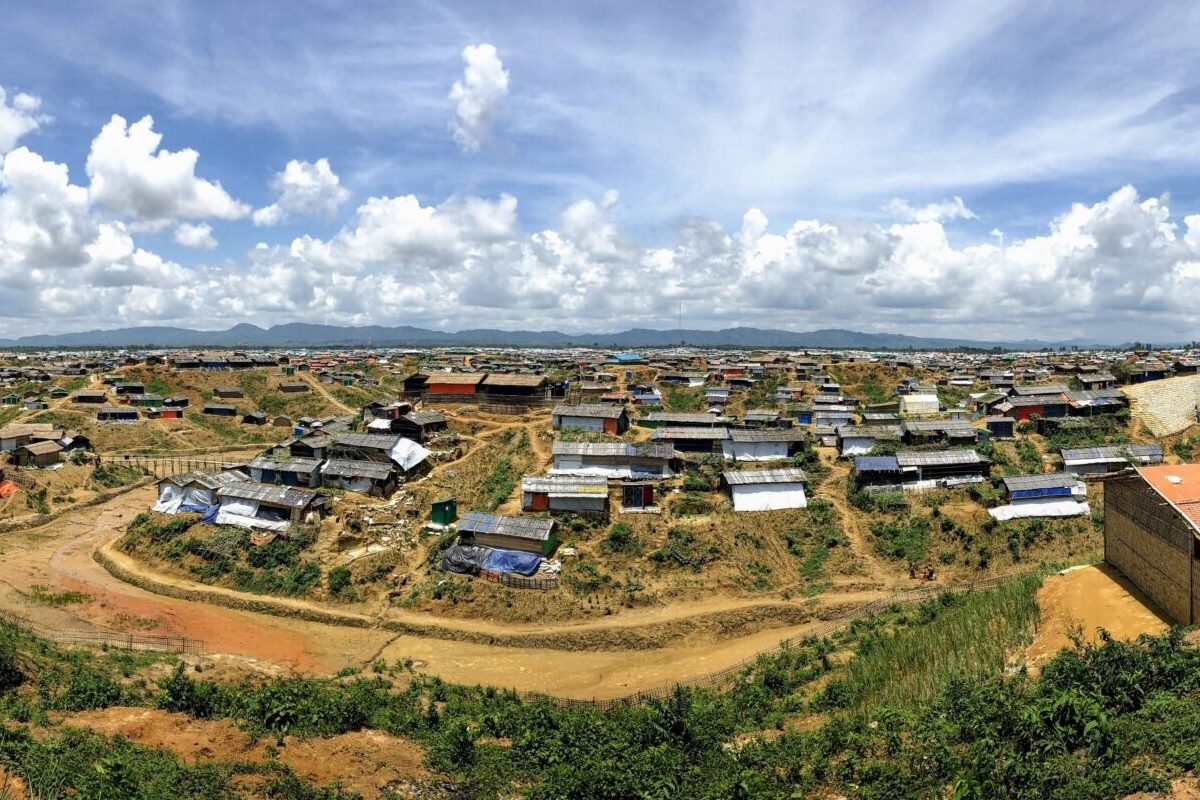
The violence drove more than 740,000 Rohingya across the border into Bangladesh within months. About 1.2 million Rohingya now live in crowded conditions in the camps of Cox’s Bazar — the world’s largest refugee settlement — while about 520,000 remain in Myanmar under severe restrictions.
Seven years from Gambia’s case to judgment
The case was brought in November 2019 by The Gambia, a small West African nation thousands of miles from where the killings took place, backed by the 57-member Organisation of Islamic Cooperation. It was the first case of its kind: a country with no direct link to the atrocities asking the World Court to hold another state to account under the Genocide Convention.
The Gambia’s team, led at the time by then-Justice Minister Aboubacarr Tambadou, argued that Myanmar had committed genocide in violation of the 1948 Convention. Myanmar’s then leader and Nobel Peace Prize winner Aung San Suu Kyi personally appeared at the court and called the claims “incomplete and misleading”.
But in January 2020, the court ordered Myanmar to take emergency measures to prevent genocide against the Rohingya still living in the country — a move experts called a stunning rebuke. In July 2022, it rejected Myanmar’s objections to its jurisdiction. Eleven countries — Belgium, Canada, Denmark, the Democratic Republic of the Congo, France, Germany, Ireland, the Maldives, the Netherlands, Slovenia and the United Kingdom — intervened in support of the case.
During merits hearings in January 2026, The Gambia, led by current Justice Minister Dawda A. Jallow, reiterated that Myanmar’s ruling military had “deliberately targeted” the Rohingya for “destruction” and acted with “genocidal intent”. Rohingya survivors travelled from the Cox’s Bazar camps to give their accounts in closed sessions before the court. “The Rohingya witnesses who came to The Hague showed extraordinary courage,” Currie said. “This judgment belongs to them.”
Myanmar is now under military leader-turned-president Min Aung Hlaing, who commanded the 2017 crackdowns and later took power in the 2021 coup.
What Myanmar has been ordered to do
The court ruled that Myanmar must cease all acts of violence and take immediate and effective steps to investigate all persons suspected of culpability, prosecute and punish the guilty, and provide guarantees that the crimes will never happen again.
Importantly, the court ordered restitution and reparations — something campaigners have long pushed for. Restitution measures, the court said, should see Myanmar allow and facilitate the safe and voluntary return of Rohingya; return or replace all collective property damaged; facilitate the search for the disappeared and ensure proper burials; provide for the physical and psychological rehabilitation of those mentally injured; and ensure their protection from persecution.
The court said it could not determine compensation itself but ordered Myanmar to submit a report within two years outlining a plan, with a deadline of November 2028. “No amount of money can undo a genocide, but meaningful reparations can help restore rights, dignity, and a measure of justice to people who have been denied all three for generations,” said Matthew Smith of the advocacy group Fortify Rights, who stood in the Peace Palace with Rohingya survivors as the ruling was read out.
Myanmar’s military-backed government dismissed the ruling on Friday, with a spokesperson calling it “unfair” and pointing out that it was “not a decision made unanimously”. “Not all 15 judges agreed with the decision,” the spokesperson said. The court’s rulings are final and binding, but it has no power to enforce them — its orders are sent to the UN Security Council, which could decide to act through a resolution.
Can the Rohingya go home?
For the refugees in Cox’s Bazar, the ruling has brought hope — but a return home remains very uncertain. “The Rohingya do not want to live in refugee camps forever. We want to return to our homeland in Rakhine state with our rights, our citizenship, and our dignity fully restored,” said Murshid Alam, 22, who was 12 when he was driven from his home and now works with young people in the camps as founder of the Rohingya Youth Union.
The obstacles are formidable. Myanmar is in turmoil after the 2021 coup triggered a nationwide civil war that has killed an estimated 100,000 people and displaced more than 3.5 million. In Rakhine state itself, the military-backed government is not in control: an ethnic armed group called the Arakan Army controls the vast majority of the state, including areas bordering Bangladesh, and has itself been accused of abuses against civilians, while the military has ramped up airstrikes on civilian markets and hospitals.
In August, Myanmar said it had verified more than 300,000 refugees in Bangladesh and registered them for repatriation, but stated that this could only begin after security is restored in Rakhine. Aid allocated for the Rohingya has also shrunk, especially since the United States cut foreign aid spending. “Even if the ICJ were to order far-reaching forms of relief, the political conditions on the ground in Myanmar are not amenable to realising that relief anytime soon,” said Michael Becker, an international law professor at Trinity College Dublin and a former ICJ legal officer.
The Rohingya’s statelessness goes back decades: a 1982 citizenship law essentially rendered most of the group stateless, and successive governments — including the civilian administration of Aung San Suu Kyi that governed between 2016 and 2021 — continued to exclude them. Until their forced displacement in 2017, there were about 1.4 million Rohingya in Myanmar.
Why the ruling reaches far beyond Myanmar
Thursday’s judgment will have repercussions far beyond Myanmar. It could have important implications for South Africa’s genocide case against Israel over its war in Gaza — a case the court allowed to proceed after The Gambia’s application opened the door. Israel denies the genocide charge.
The ruling also comes at a time when the broader idea of international justice has come under fire from the Trump administration in the United States, which has campaigned to “dismantle” the International Criminal Court. Last month, its UN ambassador accused the ICJ of trying to lower the threshold for a genocide verdict in the Myanmar case. A US State Department spokesperson said on Thursday that Washington was “studying the decision to fully assess its implications”, adding that “the proper interpretation of the Genocide Convention is of paramount importance, as is preventing politicization of the ICJ.”
For the Rohingya, however, the meaning of the verdict is simpler — and more personal. “It is the difference between being told our history was a tragedy, and being told our history was a crime that must be answered for,” said Alam. The Gambia could now table the case at the UN Security Council and request action, and survivors want the states that supported the case to keep up pressure on Myanmar’s military. “This verdict must be the beginning of a reckoning for those who planned and carried out the most heinous of international crimes, not the end of one,” Currie said.
Disclaimer: This story has been prepared on the basis of available sources and verification. If any fact is found to be incorrect, a correction will be published.