










International Bureau.
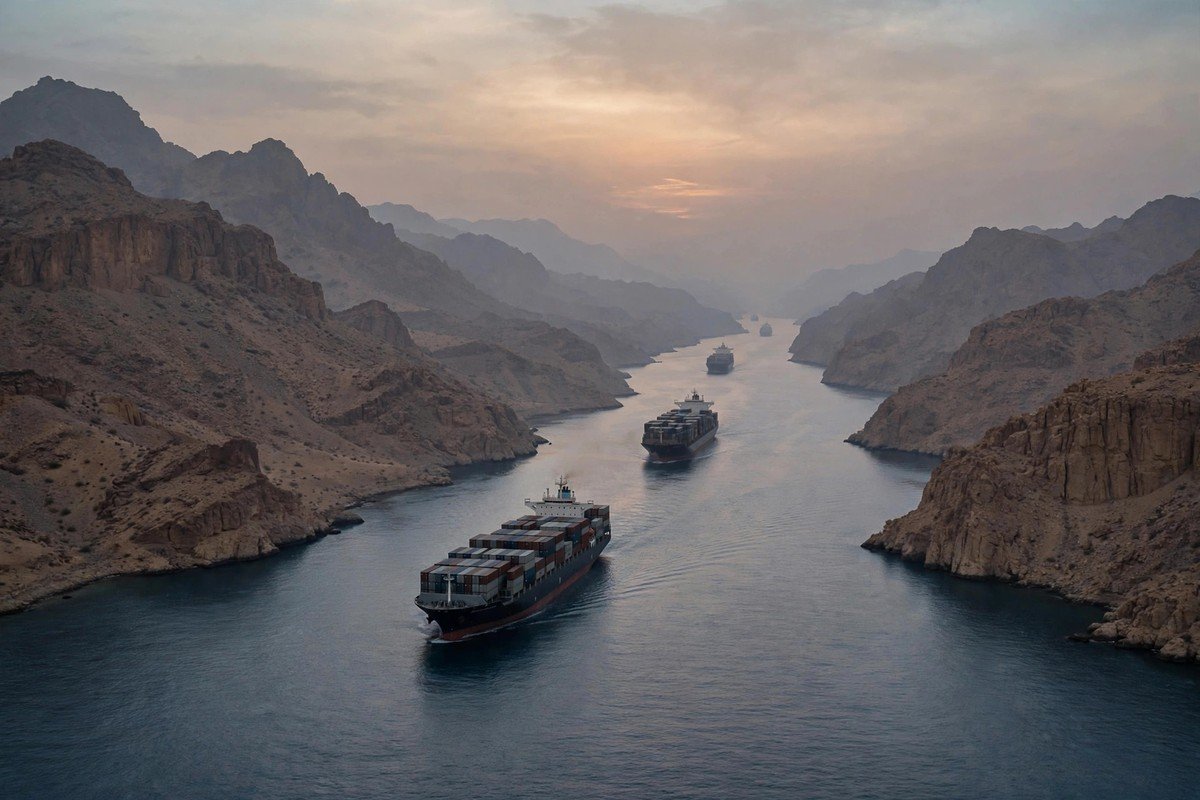
Two ships have sunk near the Strait of Hormuz in the past 24 hours after being hit by projectiles in separate incidents, as attacks on commercial shipping around the world’s most important oil waterway continue to surge.
In the past ten days, attacks around the strait have intensified sharply. Iran says it is stepping up strikes in response to the US blockade of its ports and tougher sanctions introduced last month, Reuters reported.
Two ships sunk
The Singapore-flagged container vessel GFS Pride, a small container ship with a capacity of 2,824 twenty-foot equivalent units (TEU), sank while sailing through the strait, maritime security sources told Reuters.
The cause of the sinking remains disputed. Iran’s Revolutionary Guards (IRGC) claim the ship sank after hitting a mine south of the Strait of Hormuz. Singapore, where the ship is registered, says a projectile struck it. All 21 crew members were rescued.
A second Singapore-registered vessel, the GFS Giselle, was hit on the same day but left the area under its own power, according to reports.
In a separate incident, the Antigua and Barbuda-flagged bulk carrier Cape Dao sank close to the strait, weeks after being struck by a projectile on September 23, according to International Maritime Organisation data cited by Reuters.
Pace of attacks rising
According to Maritime Executive, six merchant ships were attacked on Sunday alone and four more on Tuesday. A Financial Times tally puts the number of vessels attacked this month at up to 24.
The surge in attacks has raised fears for global energy supplies and shipping. The Strait of Hormuz carries a large share of the world’s seaborne oil, and any sustained disruption there affects fuel prices far beyond the Gulf.
Houthis threaten more strikes on Saudi targets
Yemen’s Houthis have vowed to press on with attacks on airports and oil facilities in Saudi Arabia, a day after a strike that sources said caused extensive damage to the headquarters of oil giant Saudi Aramco, Reuters reported.
The Houthis described the threatened locations as legitimate targets and said their attacks were retaliation for Saudi strikes on Yemen — threatening to escalate a conflict reignited by the US-Iran confrontation in the Gulf.
Japan raises travel advisory for Saudi Arabia
Japan has raised its travel warning for Saudi Arabia, bringing the entire kingdom under an advisory against non-essential travel following a surge in Houthi missile and drone attacks.
In an update issued on Wednesday, Japan’s Foreign Ministry raised the alert for several northern and western regions from Level 1 to Level 2 on its four-tier scale. Areas near the Yemeni border remain at Level 3, where Japanese nationals are advised against all travel.
The ministry cited an increase in Houthi attacks since October 5, including a strike on King Khalid International Airport in Riyadh in which reports say at least 12 people were killed and more than 300 were wounded. It urged travellers to avoid using or approaching Saudi airports unless absolutely necessary and advised Japanese nationals planning trips to Saudi Arabia to consider postponing their travel.
Oil tanker reported on fire
Iran’s army said on Thursday that a “violating” oil tanker is on fire in the eastern part of the Strait of Hormuz, according to a statement carried by state media.
The army statement said the tanker had disabled its tracking systems and was attempting to pass through a restricted area in the Gulf of Oman. It described the vessel as a rogue tanker. The claim could not be independently verified.
What Trump said
US President Donald Trump said on Wednesday that Iran was asking in negotiations with Washington to be “allowed to live,” adding, “They don’t want us to go after them.”
Speaking at a campaign rally in Kalispell, Montana, Trump said Iran no longer had a navy or air force, described its army as “decimated” and said successive levels of its leadership had been killed. “We’re going to knock this Iran thing off fast. It’s going to be over very quickly,” he said, adding that the conflict would end “one way or the other” and predicting oil prices would fall once it was over. These are the President’s own claims at the rally.
The Trump administration is also reported to be weighing an easing of sanctions on shadow-fleet tankers to ease a deepening tanker crunch, after freight rates hit record highs amid the Gulf war. Oil prices eased on the reports, with Brent crude trading around $104 a barrel and US crude around $94 a barrel.
What to watch
The coming days will test whether shipping through Hormuz can continue safely, whether the reported negotiations produce any pause in fighting, and whether the conflict spreads further across the Gulf region. For now, shipping companies, oil markets and governments across Asia and Europe are watching every new incident closely.
Disclaimer: This news has been prepared on the basis of available sources and verification. If there is any error in any fact, a correction will be published.