








Desk Report
Defence Minister Rajnath Singh and External Affairs Minister S. Jaishankar arrived in Tokyo on Wednesday for the fourth India-Japan 2+2 ministerial dialogue, a two-day meeting that will review the full range of the two countries’ strategic and defence cooperation a day after the Quad leaders met in Manila.
A ceremonial welcome in Tokyo
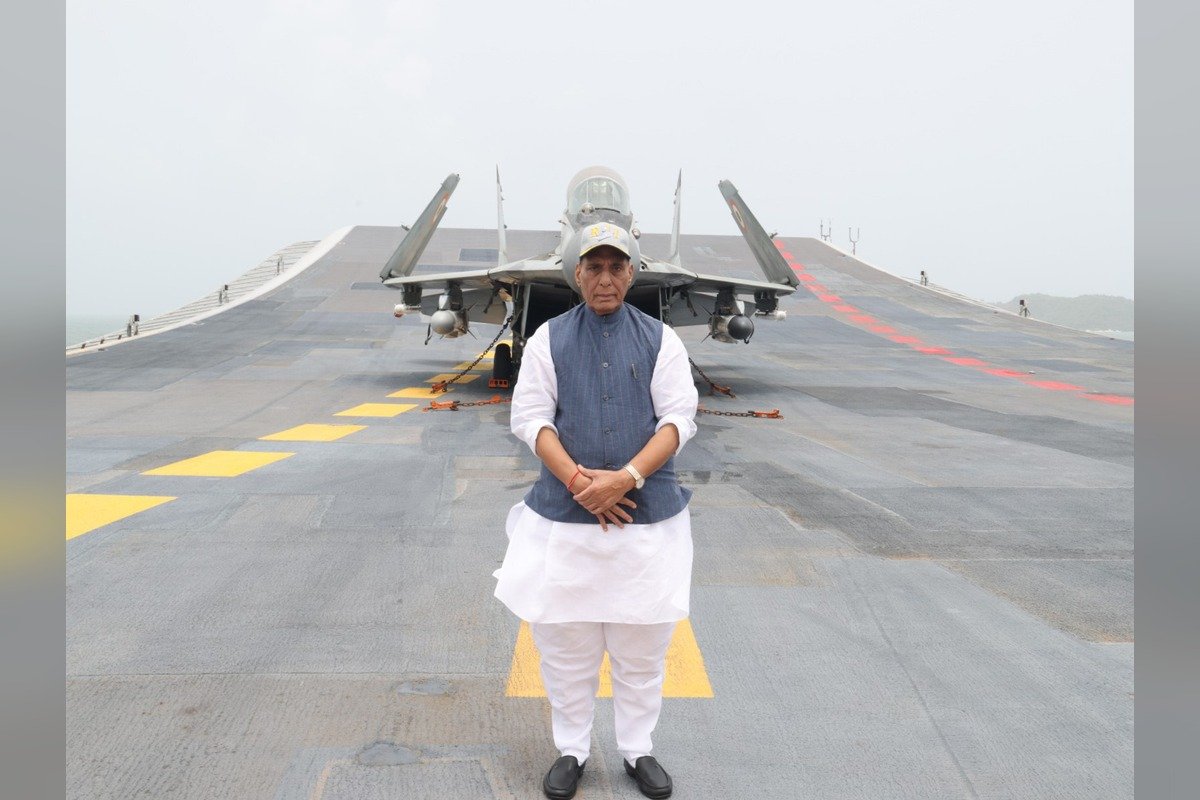
Singh inspected a ceremonial Guard of Honour alongside Japanese Defence Minister Shinjiro Koizumi at Japan’s Ministry of Defence soon after landing in the Japanese capital. He was received on arrival by Lieutenant General Norimichi Shirakawa, Vice Chief of Staff of the Japan Joint Staff, and Ambassador Nagma Mallick welcomed both ministers on their arrival in Tokyo. Writing on X before his departure on Tuesday, Singh said India and Japan shared a common vision for a free, open and rules-based Indo-Pacific, grounded in mutual trust and democratic values, and had built a “Special Strategic and Global Partnership”. “During this visit, I will review the steady progress in defence and security cooperation and explore new opportunities to further deepen collaboration on technology, maritime security, and regional stability,” he said.
What the 2+2 format is
The 2+2 dialogue brings the foreign and defence ministers of the two countries to the same table. It was set up in 2019 to deepen security and defence cooperation and to give greater depth to the Special Strategic and Global Partnership. India holds the format with only a handful of countries, including the United States, Australia and Russia. The first round was held in New Delhi in November 2019, the second in Tokyo in September 2022 and the third in New Delhi on August 20, 2024. At that meeting, the ministers decided the next round would be held in Japan — a decision this week’s visit carries out. The fourth edition is co-chaired by Singh and Jaishankar on the Indian side and by Koizumi and Foreign Minister Toshimitsu Motegi on the Japanese side.
What is on the table
According to the Ministry of External Affairs, the two sides will review the full range of bilateral strategic and defence cooperation, exchange views on regional and global developments and reaffirm their shared commitment to a free, open, inclusive and rules-based Indo-Pacific. The discussions are expected to cover defence equipment and technology, maritime security, joint military exercises across all three services and defence industrial partnerships. The two sides are also expected to discuss enhancing the scale and complexity of joint exercises, deepening industrial partnerships and strengthening operational and industrial synergy. Economic security and technology are also on the agenda. Singh will hold a separate bilateral meeting with Koizumi, while Jaishankar will hold the 19th India-Japan Foreign Ministers’ Strategic Dialogue with Motegi. Jaishankar will also take part in the third edition of Raisina Tokyo during the visit.
The Singh–Koizumi equation
The bilateral meeting between Singh and Koizumi will be their third this year, after meetings in New Delhi in August and on the sidelines of the ASEAN Defence Ministers’ Meeting-Plus in Cebu in October. Koizumi, replying to Singh’s post on X, said he looked forward to discussing a range of issues, including maritime security cooperation. He also said he would welcome the Indian minister to his hometown of Yokosuka and take him on a tour of a Mogami-class frigate. Singh said on Wednesday that he was on his way to the Japan Maritime Self-Defence Force’s naval base at Yokosuka, adding that his Japanese counterpart was “playing the perfect host”.
The Quad backdrop
The Tokyo visit comes a day after Prime Minister Narendra Modi joined the leaders of the United States, Australia and Japan for the Quad summit in Manila on Tuesday. The Quad — India, the US, Japan and Australia — is a strategic grouping focused on a free, open and rules-based Indo-Pacific through cooperation in maritime security, technology, infrastructure and disaster response. India is also hosting the annual joint humanitarian assistance and disaster relief exercise, “Sahayata Setu”, at the Air Force Station in Jamnagar from November 17 to 19, with the four Quad countries participating as observers. As chair of the Quad’s HADR Working Group, India has also convened a meeting to review progress in disaster response and strengthen regional preparedness. The two sides in Tokyo will also review understandings reached during the 15th and 16th India-Japan annual summit meetings, held in August 2025 and July 2026 respectively.
A partnership built over a decade
India and Japan describe their relationship as a Special Strategic and Global Partnership, anchored in democratic values, mutual trust and respect for the rule of law. The third 2+2 round in 2024 marked the tenth anniversary of the partnership. Since then, the two countries have steadily widened cooperation from defence exercises and maritime security to technology, economic security and industrial collaboration — the same themes that dominate this week’s agenda in Tokyo.
Why it matters now
The dialogue is the highest regular forum in which India and Japan align their foreign and defence policies, and its timing gives it added weight: it opens the day after the Quad summit and on the same days as the APEC summit in Shenzhen, where the leaders of the United States, China and Russia are also meeting. With the Indo-Pacific at the centre of competing visions of regional order, the Tokyo talks are a chance for New Delhi and Tokyo to compare notes on regional security, set priorities for joint exercises and defence industry, and signal that their partnership is moving from dialogue to delivery.
What to watch next
The dialogue runs through Thursday, November 19. Attention will turn to the joint statement and any announcements on defence equipment, maritime cooperation or new exercises — as well as to Singh’s visit to the Yokosuka naval base and Jaishankar’s engagements at Raisina Tokyo. Any decisions announced in Tokyo will set the agenda for the next round of the dialogue and for the annual summit cycle between the two countries.
Disclaimer: This report is based on available sources and verification. If any fact is found to be incorrect, a correction will be published.