








Desk Report
Summary: India and Egypt have taken the first formal step towards a possible trade agreement, agreeing in Cairo to draw up terms of reference to examine a preferential or a free trade pact, as bilateral trade reached about $6.5 billion.
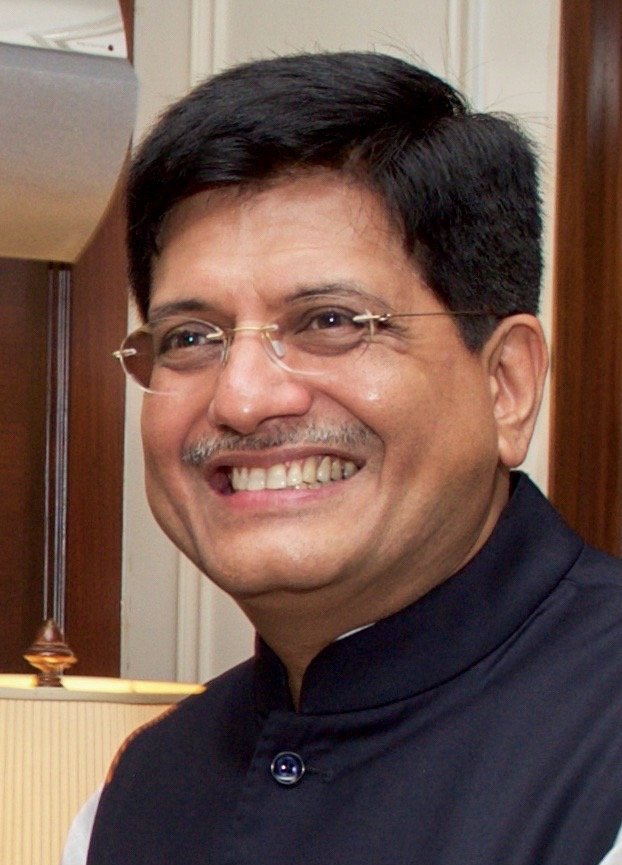
India Egypt trade moved a step closer to a formal pact on Sunday, 15 November 2026, as the seventh India–Egypt Joint Trade Committee (JTC) met in Cairo and the two sides agreed to task their officials with drawing up terms of reference to examine a future agreement. Commerce and Industry Minister Piyush Goyal co-chaired the meeting with Egypt’s Minister of Investment and Foreign Trade, Dr Mohamed Farid Saleh, on the first day of Goyal’s two-day visit to Egypt.
The decision does not, by itself, create a trade deal. It opens the first formal stage of examining whether India and Egypt should pursue a Preferential Trade Agreement (PTA) or a full Free Trade Agreement (FTA), and on what terms. A working group will finalise the terms of reference in a time-bound manner, with the Indian side led by Joint Secretary Petal Dhillon.
India Egypt trade talks open in Cairo
Announcing the agreement, Goyal said: “Minister Farid and I have also discussed and decided that we will task our officials to work on the terms of reference and examine the potential of either a preferential trade agreement or a free trade agreement between our two countries.” The wording matters: the two governments have agreed to study the possibility, not to sign a pact, and the choice between a limited preferential arrangement and a comprehensive free trade deal is still open. The Times of India reported Goyal’s remarks from Cairo.
The committee’s seventh meeting came against a sharp rise in two-way trade. Goyal led a 132-member business delegation to Cairo, spanning artificial intelligence, aerospace, defence, agri-food, clean energy and fertilisers, and including women founders.
A relationship built on $6.5 billion of trade
India Egypt trade stood at about US$6.5 billion in 2025-26, up 36.7 per cent from $4.8 billion in 2024-25. India’s exports to Egypt were US$3.87 billion in 2025-26, while imports from Egypt were US$2.60 billion. The momentum has carried into the current year: merchandise trade in April–September 2026 reached US$5.04 billion, up 64 per cent year on year.
Both sides have set their sights higher. They aim to raise bilateral trade to $12 billion in the coming years, and Goyal argued that the current level understates the potential of the two economies. “For the size of our two economies, I believe it’s just a beginning… the sky’s the limit,” he said, adding that the two sides “need to be much more ambitious” than $6.5 billion. The export push fits India’s wider ambition, set out in our report on India’s target of $1 trillion in exports.
Investment, however, remains modest. Foreign direct investment from Egypt into India totalled only US$11.5 million between April 2000 and June 2026, underlining how much of the relationship still runs through trade in goods rather than capital flows. That gap is one reason the Cairo discussions placed such emphasis on investment promotion alongside market access.
India Egypt trade: what the terms of reference will examine
Terms of reference are the ground rules for a negotiation: they set out what is on the table, what is off it, and how the talks will be run. In this case, officials must first decide whether a limited preferential deal — under which each side cuts tariffs on an agreed list of goods — or a broader free trade agreement, covering goods, services and investment rules, is the right goal. Only then can formal negotiations begin.
The working group tasked with the job is expected to work in a time-bound manner. That matters because trade negotiations can drift for years without a deadline. The Indian side of the group is led by Joint Secretary Petal Dhillon, who will work with Egyptian counterparts on the draft.
PTA or FTA: what is the difference?
A preferential trade agreement is the lighter option. It typically lowers duties on selected products and leaves the rest of the tariff structure untouched, making it quicker to agree but narrower in effect. A free trade agreement goes further, aiming to remove duties on most goods over time and to set common rules on services, investment, standards and customs procedures.
Which route India and Egypt choose will shape how much market access exporters on both sides actually gain. For now, neither option has been ruled in or out, and officials have been asked to examine the potential of both. India has pursued comprehensive pacts elsewhere too, including the CEPA push with Canada to double bilateral trade by 2030.
Sectors in focus: medicines, engineering and fintech
The Cairo talks ranged well beyond tariff schedules. Sectors flagged for closer cooperation included affordable medicines, generics and vaccines, engineering goods, auto components, two- and three-wheelers, commercial vehicles, pharmaceuticals and healthcare, agriculture, digitisation and fintech.
The sectors named span manufacturing and services. Engineering goods, auto components, two- and three-wheelers and commercial vehicles point to manufacturing supply chains, while agriculture and fertilisers matter to both sides, and clean energy and artificial intelligence show the agenda is not limited to traditional trade in goods.
Goyal also suggested linking India’s Unified Payments Interface (UPI) with Egyptian payment systems, a step that would make cross-border payments easier for businesses and travellers if it moves ahead.
Startups, UPI and the Suez Canal Economic Zone
The visit’s business agenda continues on Monday, when the two sides will sign a startup partnership agreement and hold the first Egypt-India Startup Forum. The forum is intended to connect young companies from both countries, particularly in technology and digital services, and to build on the delegation’s mix of established firms and women founders.
The Suez Canal Economic Zone also featured in the discussions.
What happens next
For now, India Egypt trade remains on an upward path, but the bigger test lies ahead. The working group must produce terms of reference that both governments can accept, and only then will the choice between a preferential agreement and a full free trade deal be settled. That sequence — terms first, negotiations second — is deliberate, and it means a deal, if it comes at all, is still some way off. Trade negotiations elsewhere have shown how long the road can be, as External Affairs Minister S. Jaishankar’s remarks on the India-US trade deal underlined.
Goyal’s two-day visit to Egypt ends on 16 November, and the startup agreement and forum on Monday will be the first test of whether the Cairo momentum carries beyond the JTC room. For exporters and investors on both sides, the signal from Cairo is clear enough: the two governments have decided that $6.5 billion is a starting point, not a ceiling.
The developments were reported by the Times of India, NDTV Profit and ANI on 15 November 2026.
Disclaimer: This story has been prepared on the basis of available sources and verification. If any fact is found to be incorrect, a correction will be published.