









Desk Report
India has retained its position as Asia’s third-most powerful country in the Lowy Institute’s Asia Power Index 2026, holding the rank for a third consecutive year, with Prime Minister Narendra Modi rated the second-most effective regional leader in Asia, behind only China’s Xi Jinping.
India’s overall score rose to 40.5 points in the 2026 edition, up from 40.0 points in 2025 and 39.1 in 2024, when it first overtook Japan to move into third place. The United States stayed at the top of the ranking with 78.9 points, followed by China at 73.6. Australia’s Lowy Institute released the 2026 index on Monday, 23 November 2026.
India holds third place for the third straight year
The top ten of the 2026 index reads: the United States (78.9), China (73.6), India (40.5), Japan (38.6), Russia (32.2), Australia (31.7), South Korea (31.0), Singapore (26.9), Indonesia (21.7) and Malaysia (20.5).
India first moved into third place in the 2024 edition, when it overtook Japan by a narrow margin — 39.1 points against Japan’s 38.9 — and it has held the position in the two editions since. The United States and China, both scoring above 70, are classified as superpowers, while India, at 40.5 points, sits in the major powers category. Australia, which ranked fifth in 2024, has slipped to sixth in the latest edition.
The index is not a ranking of countries by military strength or economic size alone. It assesses the ability of 27 countries and territories to influence events and shape the regional environment, across 131 indicators.
Modi ranked Asia’s second-most effective leader
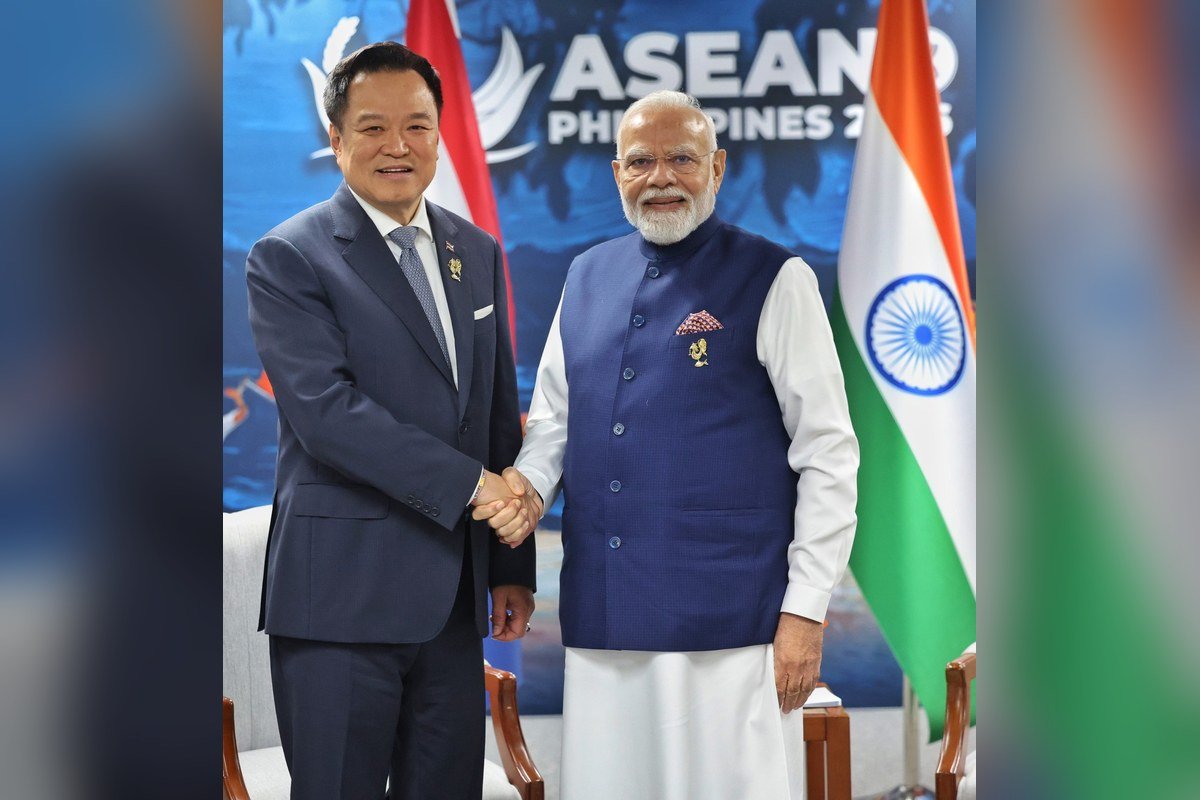
One of the headline findings of the 2026 edition concerns leadership. Experts rated Prime Minister Narendra Modi the second-most effective regional leader in Asia, behind Chinese President Xi Jinping. Assessments of Modi’s regional leadership improved in the latest edition, lifting India three places in that assessment.
The report, however, also recorded a more mixed picture for India on the world stage. Perceptions of Modi’s global leadership and strategic ambition declined, which the Institute linked to India’s relatively low diplomatic profile during the Gulf conflict. The two findings sit side by side in the report — stronger regional standing, and a weaker global-leadership reading — and both are part of the same assessment.
Where India gained — and where it slipped
India’s strongest measure remained diplomatic influence, where it scored 70.3 points. The Lowy Institute said India’s diplomatic influence held relatively steady in a year when most countries faltered, and that steadiness was the foundation of its overall gain.
Future resources was another area of improvement, with India scoring 56.2 points. A more favourable economic forecast contributed to the rise, and the Institute said the score highlighted the scale of the opportunities ahead for the country.
Cultural influence also moved up, with India’s score rising to 43.8 points, driven by improvements in cultural projection, information flows and people exchanges. On defence networks, India moved up two places to ninth, scoring 18.6 points, with the Institute attributing the improvement to greater regional defence engagement and BrahMos missile sales to Southeast Asian countries. On economic relationships, India improved two places to seventh, helped by relatively stable regional trade relations and investment ties; it was among just five countries whose Economic Relationships score did not decline in 2026.
The weak spot was economic capability. India’s score in that measure fell 0.7 points to 26.4, although it retained third place in the category. The Institute attributed the decline to a weakening rupee, a structural change in how the International Monetary Fund measures economies, and a fall of nearly 20 billion dollars in outbound investment.
Taken together, the gains helped India narrow its Power Yield gap for the first time since 2023. Power Yield measures the difference between the power a country is expected to have based on its resources and the comprehensive power it actually exercises.
Gap with China narrows to smallest since 2018
India’s overall score also brought it marginally closer to China. The gap between the two countries narrowed to 33.1 points in 2026, its smallest since the index was introduced in 2018. In 2024, China scored 72.7 points against India’s 39.1, a difference of 33.6 points; the gap widened slightly to 33.7 points in 2025, when China scored 73.7 and India 40.0. In 2026, the difference narrowed to 33.1 points, with China scoring 73.6 and India 40.5 — India’s score rose by 0.5 points over the previous year, while China’s slipped marginally by 0.1 points.
Even so, the distance remains large: China’s comprehensive power score is still about 80 per cent higher than India’s.
US–China gap also at its narrowest since 2018
The other major takeaway from the 2026 rankings is the narrowing gap between the United States and China, the two countries that continue to dominate the regional balance of power. The US remained at the top with 78.9 points, but China’s 73.6 left Washington with a lead of just 5.3 points — the narrowest gap since the Asia Power Index was introduced in 2018. The difference was wider in 2024, when the US scored 81.7 points against China’s 72.7, giving Washington a nine-point lead. By 2026, that advantage had shrunk by 3.7 points to 5.3.
The Lowy Institute said the narrowing gap had more to do with setbacks for Washington than major advances by Beijing. The American score fell 1.5 points in 2026. The Institute attributed this in part to the conflict with Iran, which began in February 2026, and its implications for US military and diplomatic influence: the conflict diverted American military resources from the Pacific to West Asia and depleted stocks of long-range missiles. The report also flagged declining perceptions of US diplomatic influence among countries in the region. The US lost ground in economic capability, military capability, defence networks and diplomatic influence; its Diplomatic Influence score fell six points to 76.7, marking the fourth consecutive annual decline and the largest single-year fall in this measure since the index began.
China, meanwhile, held steady on most measures, recording gains in military capability, cultural influence and resilience, although its Economic Relationships score declined. The Institute also pointed to China’s continued military modernisation and growing diplomatic and cultural influence across the region. The gap between the US and China in military capability also narrowed to its smallest level since the index began, though the US continues to retain advantages in defence spending, air power, land warfare firepower and global force projection, while China has strengthened its military position in the Pacific.
What the Asia Power Index measures
The Lowy Institute’s Asia Power Index is an annual assessment of the regional balance of power, published by the Sydney-based think tank. It measures the economic, military and diplomatic capabilities and influence of 27 countries and territories across Asia, and their ability to shape their external environment and influence other countries, rather than simply comparing their economic size or military strength.
The index uses eight parameters: economic capability, military capability, resilience, future resources, economic relationships, defence networks, diplomatic influence and cultural influence. Countries scoring 70 points or more are classified as superpowers, those with 40 points or more as major powers, those with 15 points or more as middle powers, and those scoring below 15 points as minor powers.
For India, the 2026 edition is a story of consolidation rather than a leap: third place held, the gap with China at its narrowest since 2018, and a leadership rating that puts its Prime Minister second in the region. The challenge the report leaves open is the one it identifies in economic capability — converting the scale of India’s resources and its favourable future-resources outlook into comprehensive power. That is the measure to watch when the next edition of the index is published.
डिस्क्लेमर: यह खबर उपलब्ध स्रोतों और सत्यापन के आधार पर तैयार की गई है। किसी तथ्य में त्रुटि होने पर सुधार प्रकाशित किया जाएगा।