




Indore Bureau
Summary: The Indore Municipal Corporation’s Mayor-in-Council unanimously passed the city’s new water policy on Monday. Under the Indore water policy fine, wasting Narmada or borewell water will draw a graded penalty of Rs 2,000 on the first offence, Rs 5,000 on the second and Rs 10,000 on the third and every subsequent offence, on complaint. Fitting a motor on a tap connection will draw Rs 5,000 first and Rs 10,000 thereafter. The council also approved 300 new borewells, pumps on 100 borewells and 33 new tankers, and a 21-day campaign from 12 November to regularise illegal tap connections.
Saving water in Indore is no longer just an appeal; it is now backed by a formal policy with graded penalties. The city’s new water policy was unanimously passed at the Mayor-in-Council meeting held in the Mayor’s chamber on Monday. Mayor Pushyamitra Bhargav chaired the meeting, which was attended by Municipal Commissioner Kshitij Singhal, Mayor-in-Council members and all additional commissioners. The meeting, held at the corporation headquarters on Monday afternoon, lasted more than three hours and cleared several important proposals on water management, illegal connections, advertising policy, housing and regularisation of employees.
The main objective of the water policy is to conserve every drop of water, harvest rainwater and recharge it as groundwater, treat wastewater and reuse it, and place Indore among the country’s leading water-secure cities. The policy lays special emphasis on reducing dependence on external water sources, improving groundwater levels, preventing water pollution and protecting lakes, ponds and other natural water sources. It also provides for fixing accountability in water management and ensuring active participation of citizens. The policy has been prepared under the guidance of Chief Minister Dr. Mohan Yadav, with the aim of securing the city’s future and making it water-rich.
Indore water policy fine: how much for which violation
The most important feature of the Indore water policy fine is that penalties will now rise with repetition. Action will follow on complaints of misuse of public water resources and unnecessary use of water. Washing a car or a floor with Narmada or borewell water, or misusing this water in any other way, will draw a fine of Rs 2,000 on the first offence, Rs 5,000 on the second and Rs 10,000 on the third and every subsequent offence.
Similarly, households that fit motors on tap connections and draw water directly from pipelines will face strict action, because this affects water supply to neighbouring homes. Drawing water with a motor on a tap will draw Rs 5,000 on the first offence and Rs 10,000 on the second and every subsequent offence. The corporation has made it clear that the purpose of the penalties is not merely to collect fines, but to strengthen the habit of water conservation across the city.
The corporation’s own agencies, officials and tanker operators appointed by the corporation will also get no exemption from the rules. If irregularities are found, penal action will be taken against them as well. The water policy will therefore apply equally to ordinary citizens and to those who run the system.
Why Narmada and borewell water face strict action
Indore depends mainly on the Narmada river for its drinking water needs. Through the corporation’s pipelines, Narmada water is brought to Indore from Jalud in Khargone district, about 80 kilometres away, and then distributed across the city. Low rainfall this year has meant that groundwater recharge has not been as good as needed, and a possible water crisis in the coming summer season is already being anticipated.
That is why the corporation has begun preparations well before summer. Enforcement against water wastage has already taken place earlier: on 27 October, a spot fine of Rs 2,000 was imposed in Ward 79 of Zone 21, on RRCAT Road in front of Seven Step Garden, for washing a floor with borewell water. Under the new water policy, this enforcement has now been converted into a fixed, graded fine system, so that every citizen knows in advance how much the penalty will rise on a repeat offence.
Promoting the reuse of treated water is also part of this preparation. The use of treated water in gardens and other suitable places has been encouraged earlier. The water policy expressly includes treatment and reuse of wastewater, so that drinking-quality water is used only for drinking and essential household needs.
Illegal to legal tap connection campaign from 12 November
Along with the water policy, a special campaign to regularise illegal tap connections will run from 12 November for 21 days. During this period, citizens will be able to get their illegal connections regularised. After the campaign ends, connections will be checked on a large scale, and strict action will be taken where illegal connections are found.
The corporation believes that illegal connections not only cause revenue loss, but also affect water supply across a locality. Drawing water with a motor in one home can leave neighbouring homes without water. The campaign therefore aims to give people a chance first, so that they can regularise their connections within the fixed period.
Citizens have been advised to check the status of their connections during the campaign period. Information about the process, fee and documents for regularisation can be obtained from the corporation’s zonal offices. Illegal connections caught after the campaign will face action under the rules.
Tanker system and monitoring: 33 new tankers, CCTV on hydrants
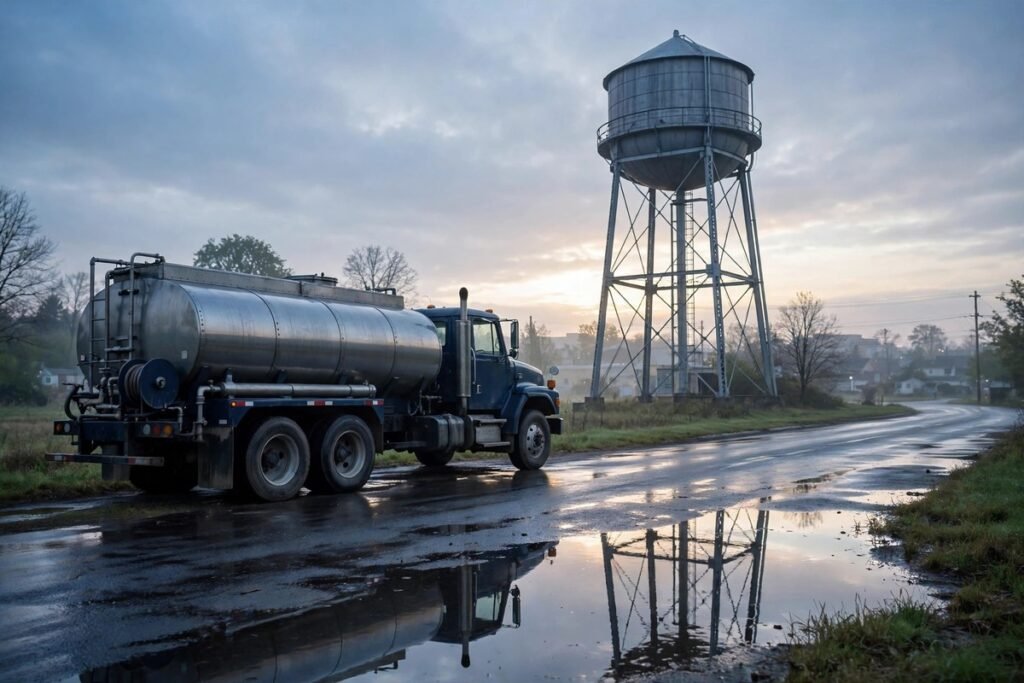
To ensure adequate tanker arrangements for reaching drinking water to every home, 11 new EV truck tankers and 22 new CNG truck tankers of 8,000-litre capacity will be purchased. In all, the purchase of 33 new tankers has been approved. CCTV cameras will be installed on all hydrants and tanks, so that water distribution and tanker movements can be monitored.
People or agencies that have put their own water tankers into service will have to set their tanker arrangements right within the next seven days. Operators of tankers running on rent will have to fix leakage problems within seven days, failing which penalty will be imposed. Monitoring matters because, in a crisis, tankers become the main support for water supply in many areas, and better surveillance is expected to check misuse, arbitrary charges and wrong distribution.
300 new borewells, pumps on 100: preparation before summer
Keeping the possible water crisis in view, the digging of 300 new borewells and the installation of motor pumps on 100 borewells has been approved. Higher-head motor pumps will also be installed as needed, so that drawing water from depth does not become a problem. This preparation has been made keeping the coming summer season in mind, when water demand is at its highest.
The new borewells and pumps are expected to bring relief to areas that do not receive Narmada water supply lines, or where supply depends on borewells. At the same time, the corporation has made it clear that increasing borewells alone is not the solution. Rainwater harvesting, groundwater recharge and checking water wastage are equally necessary, and all of these form part of the new water policy.
Sanitation system: 3,000 sanitation workers, over 1,800 regularised
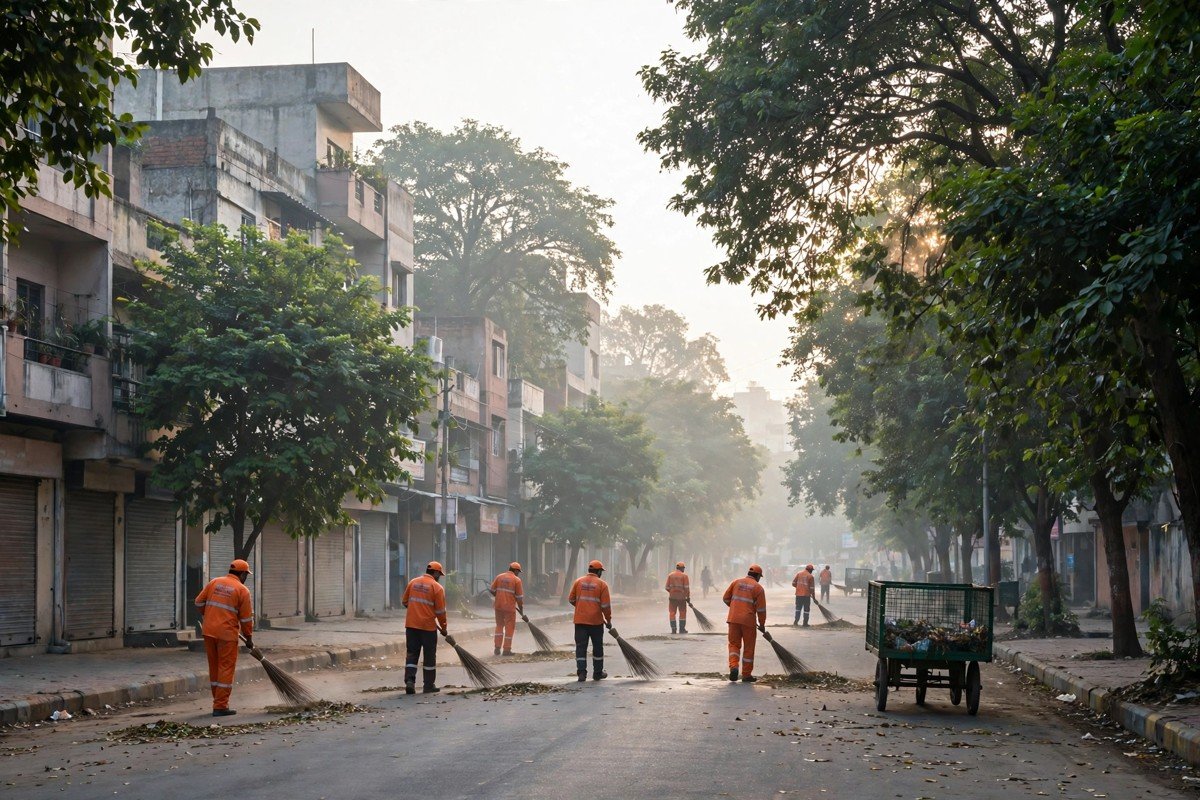
The Mayor-in-Council meeting also decided to appoint 3,000 sanitation workers to strengthen the city’s sanitation system. Indore is counted among the country’s cleanest cities, and increasing the number of sanitation workers has been considered necessary to maintain this ranking.
In addition, in compliance with an order passed by the Supreme Court, more than 1,800 employees will be regularised. Other eligible employees will also be regularised, keeping in view their seniority and priority. This will open the way to permanent status for employees who have been working on a temporary basis for a long time.
Other MIC decisions: gantries, roads and a sports facility
The meeting also took decisions on the city’s infrastructure, traffic and advertising policy. No new unipoles will be installed in the city now. Keeping traffic management and citizens’ convenience in mind, 140 new gantries will be constructed. The market department will operate the corporation’s gantries as per guidelines, and advertisements will be displayed after collecting the prescribed fee.
Fresh tenders will be issued for the remaining road development work from Sarwate bus stand via Juni Indore bridge and Chandrabhaga to Machhi Bazaar crossing. A link road connecting Airport Road to MR-5 will be developed, and a road will be constructed on MR-5 from Tata Steel crossing to Chhota Bangarda village. On land under the Kesar Bagh flyover, a smart hub multi-sports and recreation facility will be developed under the public-private partnership model. A standard operating procedure will also be prepared for the systematic operation of muktidhams and kabristans.
What changes for citizens, and what happens next
After the new water policy, the biggest change for Indore’s citizens is that wasting water is now linked to a fixed fine system. Under the Indore water policy fine, washing a car or floor with a pipe, drawing water with a motor on a tap connection and misusing public water resources will now prove costly. Even a first offence will draw a penalty of Rs 2,000 to Rs 5,000, rising to Rs 10,000 on repetition.
Next, the corporation will also run a public awareness campaign for effective implementation of the water policy. Citizens have been appealed to use water as per need, adopt rainwater harvesting and check the status of their connections in time. The illegal-to-legal campaign starting 12 November will be the first opportunity. With 300 new borewells, 33 new tankers and CCTV monitoring on hydrants before summer, the city’s drinking water system is expected to be strengthened.
Disclaimer: This story has been prepared on the basis of available sources and verification. If any fact is found incorrect, a correction will be published.