







The Kulgam encounter Lateef Bhat case came to an end on Wednesday, 18 November 2026, when security forces killed Lashkar-e-Taiba (LeT) commander Mohammad Lateef Bhat in Zangalpora village in the Devsar area of Kulgam district in south Kashmir. The joint operation by the Jammu and Kashmir Police, the Indian Army, the Central Reserve Police Force (CRPF) and intelligence agencies followed more than a week of cordon and search in the district, and it drew praise from Union Home Minister Amit Shah, who described the outcome as a significant success against militancy in the Valley.
By Desk Report
Kulgam Encounter Lateef Bhat: How the Operation Unfolded in Zangalpora
According to the police, the operation began in the early hours of Wednesday on the basis of specific intelligence inputs about the presence of a militant in Zangalpora. Security forces moved in, placed the area under a cordon and began a careful search of the village. During the search, Bhat was cornered inside a mosque. The forces then made repeated appeals asking him to surrender, including a lengthy video call with senior officers, but he refused to give himself up. Police said he later came out of the building and tried to flee, and was shot dead in the exchange that followed. His body and a weapon were recovered from the spot.
Who Was Mohammad Lateef Bhat?
Bhat, who was from Khrewan village in Kulgam and in his early twenties, had joined the Lashkar-e-Taiba exactly a year earlier, on 18 November 2025, according to Senior Superintendent of Police, Kulgam, Anayat Ali Choudhary. Police said he carried a reward of Rs 15 lakh on his head and that seven first information reports had been registered against him under the Unlawful Activities (Prevention) Act. Police further said he was allegedly involved in a series of attacks in the district, including the 11 November attack on a CRPF party at Akhran in Nowpora, in which three personnel were injured, and the killings of a police head constable and migrant workers.
Eight Days of Cordon and Search After the CRPF Attack
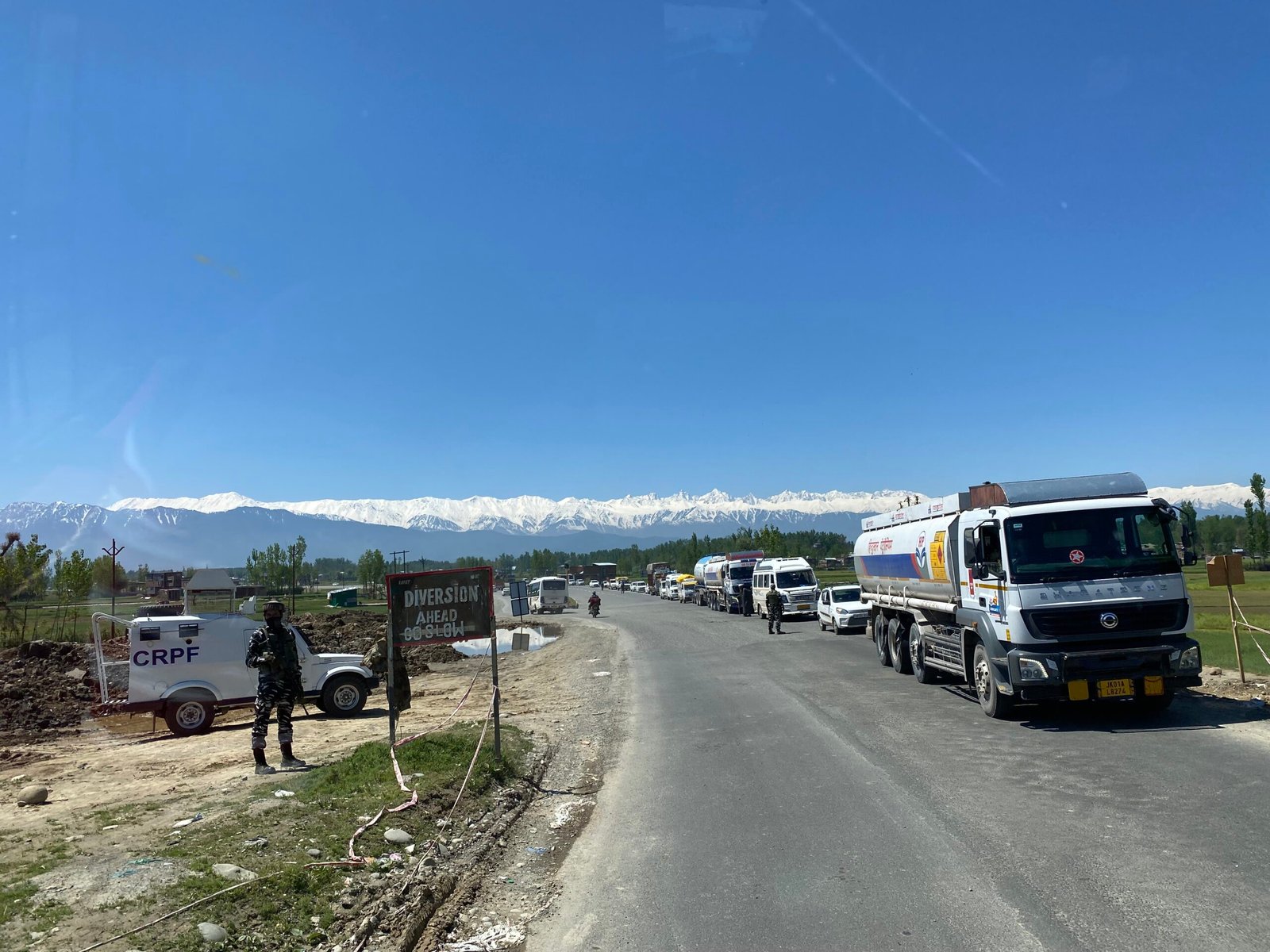
The killing came at the end of an eight-day cordon-and-search operation that began after the 11 November attack on the CRPF party at Akhran, Nowpora. Over the following days, security forces combed villages across the district, acting on intelligence inputs and tightening the net around the militants believed to be behind the attack. The Times of India reported that the operation was a focused effort to trace those responsible for the attack on the CRPF personnel, and that the forces worked through the week to narrow down the places where the group could be hiding. The eight-day effort underlined how the forces stayed on the trail after the 11 November attack rather than treating it as an isolated incident.
The Standoff at the Mosque and the Surrender Appeals
The final phase of the operation centred on the mosque in Zangalpora where Bhat had taken shelter. Police said the forces, rather than storming the building, first tried to persuade him to surrender, and that senior officers spoke to him at length over a video call. The appeals continued for a considerable time, but Bhat refused to come out. When he eventually emerged and attempted to escape, the forces opened fire and killed him. The operation, which began in the early hours of Wednesday, ended with his killing later that day.
The Associate Killed on Monday
Bhat had narrowly escaped capture two days earlier. On Monday, 16 November, his associate Umar Nisar Dar was killed in a gunfight near the Laroo bypass in Kulgam, while Bhat managed to slip away from the cordon. The search continued through Tuesday before the forces closed in on Bhat in Zangalpora on Wednesday.
Amit Shah Hails the Forces
Union Home Minister Amit Shah posted on X praising the coordinated efforts of the Jammu and Kashmir Police, the Army, the CRPF and the intelligence agencies, and said Bhat was “Lashkar’s last known active local terrorist in the valley”. The Jammu and Kashmir Police likewise described him as the last known active local terrorist in the Valley and as the last surviving local commander of the Lashkar-e-Taiba in Kashmir. Both descriptions are the assessment of the police and the Home Minister, reflecting the security establishment’s reading of the militant landscape rather than an independently verifiable count. CRPF Director General Gyanendra Pratap Singh also congratulated the forces on the success of the operation.
Why the Killing Matters
If the police assessment holds, Bhat’s death removes a commander who, according to the police, had been active in Kulgam for exactly a year and was linked to a string of attacks in the district. His killing within a week of the attack on the CRPF party is also likely to be read within the forces as a message that attacks on security personnel will draw a sustained response. For south Kashmir, where the Lashkar-e-Taiba has long maintained a presence, the loss of a senior local commander could disrupt recruitment and logistics in the short term, though the security establishment has repeatedly cautioned that the elimination of individual commanders does not by itself end militancy. The operation also comes at a time when India’s security establishment has been active on several fronts, including deepening defence cooperation with partners such as Japan.
What Happens Next
With the encounter over, the focus now shifts to the investigation of the cases registered against Bhat and to the wider security grid in Kulgam. The police are expected to continue search operations in the district to rule out the presence of other militants, and the agencies will examine the weapon and other material recovered from the encounter site. The killing is also likely to feature in the continuing debate over the security situation in the Valley — a subject that also figured in New Delhi’s recent rebuttal to Pakistan at the United Nations. For the moment, the eight-day operation that began with an attack on a CRPF party has ended with the death of the man the police held responsible for it.
डिस्क्लेमर: यह खबर उपलब्ध स्रोतों और सत्यापन के आधार पर तैयार की गई है। किसी तथ्य में त्रुटि होने पर सुधार प्रकाशित किया जाएगा।