








New Delhi Bureau
Summary: The Reserve Bank of India has told Tata Sons that it must comply with all the rules that apply to upper-layer non-banking financial companies, including the requirement to list its shares on a stock exchange, closing the Tata group’s principal route to keeping its holding company private after more than a century.
What the RBI’s letter says
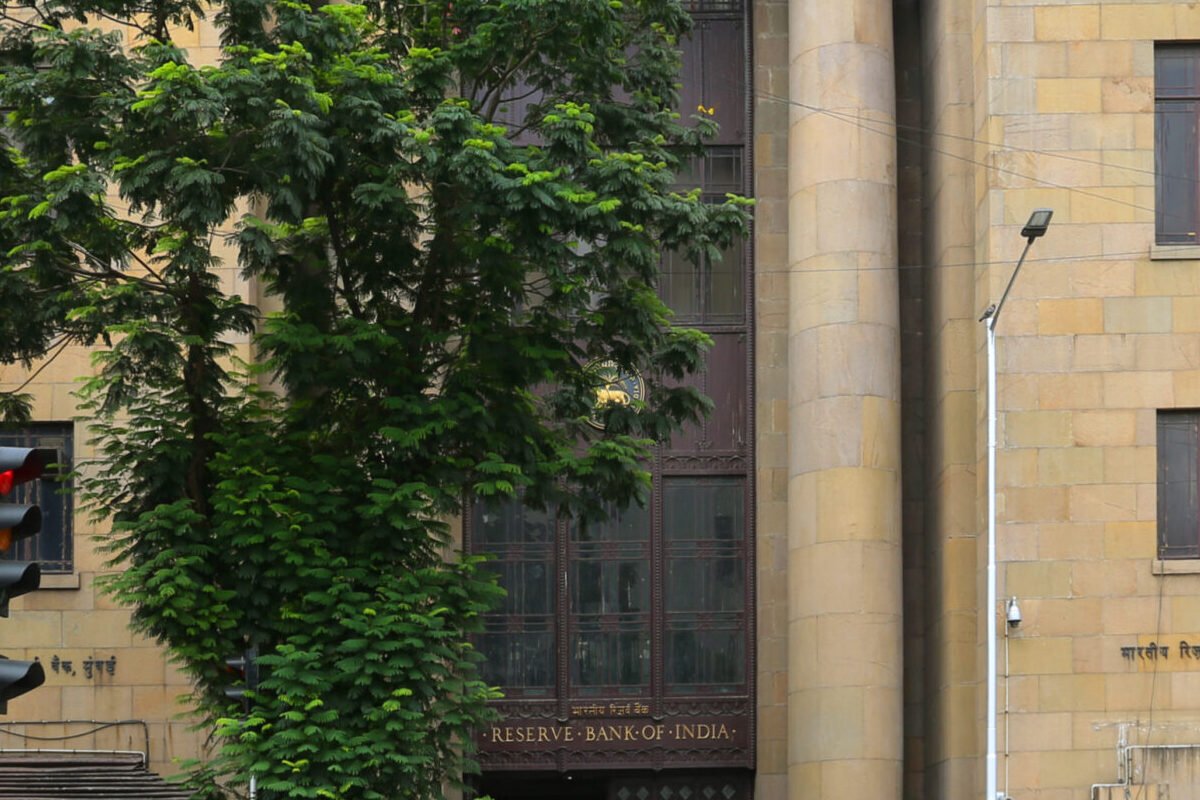
The RBI’s communication, dated 16 November and addressed to the Tata Sons chief financial officer, was a reply to a letter the company sent on 6 October seeking regulatory guidance on compliance. Signed by Deputy General Manager Harminder Singh Bains, it said the company was “advised to comply with all applicable regulations/guidelines/directions, issued by the RBI in respect of NBFCs in the Upper Layer (NBFC-UL), as stipulated in extant regulations/guidelines/directions hosted on the RBI’s website, including the requirement of listing by your company.” The central bank noted that Tata Sons had not sought guidance on any particular regulation, but that its request appeared to relate to discussions in the board about a listing. Reuters, which reviewed the letter, reported that email queries sent to Tata Sons and the RBI were not answered immediately.
An upper-layer NBFC since 2022
Tata Sons was first placed in the RBI’s upper layer in September 2022, under the scale-based regulatory framework for non-bank lenders. The framework sorts large NBFCs into layers, with the upper layer carrying the strictest oversight, including a requirement to list within three years of classification. The company has remained in the category ever since, and the RBI retained it in its list of upper-layer NBFCs for 2026-27, published in August. The three-year listing window has already passed: the deadline prescribed for upper-layer NBFCs was 30 September 2025. Under paragraph 43 of the RBI’s NBFC Governance Directions, 2025, an upper-layer NBFC must list within three years of identification, and once classified it stays subject to the stricter framework for at least five years even if it later stops meeting the criteria.
The deregistration route that closed in September
Tata Sons has spent the past two years trying to leave the framework altogether. In March 2024, after repaying all its debt, it applied to surrender its registration as a core investment company and be treated as an unregistered company, which would have taken it outside the listing requirement. The RBI’s rules, however, allow deregistration only for entities that hold no public funds, have no customer interface and own assets of less than Rs 1,000 crore. Tata Sons reported total assets of about Rs 2.01 lakh crore as of 31 March 2026 — more than twice the Rs 1 lakh crore asset threshold that qualifies an NBFC for the upper layer. On 11 September 2026 the RBI rejected the deregistration application, shutting the company’s main regulatory escape route. The November letter is the regulator’s answer to the company’s next move: a request for guidance on how to comply.
The Trusts, the board and the rift
The listing question has also divided the house of Tata itself. The Tata Trusts — the Sir Ratan Tata Trust and the Sir Dorabji Tata Trust — control about 66 per cent of Tata Sons, and in July 2025 they passed a resolution seeking to keep the holding company private. A public rift has since opened between the Trusts and Tata Sons over the reappointment of chairman N Chandrasekaran and the decision to pursue a listing. Jimmy Naval Tata, the younger brother of the late Ratan Tata and a trustee of the Sir Ratan Tata Trust, has backed a listing. The management led by Chandrasekaran approved a proposal in September for a listing in accordance with the law of the land. Attention now turns to the Tata Sons board meeting scheduled for 26 November.
A company unlisted for over a century
What is at stake is one of India’s most consequential listings. Tata Sons is the principal investment holding company of the Tata group, founded in 1868, and the promoter of its listed companies, including Tata Consultancy Services, Tata Motors, Tata Steel and Air India. It has remained unlisted for more than a century, with its shares held largely by the charitable Trusts. Its headquarters is Bombay House, the colonial-era building in Fort, Mumbai, completed in 1924 and home to the chairman’s office and the group’s top leadership. A listing would force regular public disclosures, an independent market valuation of the holding company and a wider shareholder base — a sharp change for a company that has run its affairs largely behind closed doors.
The market’s verdict
The market has already begun pricing in the possibility. Shares of Tata Chemicals, which holds 10,237 shares of Tata Sons — about a 2.5 per cent stake as of March 2026, according to SBI Securities data — have risen about 11 per cent over three sessions, gaining nearly 9 per cent in intraday trade on Tuesday before trading at about Rs 648 in afternoon trade, up nearly 6 per cent. Other Tata group stocks also rose. Traders expect a listing to unlock value in the cross-holdings that group companies own in the unlisted parent. The rally is a reminder that the listing debate is no longer only a regulatory question: investors are treating it as a matter of when, not if. The broader market backdrop is covered in our report on wholesale inflation, which surged to 12.29 per cent in October, and in today’s Sensex and Nifty trading report.
What happens next
The immediate test comes on 26 November, when the Tata Sons board meets. The board will have to weigh the RBI’s unambiguous position against the Trusts’ wish to stay private, and decide the path — and the timetable — for a listing. The RBI’s letter gives no new deadline, but it removes any doubt about the direction of travel: compliance, in the regulator’s words, includes listing. For a group that has guarded its privacy for over 150 years, the next few weeks will decide how, and how quickly, Tata Sons steps into the public markets.
Disclaimer: This report is based on available sources and verification. If any fact is found to be incorrect, a correction will be published.