








Desk Report
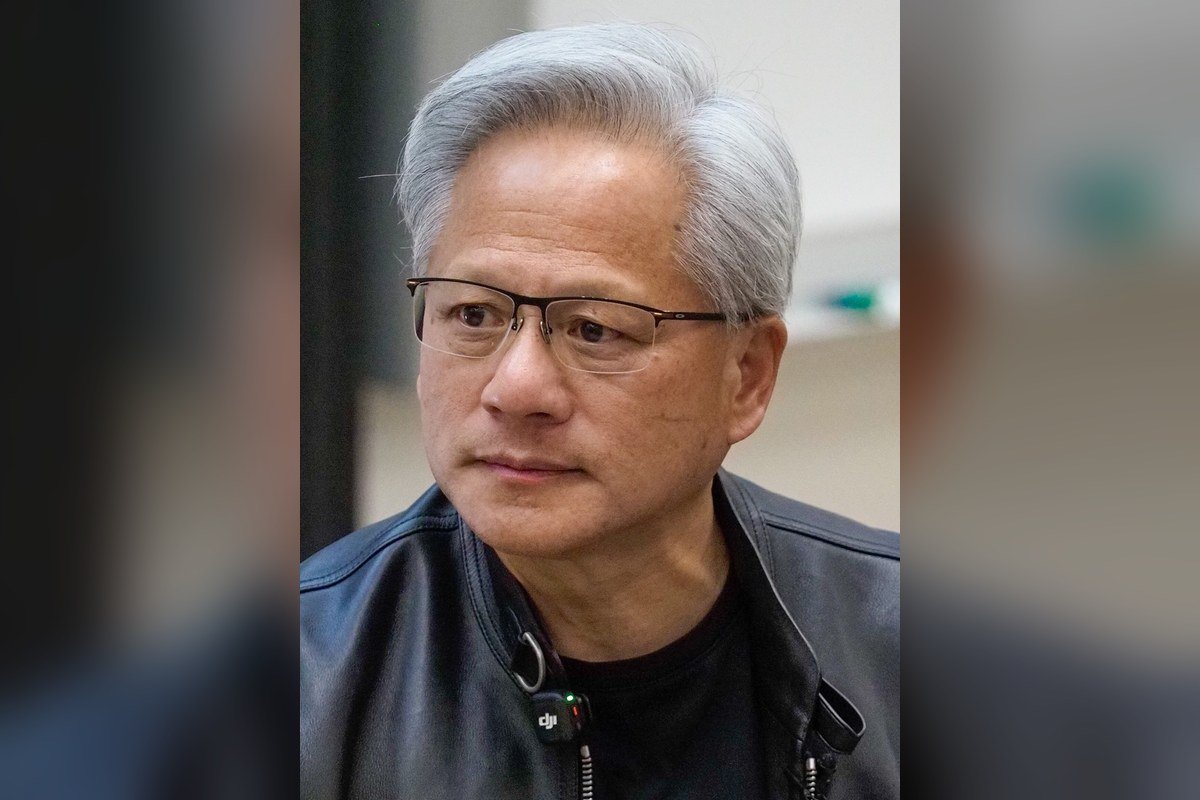
Jensen Huang is back as the chief executive of Nvidia, just 11 days after his resignation shook the world’s most valuable chipmaker and sent global markets into a tailspin. The company’s board reinstated its co-founder as president and chief executive on Monday, effective immediately, and investors answered with one of the most dramatic rallies in Wall Street history: Nvidia shares surged 31.5 percent, their biggest single-day gain in 23 years, restoring nearly one trillion dollars in market value in a single session.
The decision caps an extraordinary 11 days in which the company at the centre of the artificial intelligence boom lost its leader, watched its shares suffer their worst stretch since 2008, and then — under pressure from employees, shareholders, business partners and the President of the United States — reversed course completely. The Nasdaq Composite jumped 6.5 percent on Monday, the S&P 500 gained 4.7 percent, and the rally swept through Asian markets on Tuesday, with South Korea’s KOSPI up 7.5 percent and Taiwan’s benchmark surging 9.1 percent.
Jensen Huang’s Stunning Reversal in 11 Days
The board’s unanimous vote to bring Jensen Huang back stands in sharp contrast to its position only six days earlier. On November 17, board chair Harvey Jones told investors on an earnings call that the board had unanimously accepted Huang’s resignation and did not intend to reinstate him as chief executive. The company had already named chief financial officer Colette Kress as interim chief executive and hired a search firm to find a permanent successor.
On Monday, the same board said it had changed its mind after a series of discussions and meetings with Jensen Huang, and after receiving input from senior levels of the United States government. The board said it was satisfied with Huang’s candour and ability to lead, and that it was confident his reinstatement posed no national security risk. Jones said the board believed Huang’s return was in the best interests of stockholders, employees, partners and customers. Jones will remain as board chair, and Huang also resumes his roles as president and a member of the board.
The reversal followed intense pressure from across Silicon Valley and Wall Street. In open letters, phone calls and group chats, Huang’s allies spent days arguing that his removal had been hasty. A petition calling for his reinstatement gathered more than 177,000 signatures, including those of Elon Musk and Tim Sweeney. President Donald Trump said last week that he wanted to see Huang back in the top job, and on Monday he welcomed the decision, writing that the board had made the correct and proper decision. Trump added that the Attorney General did not possess evidence that Huang had engaged in any unlawful conduct.
Why Jensen Huang Stepped Down
Jensen Huang, 63, resigned on November 12 after reports of extramarital affairs, including one with a business executive whom United States officials suspect of working with Chinese intelligence, an allegation Beijing denies. The woman, Alice Huang, was an executive at Megaspeed, a Singapore-based data-centre company that is a customer of Nvidia and is under investigation over allegations that it illegally funnelled Nvidia chips to China. Jensen Huang also had a relationship with an employee of Nvidia.
The reports raised questions in Washington about the export of advanced artificial intelligence chips to China, a debate that has surrounded Nvidia for years. The company supplies the chips that power the global AI buildout, and it has also bankrolled much of the industry’s expansion, making its leadership a matter of national economic and security interest in the United States.
The board has formed a committee of independent directors to investigate whether Jensen Huang shared corporate or national security information during the relationship, and that investigation will proceed to its conclusion. The company is also under investigation by the Securities and Exchange Commission, which is examining whether its disclosures misled investors, and faces a proposed class-action lawsuit from shareholders. Jensen Huang is scheduled to brief lawmakers next week, to appear for a closed-door interview with three House committees on December 1, and to testify publicly before the Senate Banking Committee on December 3.
Wall Street’s Biggest AI Rally in Months
The market reaction to Huang’s return was immediate and overwhelming. Nvidia shares, which had suffered their worst stretch since 2008 in the week after his resignation, soared more than 31 percent on Monday to close near 165 dollars, their largest one-day percentage gain since 2003. The rally lifted the broader market with it: the Nasdaq Composite surged 6.5 percent, the S&P 500 jumped 4.7 percent, the Dow Jones Industrial Average climbed around 1,448 points, and the Nasdaq 100, which is concentrated in megacap technology companies, rose more than 6 percent. A gauge of semiconductor shares jumped 14 percent.
The rebound marked a dramatic reversal after the S&P 500 and the Dow entered correction territory on Friday, and after an AI sell-off the previous week had pushed the S&P 500 into correction and wiped out the Nasdaq’s gains for the year. Companies across the AI industry rallied alongside Nvidia, in a sign of how deeply the trade depends on a single company for everything from supplying chips to funding the industry’s massive buildout.
“The return of the most important man in the AI industry to the helm of its most important company has eased fear and uncertainty about the AI trade, at least at the margins,” said Kyle Rodda, a senior financial market analyst at Capital.com, while cautioning that concerns about slowing AI investment and moderating earnings growth had not gone away.
Asia Follows, India Watches from the Sidelines
Asian markets followed Wall Street higher on Tuesday. Japan’s Nikkei 225 added 4.5 percent as traders returned from a local holiday. South Korea’s KOSPI surged 7.5 percent, while Taiwanese shares jumped 9.1 percent. The MSCI index of Asia-Pacific shares outside Japan climbed 4.6 percent, bouncing back from an eight-month low and heading for its biggest single-day gain since July 31. Hong Kong’s Hang Seng advanced around 0.8 percent, while China’s Shanghai Composite gained 1.1 percent. Technology stocks led the gains across the region: Samsung Electronics climbed around 8 percent, while SK Hynix advanced nearly 10 percent in South Korea.
Indian markets were closed on Tuesday for Guru Nanak Jayanti, so domestic investors watched the global rally from the sidelines. The GIFT Nifty’s December futures traded higher in early trade, up around 98 points at 25,538, suggesting a positive opening when Indian markets reopen. Indian equities had suffered heavy losses on Monday amid broad-based profit booking on the monthly derivatives expiry day, with the Sensex falling 1.8 percent to 82,436 and the Nifty declining to 25,349.7, snapping a four-week winning streak.
The sharp AI rebound has also eased growth concerns and loosened financial conditions, reviving market bets on near-term tightening by the United States Federal Reserve. Traders are now pricing in an interest-rate rise at the Fed’s December meeting as a near certainty, compared with 89 percent odds on Friday, with the market-implied chance of a supersized half-point increase at around 5 percent. The yield on the benchmark United States 10-year Treasury note rose to 4.94 percent, and the yield on the two-year note rose to 4.69 percent. Investors will focus on Wednesday’s personal consumption expenditures data ahead of the Fed’s final meeting of 2026.
In commodities, oil prices fell more than 3 percent to near a three-month low on rising supplies from the Middle East, with Brent crude settling at 89.37 dollars a barrel on Monday and trading flat at around 89.50 dollars on Tuesday. Gold recovered from a more than one-year low, with spot prices up 0.7 percent at around 3,657 dollars per ounce as investors bought the dip.
What Happens Next
Jensen Huang returns to a company facing a host of challenges. Beyond the continuing investigations, the United States government has already signalled stricter chip export restrictions: the Commerce Department’s Bureau of Industry and Security published a regulation on November 16 to address remote access to advanced AI chips and servers. Democratic lawmakers said on November 20 that they had opened a probe into whether Nvidia influenced a Commerce Department investigation into Megaspeed.
The board has also said it is commencing a search for a chief compliance officer, who would report to the nominating and corporate governance committee — a signal that governance changes will accompany the chief executive’s return. For now, though, the market has delivered its verdict: the man who built Nvidia from a graphics-chip start-up into the engine of the AI age is back in charge, and the AI trade, for the moment, is back on.
डिस्क्लेमर: यह खबर उपलब्ध स्रोतों और सत्यापन के आधार पर तैयार की गई है। किसी तथ्य में त्रुटि होने पर सुधार प्रकाशित किया जाएगा।