










Chennai Bureau
India is preparing to widen the computing support it gives under its national artificial intelligence programme from building AI models to actually running them, with the government’s own needs getting first call on the new capacity. The shift, now under evaluation in the electronics and information technology ministry, would take the IndiaAI Mission beyond its original job of helping companies train models and turn it into the backbone for AI services used across government, research and industry.
Training Was Only the First Step
So far, the IndiaAI Mission’s compute support has been aimed at one thing: training. Companies picked in the first round to build indigenous AI models received subsidised access to graphics processors so they could train their systems, and the agreements signed with them cover training alone. That list includes startups such as Sarvam and Gnani.ai. Speaking to reporters at TEC-VERSE 2026, the annual technology showcase of the ministry’s research organisations in Chennai on Friday, the ministry’s secretary S Krishnan said that arrangement now needs to be looked at separately. “Our agreement with all the companies that were first selected for the purpose of developing models is for training. Now inference is required nationally not only for these companies but for the government as well,” he said. Inference is the computing needed to run a trained model and answer user requests, as opposed to the computing used to train it in the first place, and it is the part of the bill that grows every time an AI service is actually used.
Why Inference Is Now a National Requirement
The reason the question has become urgent is that the demand for running models is no longer confined to the companies building them. Government departments want to use AI in citizen services, researchers need computing to test and deploy their work, and academic institutions need it for teaching and research. Krishnan made the order of priority clear: the government’s own requirements come first, followed by research institutions, innovators and academic institutions, with any spare capacity then made available to private companies for inference. “Broadly there needs to be an expansion of the overall compute capacity which comes up in the country, so that more inferencing is created,” he said. The thinking is that if India does not build enough inference capacity at home, the everyday use of AI, from government services to business tools, will depend on computing rented from elsewhere.
The Capacity Being Built — Pune, Bengaluru and New Tenders
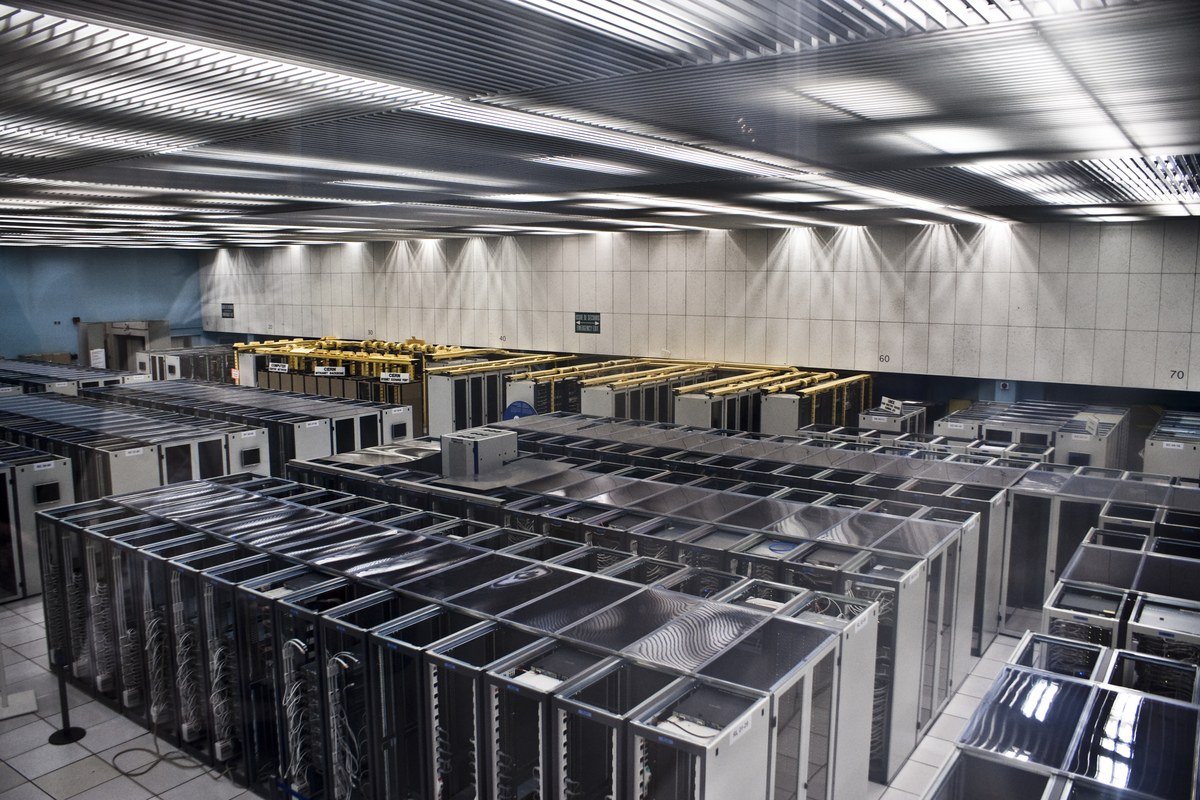
The building blocks for that capacity are already taking shape. The Centre for Development of Advanced Computing in Pune is setting up an indigenous AI infrastructure facility powered by roughly 3,300 graphics processors, and a high-performance computing and AI machine of more than 30 petaflops is coming up in Bengaluru. Procurement documents issued by C-DAC in November point to a further expansion, with a tender seeking at least 3,000 specialised AI accelerators for a new data centre at its Pune campus in Chikhali, besides 168 processors for its Innovation Park. An arrangement with the Abu Dhabi-based technology group G42 would be used mainly for inference, and a partnership with the American chip company Cerebras is meant to support sovereign AI computing onshore. Private capacity is growing alongside, including L&T’s order for NVIDIA B300 graphics processors in Chennai, part of a planned 10,000-graphics-processor cluster. The IndiaAI Mission itself, a programme worth Rs 10,370 crore, was designed to give India its own foundation for artificial intelligence rather than leaving the country dependent on technology built elsewhere.
The Sarvam Backdrop
The discussion about inference has gained edge from a controversy around Sarvam, one of the first companies selected under the mission. The Bengaluru firm launched a Token Factory platform that also hosts foreign open-weight models, including systems from Chinese developers such as DeepSeek, Moonshot AI, Z.ai and Alibaba, prompting questions about whether a company backed with public support should be selling access to foreign models and what that meant for the sovereign AI label. The ministry has defended the company, saying Sarvam had informed it of the plan to build an AI harness carrying a number of open-source models, including its own, and that the government itself uses such harness-based services because they ensure data does not leave the country. The secretary has also said it is natural for AI companies to need a revenue model to monetise their work, and that Sarvam, which has brought out a 105-trillion-parameter model and is working on a trillion-parameter model announced in July, will continue to receive support. The episode has sharpened the distinction the ministry is now drawing: training support was for building models, while the commercial running of models, including foreign ones, is a separate matter that needs its own framework.
Chariot-1 and the Homegrown Model Push
The inference debate is running alongside visible progress on the models themselves. On 26 November, Chariot-1, a suite of foundation models backed by the IndiaAI Mission, was launched in New Delhi, with Chariot AI among the first four organisations selected to build sovereign foundation models. The suite has two parts: a large language model and a text-to-speech model, both pre-trained from scratch in India. The language model is an 11-billion-parameter mixture-of-experts system, with four billion parameters active for each token, offered in three sizes of 10.7 billion, 1.7 billion and 745 million parameters so it can run in settings from large data centres to smaller devices. The speech model generates natural-sounding speech in English and 10 Indian languages — Hindi, Bengali, Marathi, Tamil, Telugu, Kannada, Malayalam, Gujarati, Punjabi and Odia — and is designed to handle numbers, dates, currencies and web addresses in context, reporting more than 97 per cent accuracy in pronouncing such text. Behind it sit three research advances: IndicShift, an open-source method covering 1,012 characters across 12 Indian scripts that needs up to two and a half times fewer tokens than a widely used commercial tokeniser; Nested Training, which trains three model sizes in a single run and is reported to be 62 per cent faster; and a Mixture of Vocabularies technique reported to speed up training by 38 per cent. The same event in Chennai also saw the launch of Aheesa Prabha, an indigenous fibre broadband platform powered by a home-designed chip, showing that the push extends beyond AI models into the hardware that carries connectivity.
What Has Not Been Decided Yet
For all the signals, no decision on inference support has been taken. Asked whether inference would get subsidies similar to those available for training, Krishnan said the existing support was meant for companies training their models, and the government would first assess whether adequate computing capacity was being created domestically before considering additional assistance. Direct investment or co-investment in companies could also be examined. Nor is the ministry selecting additional foundation models for now: the immediate priority is to help the companies selected in the first round accelerate development and bring their models to market. “What we are supporting is training,” he said, adding that commercial operations were a separate matter. The ministry is also finalising guidelines to make publicly funded research more industry-oriented and application-driven, encouraging researchers to engage with industry early and identify specific problems rather than developing projects in isolation. Those guidelines are almost ready and are expected to be issued shortly. On a separate worry, the secretary sought to calm concerns about a recent American move to restrict chip exports, saying there was no such risk for India because the restrictions were aimed at certain countries and jurisdictions and did not apply to it. He also noted that the mission had never relied only on one supplier’s graphics processors, with other hardware available on its open platform.
What Happens Next
What follows now is an assessment, not an announcement. The government will measure how much inference capacity is actually being built in the country, weigh that against the needs of its own departments, research institutions and innovators, and then decide what form of support, if any, inference should get. If the evaluation leads to a scheme, it would mark a second phase for the IndiaAI Mission: from helping a handful of companies build models to underwriting the computing on which AI services run for the whole country. Industry body Nasscom has separately sought a multi-year AI transformation scheme in the coming budget, a reminder that the private sector is watching the same gap. For now, the direction is set but the details, including money, timelines and who qualifies, are still to be worked out. The coming weeks, including the release of the new research guidelines, will show whether the evaluation turns into a concrete programme, and how quickly India’s own computing can catch up with the demand its AI ambitions are creating.
Disclaimer: This report is based on available sources and verification. If any fact is found to be incorrect, a correction will be published.