









Desk Report
CrowdStrike has agreed to buy cloud-security rival Zscaler in a $43.9 billion all-stock deal, the largest cybersecurity acquisition ever announced, uniting the company that protects devices with the company that secures the networks those devices connect to — at a moment when artificial intelligence is making cyberattacks faster, cheaper and harder to stop.
The two companies announced the definitive agreement on Monday, November 23. Under its terms, Zscaler shareholders will receive 1.135 CrowdStrike shares for each Zscaler share they own, a ratio that valued Zscaler at about $260.41 a share — a premium of roughly 34 percent over its last closing price. Existing CrowdStrike shareholders will own about 84 percent of the combined company once the transaction closes.
The deal in numbers
The headline figure is $43.9 billion, and the structure matters as much as the size. No cash changes hands: Zscaler investors are being paid entirely in CrowdStrike stock, which means the value of what they receive will rise and fall with CrowdStrike’s share price until the deal closes. The equity value of the transaction is about $42.46 billion.
The combined company is expected to start life with more than $10 billion in annual recurring revenue, including roughly $3.9 billion from Zscaler. CrowdStrike expects the acquisition to generate about $1 billion in additional annual revenue within 30 months of closing, and about $500 million a year in cost savings within 18 to 24 months. It also says the deal expands the market it can serve by more than $185 billion by 2029.
Closing is expected in the second half of CrowdStrike’s fiscal 2028, which runs from August 2027 to January 2028. The agreement still needs approval from Zscaler’s shareholders and from regulators, and the two companies will continue to operate separately until then. The agreement sets November 23, 2027 as the outside date for closing, extendable to February 23, 2028 if only antitrust or foreign-investment reviews remain. Zscaler would owe CrowdStrike a $1.4 billion fee if it walked away to accept a rival offer.
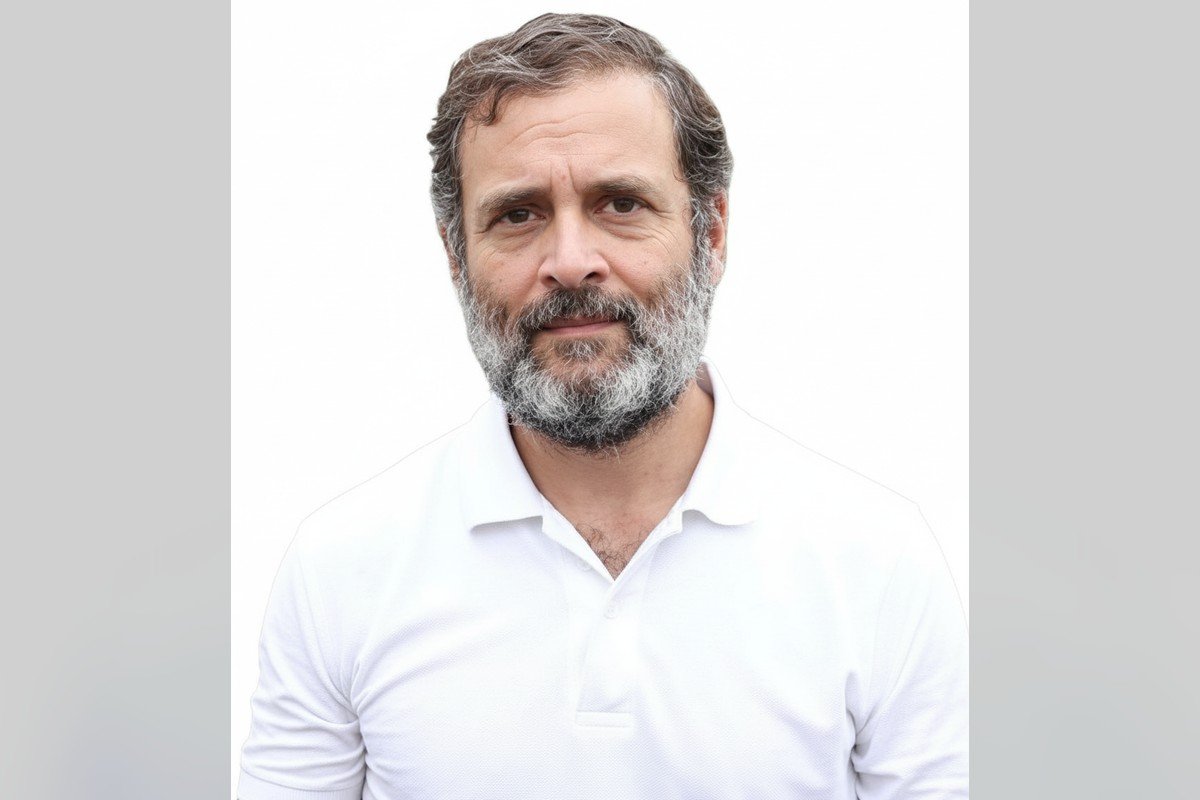
CrowdStrike chief executive George Kurtz will lead the combined company. Zscaler founder and chief executive Jay Chaudhry will stay on to run the Zscaler business and will join CrowdStrike’s board. Chaudhry and his affiliates, who hold about 34 percent of Zscaler’s shares, have agreed to vote in favour of the deal.
Why the market sold CrowdStrike and bought Zscaler
Wall Street’s first verdict was split down the middle. Zscaler shares jumped more than 13 percent in premarket trading, while CrowdStrike shares fell 5 percent. By the close of trading on Monday, CrowdStrike was down about 9 percent and Zscaler up about 18 percent — a reaction that says less about the strategy than about the price.
Acquirers often see their shares fall when they announce a large deal, and this one has two features that worry investors. The first is dilution: paying in stock means existing CrowdStrike shareholders will own only about 84 percent of a much larger company, handing roughly a sixth of it to Zscaler’s investors. CrowdStrike lost about $22 billion of market value on the day of the announcement — roughly half of what it agreed to pay.
The second is integration risk. Combining two large, independent platforms is slow, expensive work, and this deal is not expected to close for well over a year. In the meantime, Zscaler’s shares will largely track CrowdStrike’s, because the 1.135-share exchange ratio is fixed: if CrowdStrike’s stock falls, the value of the offer falls with it. Zscaler closed the day about 3.5 percent below the deal’s implied value, a small gap that suggests traders expect the transaction to complete — but a gap all the same.
The timing was deliberate. CrowdStrike pulled its quarterly results forward from December 1 so that a record quarter would share the morning with the deal announcement. Investors discussed the deal instead. The announcement also came on the same day as another extraordinary market story — Jensen Huang’s return as Nvidia chief executive, which sent that company’s shares up 31 percent — and the CrowdStrike deal was largely overshadowed by it.
A record quarter buried by the deal
The numbers CrowdStrike reported alongside the announcement were, on their own, the strongest in its history. Third-quarter revenue rose 28 percent to $1.58 billion, helped by a 29 percent rise in subscription revenue, against analyst expectations of $1.53 billion. Adjusted profit was 34 cents a share, above the 31 cents analysts had expected. New annual recurring revenue reached a record $419 million, and total annual recurring revenue grew 27 percent to $6.26 billion.
For the fourth quarter, CrowdStrike forecast revenue of between $1.638 billion and $1.644 billion, above the average analyst estimate of $1.62 billion, with adjusted profit of 36 cents a share, in line with estimates.
Zscaler reported alongside it, with first-quarter revenue up 20 percent to $949.3 million, beating estimates of $938 million, and adjusted profit of $1.23 a share against estimates of $1.16. The strength of both sets of results underlines why the market’s attention stayed fixed on the acquisition: two healthy companies are choosing to combine now, before either of them needs to.
What the combination creates
The strategic logic is straightforward. CrowdStrike’s Falcon platform protects laptops, servers and other devices — the endpoints. Zscaler’s technology secures the connections between employees and the applications and data they use, wherever those employees happen to be — the network. Together, the companies say, they can offer corporate and government customers a single platform covering both, at a time when customers are trying to cut the number of security vendors they deal with.
That platform pitch is aimed squarely at the age of AI agents. As companies deploy autonomous software that acts on their behalf, the number of things that need protecting multiplies — not just people and devices, but the agents themselves and the connections between them. CrowdStrike has described the combined company as being built for that era, and as aiming to become the largest AI safety and security company the world has ever seen.
The deal also opens up cross-selling on a large scale. CrowdStrike gains access to roughly 8,000 Zscaler customers that do not currently use its products, including large companies such as Unilever and United Airlines. It is the eighth acquisition CrowdStrike has announced since August last year, and the third this month — a pace that shows how quickly the cybersecurity industry is consolidating around a handful of broad platforms.
The scale is unprecedented for the sector. The transaction is the biggest cybersecurity acquisition on record, eclipsing the previous high-water mark set by Alphabet’s purchase of Wiz in 2025. Whether it stays that way will depend in part on regulators: analysts note that antitrust scrutiny is certainly possible given the size of the transaction and the importance of both companies, though it would be premature to assume regulators will necessarily try to block it. The key question is likely to be how much overlap regulators see between the two businesses, and whether customers would genuinely have fewer competitive alternatives as a result.
From a Himachal village to a $44 billion deal
For India, the deal has a personal dimension. Zscaler was founded in 2007 by Jay Chaudhry, who was born Jagtar Singh Chaudhry in 1958 in Panoh, a small village in Himachal Pradesh with fewer than 1,000 residents. The village had no electricity or piped water supply. He studied under a tree and walked four kilometres every day to attend school, secured the top rank in Himachal Pradesh, and won admission to IIT (BHU) Varanasi, graduating in electrical engineering in 1980.
At 22, he moved to the United States with $200 in his pocket. A Tata scholarship, one of 25 offered to IIT students, helped fund his education. He went on to earn a master’s degree in electrical and computer engineering, another in industrial engineering and management, and an MBA from the University of Cincinnati, before working at IBM and Unisys.
Since 1996, he has founded five companies, and every one of them has ended in an acquisition. SecureIT, founded in 1996, was among the early pure-play internet security services companies and was acquired by VeriSign in July 1998. CoreHarbor, founded in 2000, was acquired by USi, which was later acquired by AT&T. CipherTrust, also founded in 2000, built what was often described as the industry’s first email security gateway and merged with Secure Computing in 2006. AirDefense, founded in 2002 and focused on wireless network security, was acquired by Motorola.
Zscaler was the fifth and biggest. Co-founded with his IIT classmate K. Kailash, it bet on a cloud-native security platform at a time when businesses were still investing in firewalls and hardware to protect their corporate networks. That approach became what is now known as Zero Trust security. The company went public on Nasdaq in March 2018 and reported revenue of $3.35 billion in the financial year to July 2026, up 25.42 percent year on year.
India has been an important base for Zscaler’s operations throughout. More than 40 percent of its global workforce is based in the country, with offices in Bengaluru, Chandigarh, Hyderabad, Pune, Mumbai and Gurugram, and the company had more than 8,700 employees globally as of July 2026.
“Personally, I don’t have a lot of attachment to money. I never had money in my early childhood, so there was never a notion that I must buy A and B and C,” Chaudhry told CNBC Make It in 2024. He said that mindset had helped him become an entrepreneur.
What happens next
The deal now enters a long approval process. Zscaler’s shareholders must vote for it, and regulators in the United States and elsewhere will examine whether combining two of the industry’s biggest players harms competition. The companies have more than a year before the outside date, and the gap between Zscaler’s trading price and the offer’s implied value will be watched as a live measure of how confident the market is that the transaction completes.
For the wider industry, the message is already clear. Cybersecurity is consolidating fast, the largest deals are getting larger, and the winners are expected to be the platforms that can protect everything — devices, networks, data and the AI agents now moving between them — under one roof. CrowdStrike has just placed the biggest bet yet that it will be one of them.
डिस्क्लेमर: यह खबर उपलब्ध स्रोतों और सत्यापन के आधार पर तैयार की गई है। किसी तथ्य में त्रुटि होने पर सुधार प्रकाशित किया जाएगा।