








Indore Bureau
President Droupadi Murmu is honouring India’s cleanest cities at the Swachh Survekshan 2025-26 awards at Vigyan Bhawan in New Delhi today, as nine cities from Madhya Pradesh — led by Indore, which again topped the Super Swachh League — were chosen for national honours in the tenth edition of India’s annual cleanliness survey.
Nine cities, one state: Madhya Pradesh’s big day
Fifty-seven cities across India were selected for national honours from 4,909 assessed in Swachh Survekshan 2025-26, and Madhya Pradesh accounted for nine of them — Indore, Depalpur, Budhni, Dewas, Gwalior, Jabalpur, Rewa, Sagar and Ujjain. The awards are being presented at a ceremony at Vigyan Bhawan on Wednesday morning, in the presence of Union Housing and Urban Affairs Minister Manohar Lal and Minister of State Tokhan Sahu.
The tenth edition of the survey was held under the theme ‘Swachhata Ki Nayi Pehel – Badhayein Haath, Karein Safai Saath’, a call for citizens to join hands in keeping their cities clean. For Madhya Pradesh, the day carried a double meaning: it confirmed the state’s hold on urban cleanliness at the national level, and it showed that the gains are no longer limited to one city. From the state’s commercial capital to a town of 25,000 people, nine urban bodies stood on the same national stage.
Indore stays at the top
Indore once again finished first in the Super Swachh League, the elite bracket created for cities that have ranked at the top year after year. Reports said the city had retained its position at the head of the League, extending a run that began in 2017, when Indore first topped the national cleanliness rankings. It has held the cleanest-city tag in seven consecutive editions since then, sharing the top spot with Surat in one of those years, and has stayed in the Super Swachh League since the bracket was introduced.
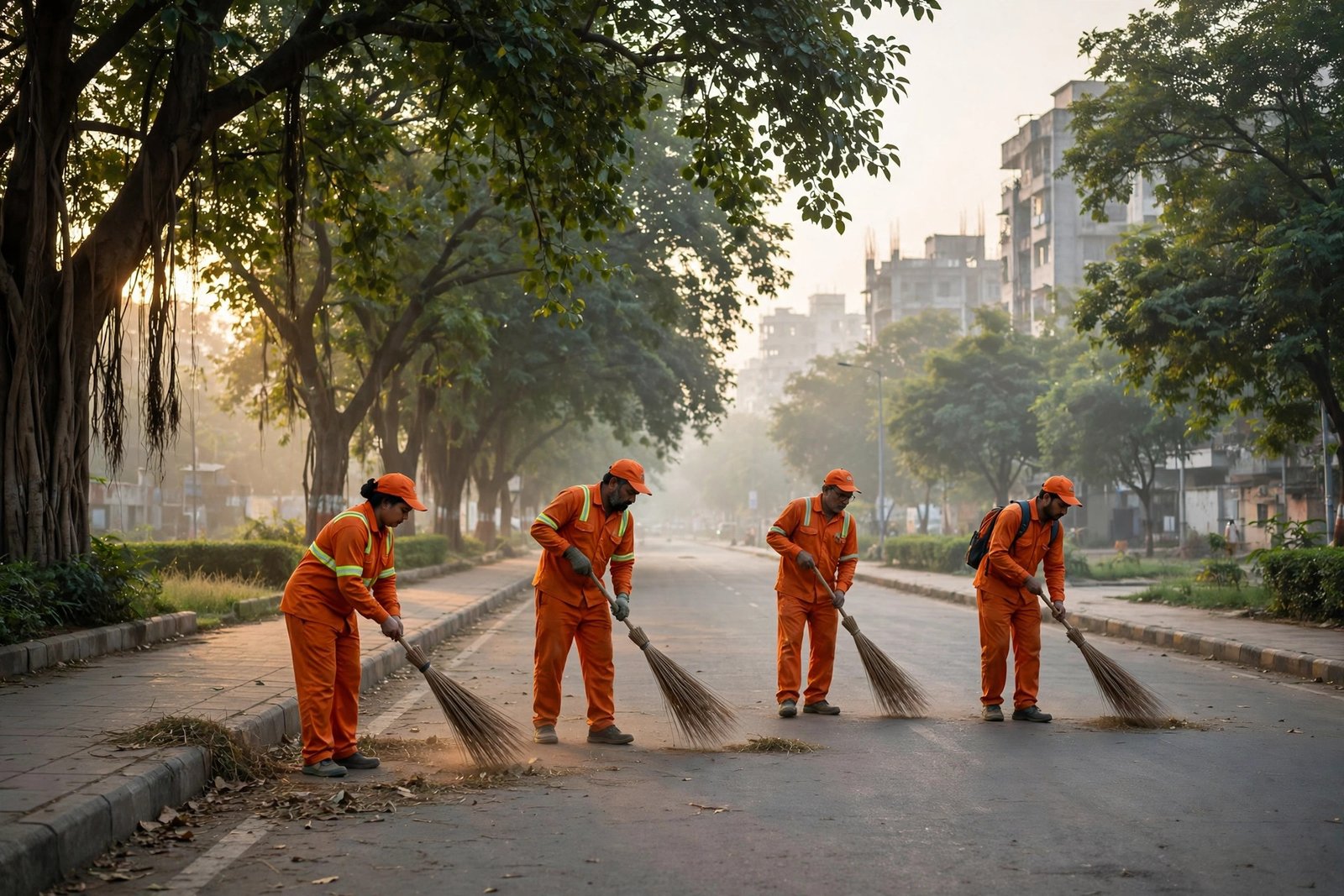
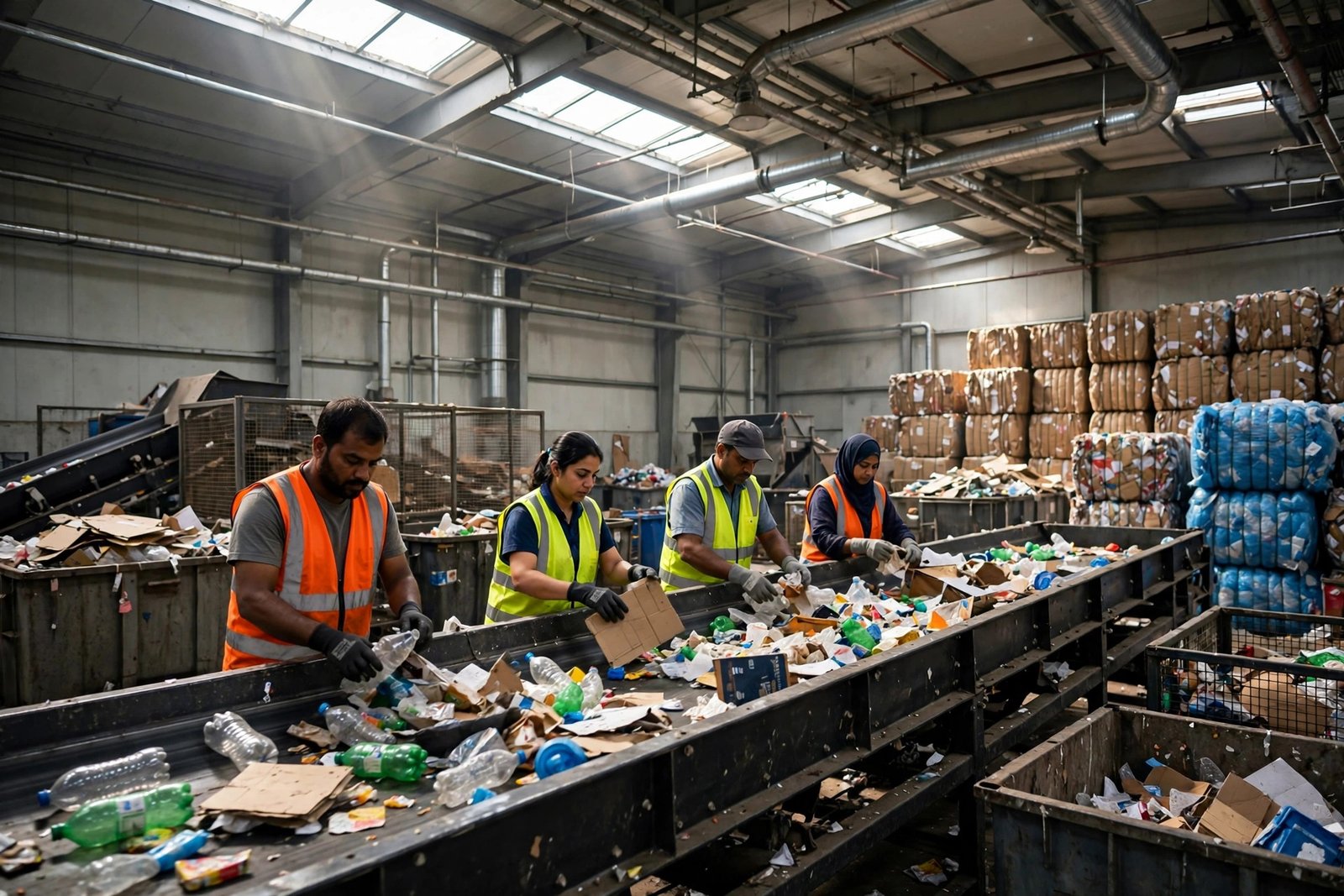
What sets Indore apart is not a single campaign but a system that has been built over a decade — door-to-door collection of segregated waste, processing of wet waste into compost and biogas, dry-waste sorting at material recovery facilities, and a municipal corporation that measures its own performance street by street. The city’s model has been studied by urban bodies across the country, and in Swachh Survekshan 2025-26 it became a formal template: Indore mentored Depalpur, its partner town, to a national award of its own.
Depalpur: from rank 1,710 to number one
The most striking story of this year’s awards belongs to Depalpur, a town of about 25,000 people near Indore with 3,200 houses spread across 15 wards. Two years ago, Depalpur stood 378th among 380 cities in Madhya Pradesh on cleanliness. In the last survey it ranked 1,710th among 2,030 cities across the country. This year it was chosen first in the category of cities with a population of up to 20,000.
The numbers behind the turnaround are modest in scale and large in effort. The town generates about 19 tonnes of wet and dry waste every day, collected by 65 sanitation workers. A material recovery facility with a capacity of five tonnes a day sorts the dry waste, and a faecal sludge treatment plant with a capacity of 20 tonnes a day treats septage. Five new vehicles replaced the old door-to-door collection fleet, and the state government provided a fund of ₹40 lakh for cleanliness work. In January, a legacy heap of 1,250 tonnes of garbage was cleared, and a sewerage treatment plant is planned.
The mentorship model that changed Depalpur
Depalpur’s rise was not an accident. It was the product of the Swachh Shehar Jodi programme, a mentorship and peer-learning initiative under which 70 mentor cities were paired with 191 mentee cities across 33 states and Union Territories. The initiative was launched on 27 September 2025, with memorandums of understanding signed between the participating cities at the launch.
Indore Municipal Corporation signed its memorandum with Depalpur Nagar Parishad on 30 September, and within three months the town’s waste collection system had been rebuilt — new vehicles, coordinated work between the irrigation, health and urban-body departments, and a plan for a sewerage treatment plant. Across the programme, mentee cities recorded sharp improvements: the share performing well on visible cleanliness rose from 48 per cent to 70 per cent, door-to-door waste collection from 52 per cent to 74 per cent, source segregation from 16 per cent to 30 per cent, access to sanitation from 11 per cent to 38 per cent, used water management from 32 per cent to 53 per cent, and advocacy for cleanliness from 48 per cent to 66 per cent.
What Swachh Survekshan 2025-26 measured
Swachh Survekshan 2025-26 assessed urban local bodies against 43 indicators across ten areas, including waste segregation, collection and transportation, solid waste management, visible cleanliness, access to sanitation, mechanised desludging services, institutional strengthening, used water management, sanitation awareness, the welfare of sanitation workers, and citizen feedback and grievance redressal. More than 3,000 trained assessors carried out field evaluations across the country, supported by real-time GPS-enabled monitoring, and the process from evidence submission to verification was carried out digitally.
This edition was scored on 10,500 marks, against 12,500 in the previous edition. The Garbage Free City and Water Plus components, worth 1,000 marks each, were not surveyed this time because of a delay in the survey cycle — a detail that makes the comparison with past scores less direct, but does not change the ranking of the cities that were honoured.
Bhopal’s miss — and what it means
One name was missing from Madhya Pradesh’s list of nine: the state capital, Bhopal. The city had been in the race for the Super Swachh League and had mentored Berasia as its partner town, but it did not make the final invitation list for the ceremony. The distinction matters. Seven Madhya Pradesh cities — Indore, Bhopal, Ujjain, Dewas, Gwalior, Budhni and Shahganj — figured in the Super Swachh League, but the final list of cities called to the stage in New Delhi was narrower, and Bhopal did not survive the cut.
For Bhopal and Indore, the contrast is now a public benchmark. Indore’s system is the reference point, and Bhopal’s task is to close the gap on the indicators where it fell short — segregation at source, processing of waste, and visible cleanliness. The miss is also a reminder that the League rewards consistency: a city must hold its standards across survey cycles, not peak in one year.
A decade of Swachh Survekshan
The survey began in 2016 with 73 urban local bodies and has grown into the world’s largest urban cleanliness survey, covering more than 4,750 cities in its latest edition. Mysuru topped the first edition. Indore’s run began in 2017 and has defined the survey ever since. In the 2024-25 edition, the Super Swachh League was introduced for consistently top-ranked cities, with Ahmedabad leading the big-city list while Indore, Surat, Navi Mumbai and Vijayawada took their place in the League.
Swachh Survekshan 2025-26 adds a new layer to that history: the mentorship programme. Where earlier editions ranked cities against each other, this one paired them — the best teaching the rest. The results, the ministry said, show that the model works: mentee cities improved on every indicator that was measured.
What happens next
An award is a marker, not a finish line. Indore must now defend a position it has held for a decade, Depalpur must prove that its rise from rank 1,710 was not a one-year spike, and the other seven honoured cities of Madhya Pradesh must hold the standards that took them to New Delhi. For Bhopal, the work is clearer still: return to the honoured list in the next edition.
The next survey cycle will test whether the mentorship model can be repeated at scale — whether more towns like Depalpur can climb the rankings with a mentor city’s help, and whether the gains in segregation, collection and processing survive after the awards are handed out. For now, Madhya Pradesh has nine reasons to celebrate, and one clear task: to keep all nine at the top.
डिस्क्लेमर: यह खबर उपलब्ध स्रोतों और सत्यापन के आधार पर तैयार की गई है। किसी तथ्य में त्रुटि होने पर सुधार प्रकाशित किया जाएगा।