









New Delhi Bureau
The next time you pick up a packet of chips, biscuits or a fizzy drink, the front of the pack may carry a plain red warning — “High Sugar”, “High Salt” or “High Fat” — after the Supreme Court on Thursday directed food regulator FSSAI to make separate hexagonal warnings mandatory on packaged foods that cross nutrient limits.
What the Supreme Court ordered
A bench of Justices J B Pardiwala and K Vinod Chandran delivered a 131-page judgment on 26 November 2026 in a public interest petition filed by the non-profit 3S and Our Health Society, which had sought mandatory front-of-pack nutrition labelling on packaged foods. The court directed the Food Safety and Standards Authority of India (FSSAI) to ensure that each nutrient of concern — fat, sugar and salt — gets its own separate red hexagonal warning on the front of the packet, carrying a standardised pictogram and the words “High Fat”, “High Sugar” or “High Salt”, as the case may be. The court also directed that the labels must treat “total sugars” and “saturated fat” — rather than “added sugar” and “added fat” — as the nutrients of concern, alongside salt. Each hexagon must occupy at least 4 to 5 per cent of the packet’s principal display panel, in line with international practice, and the text inside it must be prominent and easily legible in normal shopping conditions.
Why the court rejected a single combined label
FSSAI had proposed a single red hexagon carrying all three warnings together — “High Sugar”, “High Saturated Fat” and “High Salt”. The court rejected that design, saying a single combined hexagon would undermine the very objective of the exercise. A product may be high in sugar but not in salt, or high in fat but not in sugar, and clubbing the warnings together hides the real risk from the shopper. Separate hexagons, the court said, let a buyer see at a glance exactly which nutrient is in excess, without turning the packet over or decoding a fine-print nutrition table. The court also rejected the use of “added sugar” and “added fat” as the yardstick, noting that in a finished product a laboratory cannot tell added sugar from the natural kind — so a rule built on that distinction could not be enforced. The thresholds for each nutrient must now be revisited and reformulated on evidence, and tightened over time.
The timeline: four months, ten weeks, one year
The court has bound FSSAI to the regulator’s own proposed timeline. FSSAI must file an affidavit on its progress after ten weeks, and the matter will be listed again then. The regulator has four months to review and finalise the threshold levels and bring the regulations into force. Food companies will then get a 365-day transition period from the date of notification before the labels become mandatory — a period the court described as voluntary implementation, warning that it must not be misused to delay. “Every day of delay means that packaged foods continue to be sold without such labels, to the detriment of the rights to health, food and informed choice,” the bench said. The court also directed FSSAI to closely monitor how companies reformulate their products once the labels arrive, including on artificial preservatives and other additives.
What changes on your shopping shelf
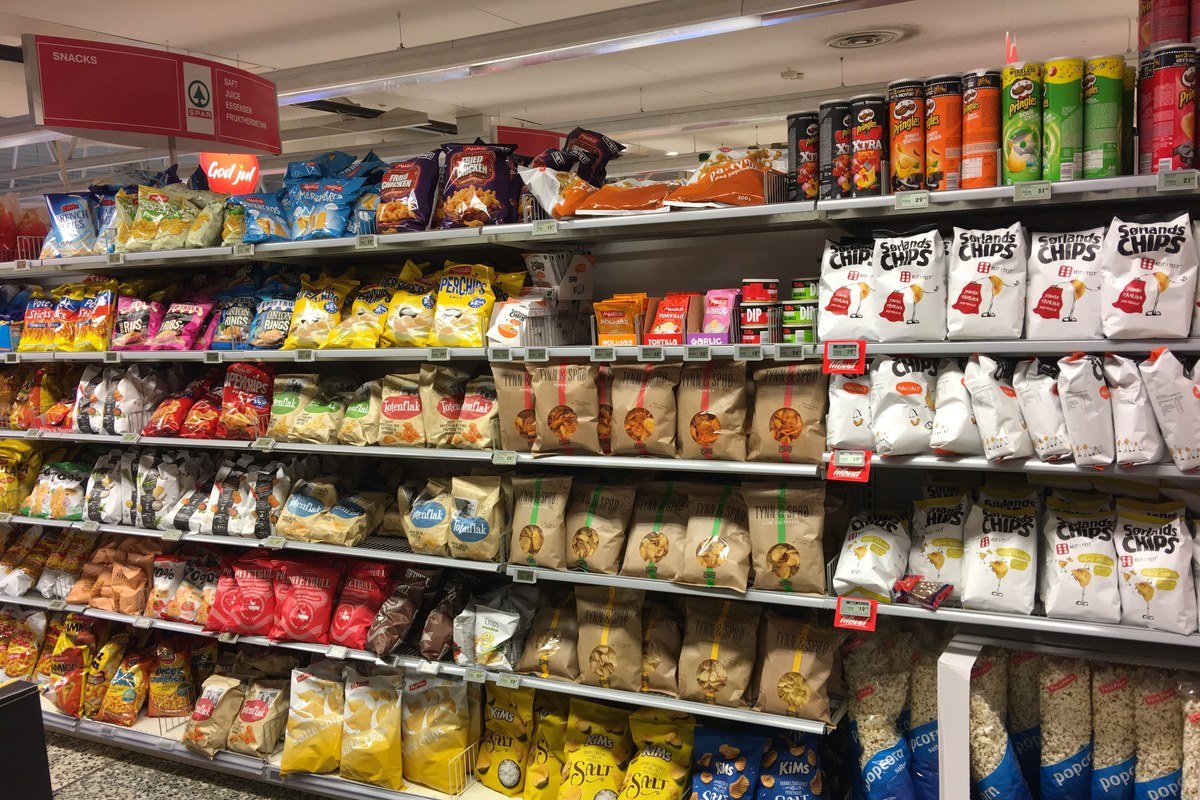
The ruling will touch almost everything in the packaged-foods aisle — chips, biscuits, namkeen, instant noodles, breakfast cereals, sauces and fizzy drinks. If a product crosses the prescribed limit for even one nutrient, it will carry that nutrient’s red hexagon on the front. A product high in all three will carry three hexagons. At the same time, the court protected honest products: sweetened beverages that do not exceed the thresholds must not be shown with front-of-pack labels identical or deceptively similar to the warning labels prescribed for products that do. For shoppers, the change is simple — the warning will be on the front, in a standard form, with a picture and clear words, so that no one has to search for fine print to know what they are buying.
The health crisis behind the order
The bench expressed grave concern at what it called a huge public health crisis — from malnutrition and undernutrition in children to a surge in non-communicable diseases such as diabetes, heart disease and obesity in the general population. Reading the fundamental right to life under Article 21 of the Constitution together with Article 47, which makes improving nutrition and public health a primary duty of the state, the court held that consumers have a right to know the full nutritional truth before they buy packaged food. The judgment also noted that Indian consumers are entitled to no less protection and information than their counterparts in the US and the UK, and recorded concerns that some multinational food companies adopt different practices for Indian consumers than those they follow elsewhere, including in the composition of their products and the information on their labels.
Children and schools get a mention too
The order reaches beyond the supermarket shelf. The court directed the Centre to ensure changes and additions to the school curriculum and pedagogy so that children get practical nutritional literacy through interactive workshops, co-curricular activities and other initiatives aimed at teaching healthy food choices. The idea, the court indicated, is that children who can read a label today become adults who choose better tomorrow.
A long road from star ratings to red hexagons
The case has travelled a long way. The petitioners had originally sought warning labels instead of the star-rating system FSSAI floated in 2022. After an expert committee failed to find consensus, the regulator offered back-of-pack bold type and then daily-intake limits on the front — both of which the court said were not front-of-pack labels at all. At an earlier hearing on 28 September, the court had questioned FSSAI over its proposed implementation timeline; the regulator had said it would need about four months to issue and finalise the draft regulations, with the draft published for 60 days for stakeholder comments through domestic consultation and the World Trade Organisation platform. The court noted that the regulator had at one point told the bench it was not possible to adopt measures like those abroad, despite a legal duty to consider international practice, and said it could not stand by given the imbalance of power between consumers and the food industry.
What happens next
FSSAI must now go back to its drawing board — reworking the design of the hexagons, recalculating the threshold for each nutrient on evidence, and drafting the regulations within four months. The progress affidavit due in ten weeks will be the first public checkpoint. Until the labels become mandatory a year after notification, companies may adopt them voluntarily. For now, the message from the court is unambiguous: what you eat should not be a mystery, and the warning must be on the front of the packet, in red, in words and pictures that anyone can understand at a glance.
Read also: FSSAI sanctions prosecution in the Bisleri case after lab tests flagged bromate and toxic compounds
External source: The Times of India report on the Supreme Court order
डिस्क्लेमर: यह खबर उपलब्ध स्रोतों और सत्यापन के आधार पर तैयार की गई है। किसी तथ्य में त्रुटि होने पर सुधार प्रकाशित किया जाएगा।